






The Metro Market Burnout
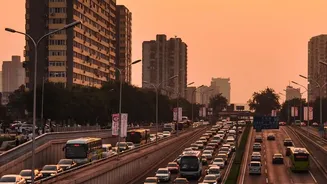
The allure of India's major metropolitan centres is fading for many tech professionals. While cities like Bengaluru, Mumbai, and Delhi-NCR still command a majority of tech jobs, they come with significant downsides. Engineers face sky-high rents, which
can consume a massive portion of their income; for instance, a two-bedroom apartment in a Mumbai tech corridor can cost between ₹30,000 and ₹60,000 per month. Add to that gruelling daily commutes, a hyper-competitive job market where companies poach from the same talent pool, and high attrition rates, and the result is significant professional burnout. The promise of a high salary often gets eroded by an even higher cost of living, leaving professionals with less disposable income than they might have in a smaller city.
The Tier-2 Temptation: More Than Just Savings
In response, a reverse migration is gaining momentum, with engineers and other professionals moving to so-called tier-2 and tier-3 cities like Pune, Jaipur, Indore, and Coimbatore. The primary driver is a better quality of life. The cost of living in these emerging hubs can be 30-40% lower than in metros, while office rents are up to 55% cheaper. This financial breathing room is coupled with less congestion, shorter commutes, and the ability to live in larger homes closer to family. But it's not just a lifestyle choice. Companies setting up in these cities are offering high-growth positions, not just entry-level roles. A senior software engineer might command a lower salary in Coimbatore than in Bengaluru but enjoy a higher standard of living.
Companies Follow the Talent
This migration isn't just employee-driven; it's a strategic move by corporations, especially Global Capability Centres (GCCs). Businesses are realizing that expanding into non-metro cities offers a dual advantage: tapping into a fresh, underutilized talent pool and significantly reducing operational costs. With over 60% of India's graduates coming from institutions in non-metro areas, a skilled workforce is readily available. Furthermore, employee attrition rates are notably lower in these cities, leading to more stable, long-term teams. Government bodies are also fuelling this trend, with state-level initiatives offering incentives like payroll subsidies, skilling grants, and single-window clearances to attract investment.
Meet India's New Engineering Hotspots
A new map of India's tech hubs is being drawn. Cities that were once considered peripheral are now becoming specialized centres for engineering and IT. Coimbatore is turning into a hub for manufacturing and engineering startups, leveraging its industrial base. Jaipur and Indore are seeing a surge in IT recruitment, with annual growth reaching 30-40%. Visakhapatnam, Mysuru, Vadodara, and Bhubaneswar are also emerging as high-potential locations, attracting investments in AI, data analytics, and digital engineering. This isn't just about cost arbitrage; these cities are developing distinct economic identities, from FinTech in one to EV manufacturing in another.
A Redefined Path to Success
The trend signifies a fundamental shift in what constitutes a successful engineering career in India. The traditional path of climbing the corporate ladder in a saturated metro is no longer the only option. For many, success now includes a better work-life balance, greater purchasing power, and the opportunity to contribute to a growing local ecosystem. While metros like Bengaluru and Hyderabad will remain vital for their deep talent density and complex R&D roles, emerging cities offer a compelling alternative for both companies and employees. The trade-off of a slightly smaller professional network is often outweighed by the benefits of stability and a higher quality of life. This distribution of opportunity is creating a more resilient and geographically diverse economic landscape for the entire country.