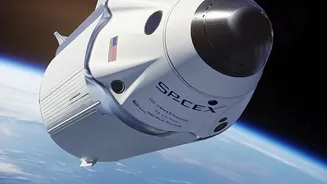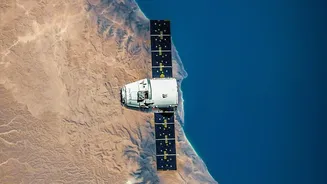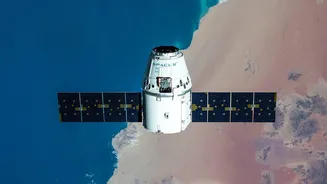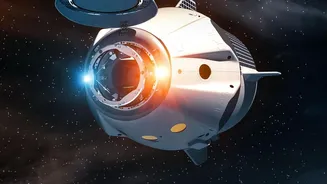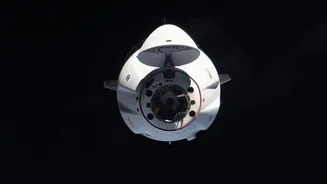




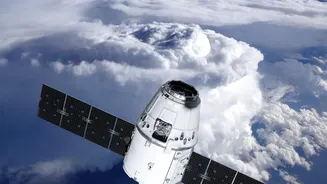
After a fiery plunge through the atmosphere, a capsule carrying not astronauts, but something just as precious, has safely returned to Earth. The SpaceX CRS-35 mission successfully concluded with a splashdown, bringing home vital scientific samples.
A Successful Splashdown
A
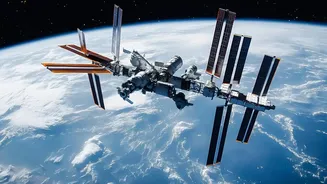
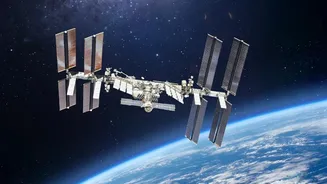
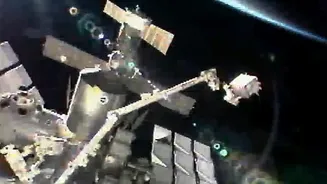
SpaceX Dragon cargo spacecraft successfully splashed down in the Pacific Ocean off the coast of California on Saturday, November 21. This event marked the conclusion of the 35th Commercial Resupply Services (CRS) mission for NASA, a 39-day journey that began with a launch from Florida on October 13. After undocking from the International Space Station (ISS) on November 20, the uncrewed capsule spent approximately 29 hours making its way back to Earth, carrying thousands of pounds of valuable cargo. Unlike other cargo vehicles that service the station, SpaceX's Dragon is currently the only one capable of returning experiments and hardware intact, making these return trips a cornerstone of modern space research.
What Was in the Cargo Hold?
The Dragon capsule was packed with a diverse array of scientific materials that require urgent analysis on the ground. Among the most anticipated items were frozen tumor organoids that had been treated with chemotherapy drugs in space. Researchers hope studying these will reveal new ways to improve cancer treatments and advance personalized medicine. Also on board was a 3D-bioprinted blood vessel construct, part of an experiment to study vascular aging and cardiovascular disease. By examining these tissues grown in microgravity, scientists can gain insights into biological changes that affect people both in orbit and on Earth. The return shipment also included frozen microbial samples to understand how antibiotic-resistant bacteria evolve in space and a lighting system tested for its potential to improve astronaut well-being.
The Unique Laboratory of Space
Conducting research on the International Space Station offers scientists a unique advantage that cannot be replicated on Earth: a persistent microgravity environment. The near-weightlessness of low-Earth orbit alters fundamental physical and biological processes. For example, without gravity, protein crystals can grow larger and more perfectly, allowing scientists to better understand their structure, which is crucial for designing new drugs. Similarly, studying how the human body adapts to space—from muscle and bone loss to changes in brain tissue—provides invaluable data for developing countermeasures to keep astronauts healthy on long-duration missions to the Moon and Mars. These investigations also offer a novel perspective on Earth-bound health problems like osteoporosis and cardiovascular disease.
A Race Against Time on Earth
The mission doesn't end with the splashdown. For many of the biological samples, the journey is a race against time. A recovery team was on standby to retrieve the Dragon capsule from the ocean and quickly transport it to shore. From there, the time-sensitive scientific cargo is expedited to laboratories at NASA and other research institutions across the country. Many of the samples, such as the tumor organoids and microbial cultures, are kept in cold stowage to preserve their integrity. Scientists must work quickly to process and analyze them before terrestrial gravity and other environmental factors begin to obscure the subtle changes that occurred in space. This rapid return and analysis capability is what makes the Dragon capsule so essential for maximizing the scientific return on investment from the ISS.
From Orbit to Breakthrough
The experiments returned on CRS-35 are part of a continuous cycle of research that has been ongoing for over two decades. Investigations start with proposals from scientists, undergo rigorous review, and can take years to develop before ever reaching the launchpad. Once on the station, astronauts perform the experiments, collecting data and preparing samples for their eventual return. The analysis of these returned materials often leads to new discoveries, publications in scientific journals, and sometimes, tangible benefits like new technologies or medical treatments. The findings from the CRS-35 mission, whether related to cancer therapy, human physiology, or crop disease, will now feed back into the scientific community, potentially paving the way for the next generation of breakthroughs.