



Hyderabad's Nutritional Blueprint
While India’s space ambitions soar with missions like Gaganyaan, a critical and complex challenge is being tackled on the ground: how to feed the astronauts. At the heart of this effort in Hyderabad is the ICMR-National Institute of Nutrition (NIN). Scientists
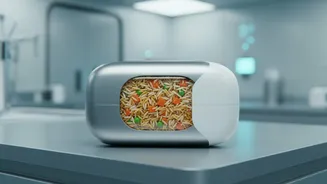
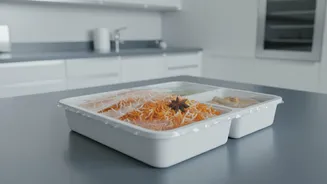
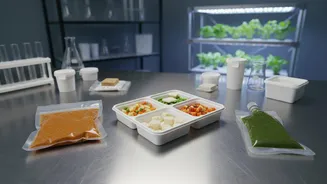
here are not just packing meals; they are creating a nutritional blueprint for Indians in space. Their work focuses on the intense physiological demands of microgravity, where bone density can decrease and nutritional needs change. The NIN's team is developing food formulations rich in micronutrients and antioxidants, with carefully controlled levels of sodium and fibre to maintain astronaut health. They are designing meals in semi-solid, dehydrated, and ready-to-eat formats that are easy to consume in a zero-gravity environment where even a floating crumb can be a hazard.
The Science of Space-Ready Meals
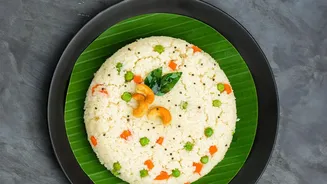
The research extends beyond just the menu. In a fascinating crossover of health science and space exploration, scientists are conducting microgravity simulation studies. These involve participants staying in a head-down, bed-rest position for extended periods to mimic the effects of spaceflight on the human body. This allows researchers from NIN to study how the body digests food and absorbs nutrients under these unique conditions, ensuring the specially designed diet of khichdi, mutton rolls, and fruit purées performs as expected when it matters most. This meticulous work in Hyderabad provides the crucial scientific foundation for the food that will eventually be prepared for India's spacefarers.
From Recipe to Ready-to-Eat
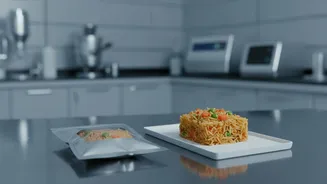
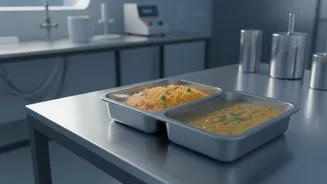
While Hyderabad provides the nutritional science, the primary hub for turning these plans into packaged meals is the Defence Food Research Laboratory (DFRL) in Mysuru. A veteran in this field, DFRL has been developing food for extreme conditions for decades, even supplying meals for Rakesh Sharma’s historic spaceflight in 1984. The lab has perfected techniques like retort processing and freeze-drying to prepare a wide variety of Indian dishes. The goal is to create a menu that is not only nutritious but also shelf-stable for months without refrigeration. The food must be lightweight, low-volume, and, crucially, must not create fragments or spillages when opened and eaten in zero gravity.
The Menu for Mission Gaganyaan
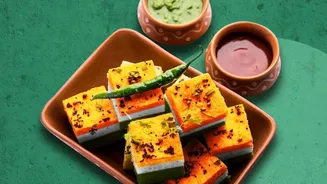
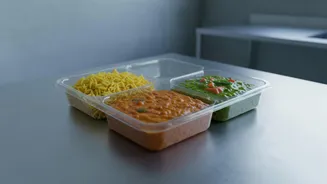
So, what might an Indian astronaut eat? The prospective menu reads like a who's who of comfort food, albeit in a carefully modified form. DFRL has developed dozens of dishes, including vegetable biryani, moong dal halwa, idli sambar, chicken korma, and various parottas and rolls. However, these aren't your typical preparations. The space-bound versions are significantly less spicy and oily to be gentle on the digestive system in microgravity. Special containers and rehydration systems are also developed to make drinking liquids and preparing meals feasible in the weightless conditions of a spacecraft.
A Reality Check from Orbit
Developing the perfect space menu is an incredibly rigorous process, a fact highlighted by recent experiences. Astronaut Shubhanshu Shukla, who flew on a mission to the International Space Station, revealed that despite the extensive menu prepared by DFRL, only three items ultimately made it to space with him: gajar ka halwa, moong dal halwa, and amras (mango pulp). Dishes like khichdi and pulao couldn't complete the stringent and time-consuming qualification tests required by space agencies in time for the launch. This illustrates the immense challenge of ensuring every food item is perfectly safe, stable, and suitable for the most extreme environment known to humanity. The experience provides invaluable lessons for perfecting a wider menu for future Gaganyaan crews.