





More Than Just 'George' the Autopilot
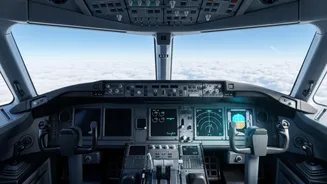
When people think of aircraft automation, the classic autopilot—often nicknamed 'George'—comes to mind. But today’s systems are far more advanced than a simple heading or altitude hold. Modern airliners operate with a suite of interconnected computers
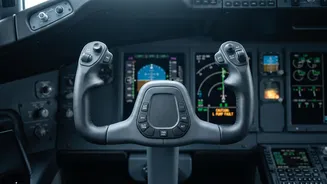
and 'fly-by-wire' technology, where pilot inputs are sent as electronic signals rather than through mechanical cables. This digital foundation does more than just reduce pilot workload; it creates a safety net. These systems continuously monitor the aircraft, preventing pilots from making manoeuvres that could exceed the plane's structural limits or lead to a stall, a condition known as 'flight envelope protection'. This acts as a silent, digital co-pilot, ready to intervene if an input is too aggressive or dangerous, especially during a high-stress emergency.
The Automated Response to Incapacitation
In the critical moments of a pilot becoming incapacitated, automation can be the first line of defense. Advanced systems are designed to detect a lack of pilot interaction. If a pilot is unresponsive to prompts, the plane's automation can assume a greater level of control. For instance, in the event of a cabin depressurisation at high altitude—a situation that can quickly lead to hypoxia—an Emergency Descent Mode (EDM) can automatically activate. The system will initiate a rapid but controlled descent to a lower, safer altitude where supplemental oxygen isn't required, levelling off to give the crew a chance to recover. This automated action removes the immediate danger, buying precious time for the remaining crew to assess the situation and plan their next steps.
The 'Panic Button': Full Autonomous Landing
Perhaps the most remarkable leap in aviation safety is the development of fully autonomous landing systems. Garmin's Autoland technology, which recently received certification for various aircraft, is a prime example. This system is designed for the ultimate emergency: complete incapacitation of the flight crew. It can be activated by a passenger pressing a button or can engage automatically if it detects prolonged pilot inactivity. Once initiated, Autoland takes complete control. It analyzes factors like fuel levels, weather, and terrain to select the nearest suitable airport. It then communicates its intentions to air traffic control, flies the plane along a calculated route, lowers the landing gear, and performs a safe landing on the runway before braking and shutting down the engines, allowing emergency services to approach.
Inspired by Nature: The Future of Autonomous Flight
The innovation doesn't stop there. Major manufacturers like Airbus are pushing the boundaries even further with projects such as DragonFly. This system aims to enhance pilot assistance by using advanced sensors and computer vision, inspired by the way a dragonfly can identify landmarks to navigate its environment. During simulated tests, DragonFly has successfully managed an incapacitated crew member event by automatically generating a new flight plan, communicating with air traffic control, and executing an autonomous landing. The goal of these next-generation systems is not to replace pilots, but to create a more resilient and collaborative cockpit. They act as the ultimate backup, capable of making intelligent decisions and taking control when the human crew is unable to.