



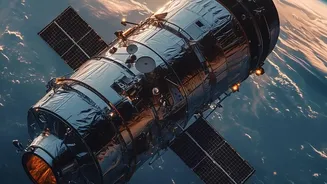
From 'Frugal Engineering' to High-Tech Ambition
India’s space agency, the Indian Space Research Organisation (ISRO), is famous for its “frugal engineering”—a knack for achieving incredible feats, like reaching Mars on a shoestring budget. This approach made India a go-to nation for cost-effective satellite
launches. But the global space economy is shifting. It’s no longer just about getting to orbit; it's about what you can do once you’re there. By embracing artificial intelligence, India is signaling a major strategic pivot. The goal is to evolve from being a reliable launch service to a leader in sophisticated, next-generation space systems. This isn't just an upgrade; it’s a redefinition of its role in the cosmos, aiming for technological prowess that competes directly with the United States, China, and Europe.
Giving Satellites a Mind of Their Own
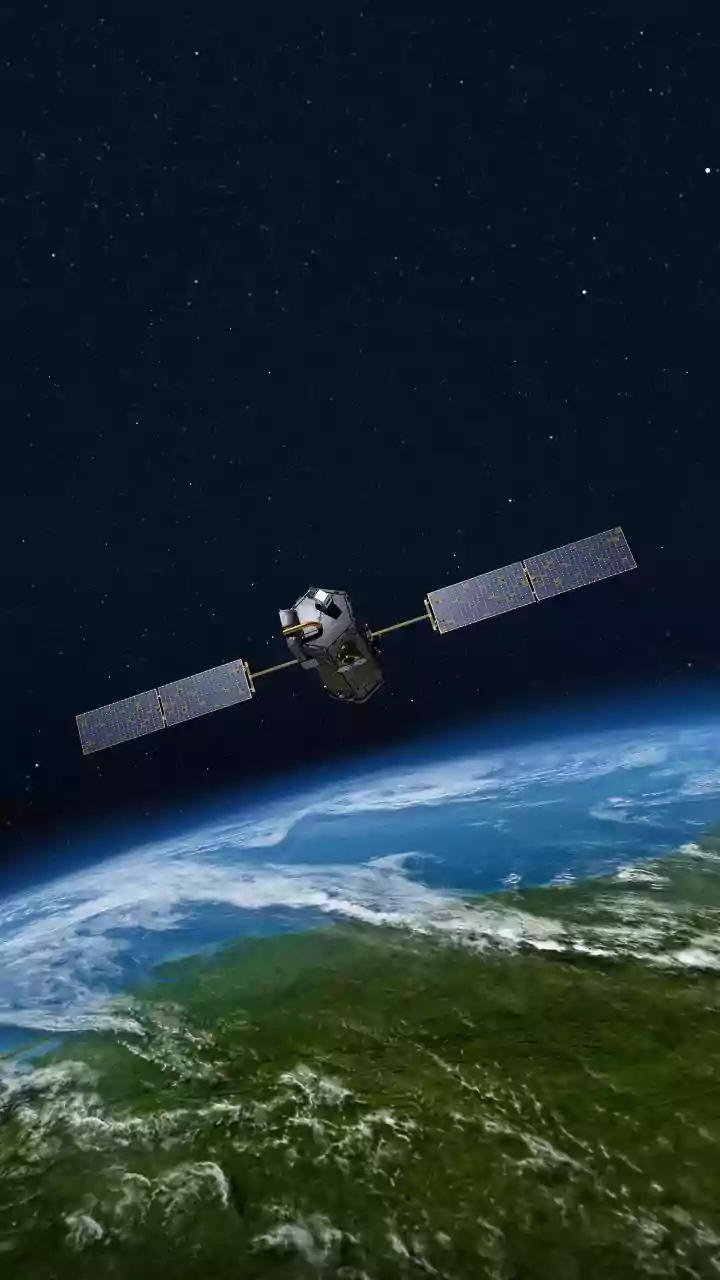
So, how exactly does AI make a satellite “more capable?” It fundamentally changes how they operate, turning them from remote-controlled cameras into autonomous decision-makers. One of the biggest game-changers is on-board data processing. Traditionally, satellites collect enormous volumes of raw data—think thousands of high-resolution images of Earth—and beam it all down to ground stations for analysis. This is slow and bandwidth-intensive. With AI, the satellite can analyze the data itself. For example, instead of sending down terabytes of ocean imagery, an AI-powered satellite can identify ships, count them, and send back only that specific, actionable information. It’s the difference between recording a full day of security footage versus getting a 10-second alert only when someone walks by.
Smarter, Safer, and Longer-Lasting
Another key application is autonomous operation and health monitoring. Space is a hazardous environment, filled with debris. AI algorithms can allow satellites to independently detect potential collisions and adjust their orbits to avoid them, reducing the need for constant supervision from Earth. This autonomy also extends to self-maintenance. An AI system can monitor a satellite's internal functions, predict potential component failures, and make adjustments to extend its operational lifespan. This capability is crucial for everything from ensuring the stability of communications networks like Starlink to enabling complex missions in deep space, where direct human control is impossible due to time lags. ISRO is actively developing these solutions for its future launch vehicles and spacecraft.
The Real-World Impact on the Ground
Smarter satellites translate into tangible benefits back on Earth. For India, these advancements promise to supercharge critical national services. AI-driven satellite imagery analysis can lead to more accurate weather forecasting and faster, more effective disaster management during floods or wildfires. In agriculture, it can provide farmers with precise data on crop health, soil moisture, and yield predictions. These capabilities also have significant national security implications, offering enhanced geo-intelligence and surveillance. Hyderabad-based startup TakeMe2Space is even planning to launch what it calls India's first AI lab in space, demonstrating how real-time, in-orbit data processing can make space research more accessible and affordable.
A New Chapter in the Space Race
India's investment in AI is about more than just technological progress; it’s a strategic necessity in the modern space race. As nations and private companies alike deploy vast constellations of satellites, the ability to manage them efficiently and autonomously becomes a defining advantage. ISRO is not just working in isolation; it's fostering a domestic ecosystem of startups and collaborating with academic institutions to build these capabilities. Projects are already underway to integrate AI into major programs, including the Gaganyaan human spaceflight mission. This push ensures that as space becomes more crowded and complex, India won't just be participating—it will be equipped to lead.