






A New Space Race Takes Flight
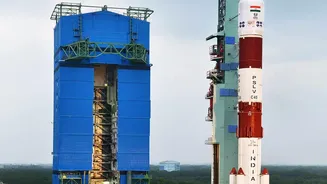
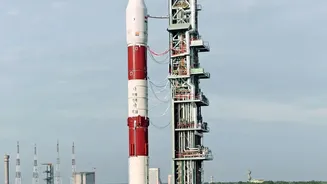
For decades, the story of India in space was the story of the Indian Space Research Organisation (ISRO). Now, a new cast of characters is joining the narrative. Startups like Skyroot Aerospace, Agnikul Cosmos, and Pixxel are making headlines and history.
The number of private space startups has skyrocketed from just a handful in the previous decade to over 400 today. These companies are not just designing concepts on paper; they are achieving significant milestones. Skyroot Aerospace, for instance, became the first Indian private company to successfully launch a rocket into orbit in July 2026 with its Vikram-1 vehicle. Others, like Agnikul Cosmos, have successfully tested innovative technologies like the world's first single-piece 3D-printed rocket engine. This surge in private activity is injecting dynamism into the sector, building everything from launch vehicles to satellite constellations and propulsion systems.
The Government's Enabling Role
This private-sector boom is no accident. It is the result of deliberate policy shifts by the Indian government, most notably the Indian Space Policy of 2023. This policy was designed to liberalise the space sector and encourage private participation. A key part of this new architecture is the Indian National Space Promotion and Authorisation Centre (IN-SPACe). Think of IN-SPACe as a single-window agency that promotes, guides, and authorises the activities of these private players, ensuring a level playing field. It facilitates access to ISRO's world-class facilities and expertise, which would be incredibly expensive for startups to build from scratch. This framework, which also includes the commercial arm NSIL (NewSpace India Limited), aims to grow India's share of the global space economy from its current 2-3% to a much larger slice of the multi-billion dollar pie.
ISRO's Evolving Mission
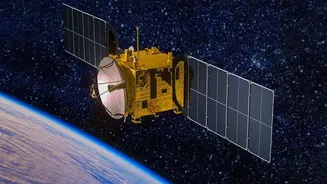
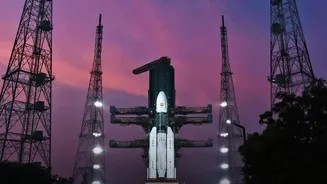
With private companies stepping up to handle more routine tasks like building and launching commercial satellites, ISRO is not becoming obsolete. On the contrary, it is being freed up to focus on what it does best: pioneering advanced research and executing complex, high-stakes national missions. In a recent clarification, ISRO stated it will neither be privatised nor will its importance be diminished. Instead, its role is evolving. The agency will concentrate on frontier technologies, deep-space exploration, and strategic capabilities. This includes ambitious projects like the Gaganyaan human spaceflight programme, which aims to send Indian astronauts into orbit; the Venus Orbiter Mission; and a lunar sample-return mission, Chandrayaan-4. By handing over mature technologies to the private sector, ISRO can dedicate its scientific talent to pushing the boundaries of what's possible.
A Symbiotic Future in Orbit
The relationship between ISRO and the new space startups is not one of competition, but of collaboration. ISRO Chairman V Narayanan has emphasised that the success of India's space program has always been due to partnerships. The growing demand for space-based services, requiring hundreds of satellites, cannot be met by ISRO alone. Private companies will manufacture and operate launch vehicles and satellites on a commercial scale, while ISRO provides the foundational research, technical guidance, and critical infrastructure. This creates a powerful synergy. The private sector brings in new investment and agility, helping to scale up production and compete globally. ISRO, in turn, acts as the anchor of this expanding ecosystem, ensuring India remains at the forefront of space science and exploration. The model is designed for capability multiplication, where the whole becomes far greater than the sum of its parts.