





A Feast for the Eyes
Before you ever taste it, you see it. Indian street food is a kaleidoscope of vibrant colours that seem tailor-made for high-definition screens. The fiery reds of chilli, the bright yellow of turmeric in a batter, the fresh green of coriander, and the deep
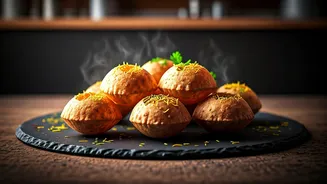
purples of beetroot create a stunning palette. [2] This visual appeal is not accidental; colour has long been an integral part of Indian culinary tradition, signifying freshness, flavour, and festivity. [2] Dishes like Dahi Puri, with its colourful layers of yoghurt, tamarind chutney, and sev, or a perfectly golden-brown samosa are inherently photogenic. [18] This rich visual tapestry makes the food incredibly shareable, encouraging likes, comments, and a global curiosity that turns a local snack into an international sensation. [8]
The Theatre of Preparation
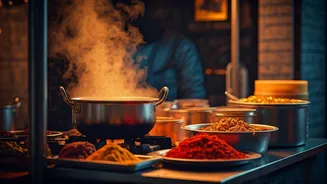
What truly sets Indian street food apart in the video world is the performance. The vendor is not just a cook; they are a performer, and the stall is their stage. [19] There’s a rhythm and a practised flair in their movements—the rapid-fire chopping of onions, the artful flip of a dosa, the percussive sound of a pav bhaji masher on a hot tawa. [3] Food vloggers have capitalized on this, documenting the entire process from raw ingredients to finished product. [5] These actions create a narrative that is both hypnotic and deeply engaging. Viewers are drawn into the skill and speed, watching a master at work. [21] This transformation, happening right before your eyes, is compelling content that keeps people watching and sharing.
An ASMR-Friendly Symphony
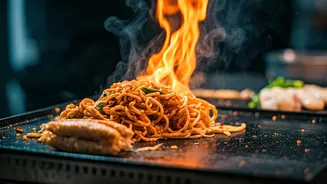
Beyond the visuals, the sounds of Indian street food are a core part of its video appeal. The sizzle of oil, the sharp crunch of a puri breaking, the slosh of pani being poured—these are the sounds that create an Autonomous Sensory Meridian Response (ASMR) experience for many viewers. [7] Food-related ASMR and mukbang videos, where creators eat large quantities of food while emphasizing the sounds, are a massive genre online. [11, 13, 14] The distinct textures of Indian street food, from the crispy sev to the soft vada, provide a rich auditory landscape that can be incredibly satisfying and trigger what is known as "food noise"—the constant thoughts about food in our brains. [15] This multi-sensory experience makes the viewer feel closer to the action, almost as if they can taste the food themselves.
Authenticity and the Human Story
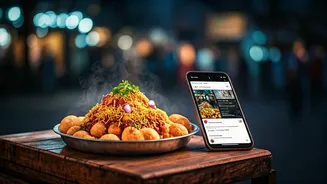
In a world of polished, often impersonal, content, the rawness of the Indian street food scene offers a dose of authenticity that viewers crave. Videos often feature not just the food, but the vendor's story, the bustling energy of the market, and the generations of tradition behind a single recipe. [24] These are often small, family-run businesses, and social media has become a powerful, low-cost marketing tool, levelling the playing field and allowing them to reach a massive audience. [4, 20] A single viral video can transform a vendor's livelihood. [4] This human element—the story of hard work, tradition, and community—resonates deeply with audiences, creating an emotional connection that goes beyond just the food. It’s a taste of culture, history, and the vibrant, everyday life of India. [27]