






A Major Push into Higher Education
Microsoft is deepening its roots in India’s academic landscape through strategic partnerships with higher education institutions. A recent notable collaboration is with Manipal Academy of Higher Education (MAHE), where Microsoft is set to establish five
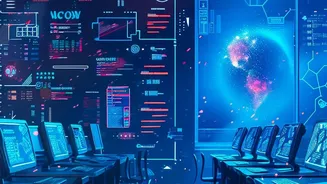
dedicated AI labs across its campuses in Manipal and Bengaluru. These labs will be integrated into management, commerce, economics, and law schools, signaling a push to embed AI skills beyond traditional engineering streams. This initiative is part of a broader, long-term strategy. The company has a history of launching such labs, having previously partnered with institutes like BITS Pilani and SRM University back in 2019 to create similar innovation hubs. These labs serve as dedicated centers providing students and faculty with hands-on access to cutting-edge technology, including Microsoft's cloud platform Azure, AI services, and developer support tools.
The Strategic 'Why' for Microsoft
Microsoft's expansion of campus labs is driven by a clear-eyed business strategy. According to a recent Microsoft Work Trend Index, a staggering 90% of Indian leaders believe new hires will need AI-related skills. By embedding its technology directly into the curriculum, Microsoft is cultivating a future workforce that is not only AI-proficient but also fluent in its own ecosystem of tools like Azure AI and Microsoft Copilot. This creates a direct talent pipeline for Microsoft and its vast network of partners and customers. Puneet Chandok, President of Microsoft India and South Asia, has emphasized that such partnerships are critical to unlocking the potential of India's young talent to shape the next wave of AI innovation. This isn't just about corporate social responsibility; it's a forward-thinking investment in market dominance and relevance in one of the world's fastest-growing digital economies.
Aligning with India's National AI Mission
This corporate initiative aligns perfectly with New Delhi's own ambitions. The Indian government launched the IndiaAI Mission in March 2024, a major public-private partnership aimed at propelling the nation's AI innovation ecosystem. The mission's goals include building computational capacity, fostering skills, financing startups, and ensuring the ethical deployment of AI. Microsoft's efforts directly support the 'FutureSkills' and 'Startup Financing' pillars of this national strategy. The company has committed to skilling millions of people in India in AI. These initiatives focus on reaching beyond major metropolitan areas to Tier 2 and Tier 3 cities, which helps democratize access to high-tech skills and aligns with the government's vision of inclusive growth. By partnering with universities, Microsoft is helping to build the skilled human capital necessary for India to achieve its goal of becoming a global AI leader.
The Advantage for Students and Faculty
For students, the benefits are tangible and immediate. Instead of learning AI concepts in theory, they get hands-on experience with the same tools used by professionals in the field. The labs at institutions like MAHE are designed to be platforms for experiential learning, experimentation, and interdisciplinary research. This approach helps bridge the often-cited gap between academic knowledge and industry requirements. Students gain a competitive edge in the job market, where 78% of Indian workers feel they currently lack the right AI capabilities for their work. Faculty members also benefit from access to updated curriculum, training, and the infrastructure to conduct advanced research. This industry-academia collaboration ensures that educational content remains relevant and aligned with the rapid evolution of AI technology, preparing graduates for the 21st-century workforce.
Building a Foundation for the Future
Microsoft's campus lab expansion is about more than just education; it's about building the entire foundation of India's AI-driven economy. The company's massive investments in cloud infrastructure, including a new hyperscale data center region planned for Hyderabad, provide the necessary backbone for these AI initiatives to function at scale. By combining infrastructure investment with widespread skilling programs that reach from K-12 schools to universities and vocational centers, Microsoft is creating a comprehensive ecosystem. This strategy aims to ensure that as AI reshapes every industry—from healthcare and finance to law and agriculture—India has both the technological power and the human talent to not just participate, but to lead. The campus labs are a critical piece of this puzzle, serving as the frontline where the next generation of innovators takes their first steps.