

Rethink Your Watering Strategy
The monsoon might seem like a natural irrigation system, but erratic rainfall—too much one week, too little the next—requires a thoughtful approach. Overwatering is a major risk during the rains. Before you water, check the soil; if the top two inches
are dry, it’s time. For potted plants, ensure every container has clear drainage holes to prevent waterlogging, which can lead to root rot. Conversely, during dry spells between rains, water deeply but less frequently to encourage strong, deep root systems that are more resilient to drought. Applying a layer of organic mulch, like straw or dried leaves, can help retain soil moisture during these dry periods and protect the soil from being washed away by heavy downpours.
Choose Plants That Defy the Extremes
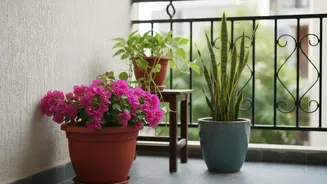
The single most important step towards a climate-suitable garden is selecting the right plants. Instead of struggling with species that require constant care, opt for those that are naturally equipped for India's varied and changing climates. For hot, sunny spots, drought-tolerant choices like Bougainvillea, Lantana, and Zinnia thrive with minimal fuss. Heat-resilient vegetables such as okra (bhindi), brinjal, and cluster beans (guar) are excellent choices for your kitchen garden. Native plants are often the best bet, as they are already adapted to local conditions. Consider adding hardy, fragrant flowers like marigold and jasmine, or useful herbs like tulsi and curry leaf, which handle humidity well.
Build a Foundation of Healthy Soil
Climate-resilient gardening starts from the ground up. Healthy soil acts as a buffer against extreme weather. Before planting, enrich your soil with compost or vermicompost to improve both its fertility and structure. Good soil can absorb heavy rain without becoming waterlogged and retain moisture longer during dry spells. For container gardens, using a well-draining potting mix that contains materials like cocopeat and sand is crucial. If you have garden beds, consider creating raised beds, which should be about six to twelve inches high to ensure excellent drainage and protect plant roots from sitting in water during heavy monsoon showers. Loosening the top layer of soil can also prevent it from becoming compacted by rain.
Proactive Pest and Disease Management
High humidity during August creates a perfect breeding ground for fungal diseases and pests. A climate-adapted approach focuses on prevention rather than reaction. Ensure good air circulation around your plants by not overcrowding them. Regularly prune away any yellowing, dead, or diseased leaves to prevent problems from spreading. Inspect your plants weekly, especially the undersides of leaves, for common monsoon-related issues like mealybugs, aphids, and fungal spots. Choosing disease-resistant varieties of plants, particularly for vegetables like tomatoes, can significantly reduce the need for intervention. Avoid spraying chemicals indiscriminately; a healthy garden ecosystem often keeps pests in check naturally.
Smart Pruning and Support
August is an excellent time for pruning, but the goal should be resilience, not just tidiness. Removing faded flowers from plants like hibiscus and roses encourages new, healthy growth. Strong winds and heavy rain can easily damage plants with weak stems. For taller plants or vines like tomatoes and beans, providing sturdy support with stakes or trellises is essential to keep them from breaking and to lift fruit and foliage off the wet ground, reducing the risk of rot. Young trees planted during the monsoon should be securely staked to help them establish strong root systems that can withstand future storms.