








The Lure of the 'Self-Transfer' Deal
Many of the cheapest flight options found on booking sites are known as "self-transfer" or "unprotected" connections. This means you are booking two or more separate flights that are not part of a single itinerary with one airline. While the price is attractive,
the risk is entirely yours. If your first flight is delayed and you miss the second, the airline has no obligation to rebook you. More importantly, these connections often require you to physically enter the transit country, even if for a short time, which is where visa problems begin.
Understanding the Transit Visa Trap
A transit visa is a temporary permit allowing you to pass through a country en route to your final destination. The critical distinction is between staying 'airside' versus going 'landside'. On a standard connecting flight booked with one airline, you usually remain in the international transit area (airside), and your bags are transferred for you. However, with a self-transfer, you often have to collect your checked luggage, pass through immigration (landside), check in for your next flight, and go through security again. The moment you pass through immigration to collect your bags, you have officially entered the country, and you may need a visa to do so legally.
Key Regions Indian Travellers Should Watch
For Indian passport holders, certain regions have historically required careful planning. The United Kingdom, for example, generally requires a transit visa even if you are not leaving the airport. There are exemptions, such as holding a valid visa for the USA, Canada, Australia, or New Zealand, but the rules are strict. The Schengen Area in Europe has also traditionally required airport transit visas for Indians in many of its member countries. However, recent changes in 2026 have seen France, Germany, and Spain remove this requirement for Indians who remain in the international transit zone. Despite these positive changes, if your self-transfer requires you to exit the transit area to re-check a bag, you would still need a full Schengen visa. The United States also requires most travellers, including Indians, to have a C-1 transit visa to pass through, even without leaving the airport.
The High Cost of Getting It Wrong
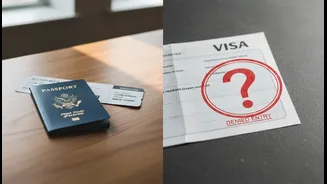
Assuming you don't need a transit visa when you actually do can have disastrous consequences. The most common outcome is being denied boarding by the airline at your point of origin. Airlines are fined heavily for transporting passengers with improper documentation and will rigorously check your visas for all points on your journey. If you manage to fly, you could be detained by immigration authorities at the transit airport and deported back to your starting point at your own expense. In either scenario, you will likely lose the entire cost of your flight tickets and have your travel plans ruined.
Your Pre-Booking Travel Checklist
To avoid a travel nightmare, follow these steps before booking any flight with a connection: 1. Identify the Connection Type: Is it a single booking with one airline or a self-transfer with separate tickets? Look for terms like "self-transfer" or "unprotected layover." 2. Check Your Baggage Plan: Are you travelling with only a carry-on, or will you have checked luggage? Having to re-check bags is a major reason for needing to enter the transit country. 3. Verify Transit Country Visa Rules: Check the official embassy or consulate website of the transit country for its specific visa requirements for Indian citizens. Do not rely on forum posts or second-hand information. 4. Confirm Terminal and Airport Changes: Does your connection require you to change terminals or, in some cases, entire airports? If so, you will definitely need to formally enter the country. 5. Allow Ample Time: Self-transfers require much more time than protected connections. Factor in potential delays, baggage claim, immigration lines, and re-checking in. A layover of less than four hours can be extremely risky.