




The Heart of the Mission
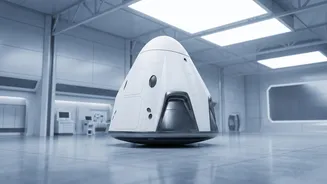
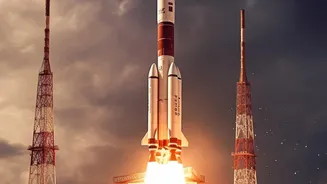
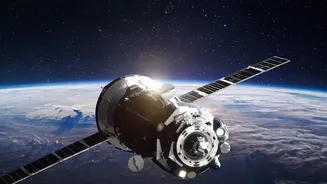
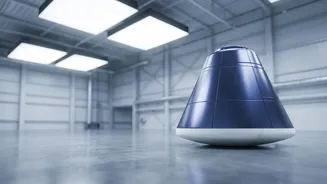
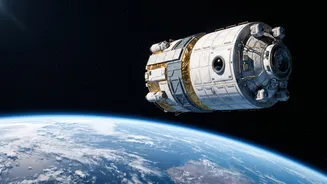
The Gaganyaan programme is India's prestigious endeavor to send astronauts into a 400 km orbit for a three-day mission and bring them back safely. At the core of this human spaceflight is the Crew Module, a sophisticated capsule that will serve as the living
and working quarters for the astronauts. It is designed to be a self-sufficient spacecraft, equipped with life support systems, navigation, and communication technology. However, its most critical function is to protect its occupants from the harsh environment of space and the fiery ordeal of re-entering Earth's atmosphere.
A Gauntlet of Safety Checks
Before Indian astronauts, or 'Vyomanauts', can fly, every system must be proven flawless. ISRO has been conducting a battery of tests to validate the Crew Module's integrity under extreme conditions. Recently, several key qualification tests were successfully completed, marking a major step forward. These trials are not just about checking boxes; they simulate the most dangerous phases of the mission to ensure the systems designed to save lives work perfectly when it counts the most. The successful test of the Crew Escape System, for instance, demonstrated its ability to pull the crew module away from the rocket in case of an emergency during launch.
Mastering the Splashdown
A safe return is as important as a successful launch. The Gaganyaan module is designed to splash down in the ocean. To ensure astronaut safety during this final phase, ISRO has conducted several crucial tests. The Crew Module Up-righting System (CMUS) uses gas-inflated floats to ensure the capsule turns upright automatically after landing in the sea, which is vital for a quick and safe recovery. This prevents a situation where the capsule is inverted, which could be dangerous for the crew inside. These tests confirm the reliability of the recovery sequence.
The Parachute Perfection
Slowing a capsule hurtling towards Earth from orbital speeds is a monumental task. The Gaganyaan module relies on a complex sequence of 10 parachutes to decelerate from supersonic speeds to a gentle splashdown velocity. ISRO has been rigorously testing this multi-stage parachute system through a series of integrated airdrop tests. In these tests, a simulated module is dropped from an aircraft to verify the deployment sequence and strength of the drogue and main parachutes. Successful completion of these tests provides crucial confidence in the system that represents the final line of defense for the returning astronauts.
The Road Ahead
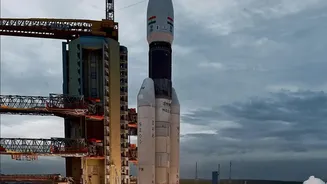
With these critical tests advancing, ISRO is systematically de-risking the mission. Progress has also been made on the Crew Escape System, with several successful motor tests. The plan involves a series of uncrewed test flights before the first crewed mission. The first uncrewed flight, designated G1, is a crucial step to validate the performance of all systems in an actual space environment and is anticipated for the latter half of 2026. Each successful test brings India closer to joining the elite group of nations capable of independent human spaceflight, with the crewed mission targeted for 2027.