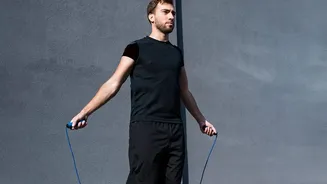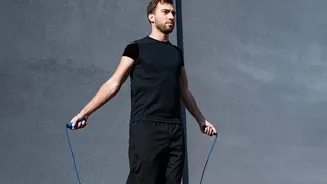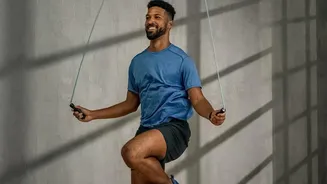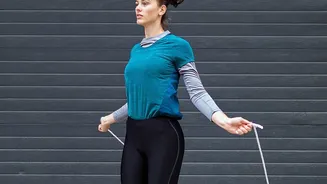






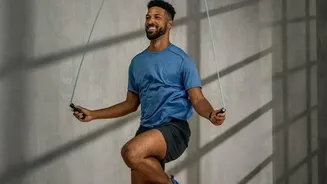
The humble jump rope is more than a playground toy or a boxer's warm-up tool. It's a powerful device for rewiring your brain-body connection. But how exactly does this simple rope translate into superior coordination for everyday life and sport?
More Than Just Fast Feet
When we
think of coordination, we often picture fancy footwork or the steady hand of an artist. But in fitness, coordination is a deeper concept. It is the ability of your nervous system to get different parts of your body to work together smoothly and efficiently. Jumping rope is a masterclass in this skill. It’s not just about hopping over a rope; it's a precise, rhythmic activity that requires your hands, wrists, feet, and eyes to all communicate and act in perfect synchrony. Every single rotation of the rope provides immediate feedback—if your timing is off, you trip. This constant feedback loop forces your body to learn and adapt, making it one of the most effective coordination trainers available.
The Neurological Dance
The magic of jump rope happens in the brain. The exercise involves learning and repeating new motor patterns, which strengthens the neural pathways connecting your brain to your muscles. This process improves what's called neuromuscular adaptation. Think of it as upgrading the communication lines between your brain and body, allowing for faster and more precise signals. This is why skipping regularly can improve cognitive function. Your brain learns to anticipate the rope's path, your wrists learn to control its speed with small, efficient movements, and your legs learn the exact timing and force needed to clear it. This trains your body to become more automatic and reactive, improving reflexes and agility.
Rhythm Is the Foundation
At its core, jumping rope is a rhythmic exercise. You establish a steady cadence and maintain it. This rhythm isn't just for show; it's fundamental to building coordination. It teaches your body to maintain a consistent pattern even as you increase speed or introduce more complex movements. Studies on young athletes have shown that incorporating jump rope training can significantly improve motor coordination and balance, partly due to this enhancement of rhythm and inter-limb coordination. The continuous, cyclical nature of skipping helps stimulate both hemispheres of the brain, promoting better neural connections that are vital for concentration and learning.
Progressing Beyond the Basic Jump
Once you master the basic two-foot jump, a whole world of coordination challenges opens up. Drills like alternating feet (running in place), high knees, and boxer steps force each side of your body to work independently while maintaining the overall rhythm. Moving on to more advanced skills like the criss-cross or double-unders demands even faster wrist turnover and tighter timing. Single-leg jumps are a fantastic way to challenge your balance and stability on a whole new level. Each new skill you learn creates new neural connections, making your brain more adaptable. This progression is key; it ensures you are continuously challenging your coordination rather than letting your body go on autopilot.
Putting It All Into Practice
To reap the coordination benefits, treat the jump rope as a skill building tool, not just a cardio machine. Start slow and focus on form. Keep your jumps low, just enough to clear the rope, and rotate the rope using your wrists, not your whole arms. Begin with short sessions, perhaps a few sets of 15–30 seconds, and focus on achieving a consistent rhythm without tripping. As you get comfortable, you can start introducing new footwork patterns. The goal isn't just to get tired; it's to get smoother, more efficient, and more in control of your movements with every session.