






The modern urban workday is a marathon of sitting. While you focus on deadlines, your office chair might be silently setting your knees up for long-term trouble. The aches you dismiss today could be signs of a deeper issue linked to your desk setup.
The Real Culprit: Prolonged Inactivity
Before
we blame the chair, let's look at the real problem: prolonged sitting. The human body is designed for movement. When you stay seated for hours, a cascade of negative effects begins. Your chair isn't actively harming your knees, but it is the enabler of a static posture that weakens key muscle groups. This inactivity, more than any single piece of furniture, is the primary driver behind many of the aches and pains office workers experience. The chair's role is in how it supports—or fails to support—your body during these long periods of inactivity, making a bad situation worse.
How Your Chair Creates Muscle Imbalances
A poorly adjusted chair forces your body into an unnatural position, creating a harmful chain reaction. When your chair is too low, your knees are bent at a sharp angle, putting stress on the joint. If the seat is too deep, it may encourage you to slouch, tilting your pelvis and effectively 'switching off' your glute muscles. Over time, this leads to classic office worker posture: tight hip flexors and hamstrings, combined with weak, inactive glutes. Your body's support system becomes compromised, and your knees are forced to bear the brunt of this imbalance with every step you take.
The Knee: Caught in the Middle
Your knee joint is a hinge that relies on the muscles above and below it for stability. When your glutes (the powerful muscles in your buttocks) are weak, they can't effectively control the movement of your femur (thigh bone). To compensate, your body relies more heavily on the quadriceps muscles at the front of your thigh. This over-reliance can create excessive pulling and pressure on your patella, or kneecap, leading to anterior knee pain. This condition, often felt as a dull ache behind or around the kneecap, is one of the most common complaints among desk-bound professionals and is a direct consequence of the muscle imbalances that start in your chair.
Perform a 2-Minute Ergonomic Audit
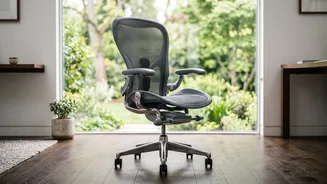
You can dramatically reduce the strain on your body with a few simple adjustments. First, set your chair height so your feet are flat on the floor and your knees are at a roughly 90-degree angle, level with or slightly below your hips. Second, ensure you can fit two to three fingers between the back of your knees and the edge of the seat; this prevents pressure on nerves and blood vessels. Third, adjust your lumbar support to fit the natural curve of your lower back, which helps maintain a healthy pelvic position. This simple audit encourages a neutral posture that distributes weight evenly and keeps the right muscles engaged.
Your Best Posture Is Your Next Posture
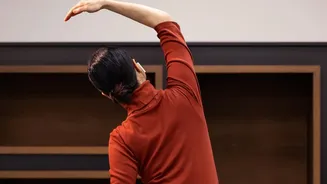
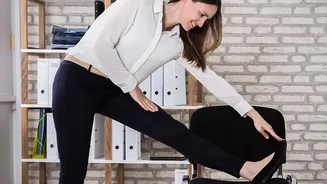
Even the most perfect ergonomic setup cannot defeat the negative effects of staying static. The single most effective strategy for protecting your knees and overall health is to break up your sitting time. Set a timer to stand up, stretch, and walk around for a few minutes every hour. Simple office-friendly exercises, like hamstring stretches, hip flexor lunges, and bodyweight squats, can help counteract muscle tightness and reactivate your dormant glutes. Think of it not as interrupting your work, but as a necessary investment in your long-term mobility and comfort.