





What Exactly Was Tested?
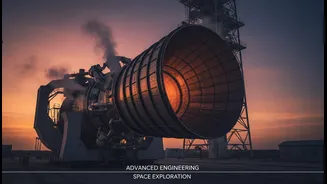
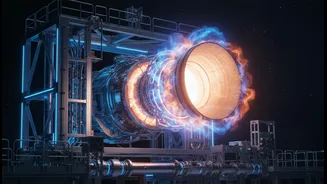
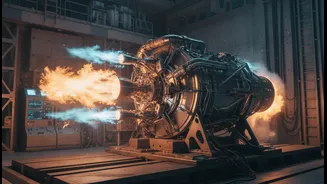
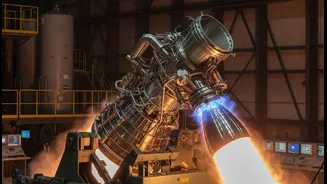
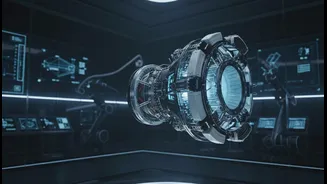
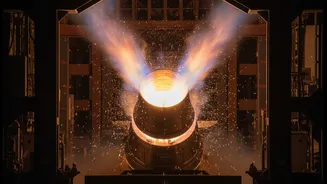
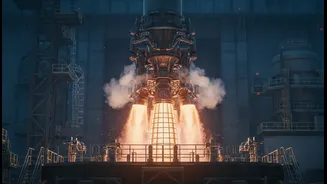
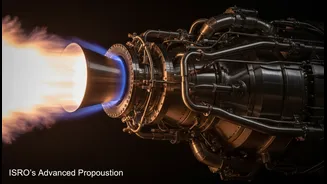
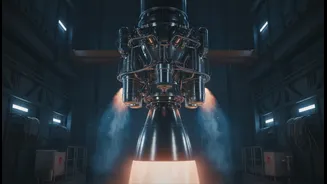
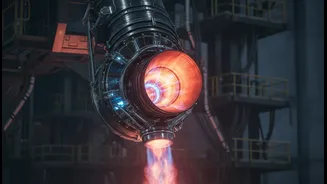
ISRO conducted a 'hot test' on what is called the Power-Head Test Article (PHTA) at its Propulsion Complex in Mahendragiri, Tamil Nadu. Think of the power-head as the heart of a liquid-fuel rocket engine. It consists of the complex system of turbopumps,
valves, and a pre-burner that force the fuel and oxidiser into the main combustion chamber at immense pressures. This test fired the power-head assembly, running it at a massive 175-tonne thrust level, which is 88% of its full designed capacity. The trial was the eighth in a series, with previous tests reaching lower thrust levels. This successful demonstration at near-full power, without the final thrust chamber attached, proves the core machinery can handle the extreme stresses of operation.
The SCE-2000: A New Class of Power
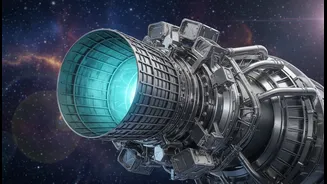
This power-head is for the SE-2000, a 2000-kilonewton class semi-cryogenic engine that represents a major leap for India. Unlike fully cryogenic engines that use super-cooled liquid hydrogen and liquid oxygen, a semi-cryogenic engine uses liquid oxygen as the oxidiser but employs refined kerosene as its fuel. This has several advantages. Kerosene is denser and can be stored at normal temperatures, which makes the engine systems less complex and cheaper to operate compared to handling two cryogenic fluids. This design allows for a powerful, high-thrust engine that is more efficient and practical for the booster stages of heavy-lift rockets. The goal is to create an engine capable of producing 200 tonnes of thrust to power the next generation of India's launch vehicles.
Why This Milestone Is a Game-Changer
The successful test is crucial for ISRO's future roadmap. This powerful semi-cryogenic engine is being developed to replace the current L110 liquid core stage of the Launch Vehicle Mark-3 (LVM3), India's heaviest rocket. This upgrade, known as the SC120 stage, will significantly increase the LVM3's payload capacity, allowing it to carry much heavier satellites into orbit. Experts estimate it could boost the LVM3's capacity to Geostationary Transfer Orbit (GTO) from 4 tonnes to over 5 tonnes. This capability is vital not only for launching heavier communication satellites and competing in the global commercial launch market but also for more ambitious missions, including future phases of the Gaganyaan human spaceflight program and the development of a reusable Next Generation Launch Vehicle (NGLV).
The Road Ahead: The Need for Careful Planning
While a massive achievement, this hot test is one step in a long and complex journey. The 'careful planning' comes now, as ISRO moves from testing a key component to building and qualifying a fully integrated, flight-ready engine. The next major milestone will be to integrate this proven power-head with the thrust chamber and conduct a full-engine hot test at its rated 200-tonne thrust level. After that comes a battery of qualification tests to prove its reliability over and over again. As ISRO Chairman V Narayanan has noted, human-rating a vehicle for the Gaganyaan program is an incredibly technology-intensive process that requires multiple uncrewed test flights before astronauts can fly. Every component, especially the engine, must be proven to be robust and reliable. This methodical, step-by-step validation is what separates a successful component test from a rocket ready for a mission.
The Big Picture for India's Space Program
Mastering semi-cryogenic technology is about more than just one engine; it's about strategic capability. It gives India the power to place heavier payloads in orbit independently, reducing reliance on foreign launch providers. This technology is a cornerstone for the proposed Next Generation Launch Vehicle (NGLV), which is envisioned as a reusable system to make space access more affordable. With a more powerful and efficient launch fleet, ISRO can undertake more complex deep-space science missions, build its planned Bharatiya Antariksh Station by 2035, and pursue long-term goals like a crewed lunar landing. This single engine test, therefore, is a critical enabler for the next several decades of India's space exploration, underpinning ambitions for greater commercial, scientific, and strategic reach in the final frontier.