







The Age-Old Foundation Frustration
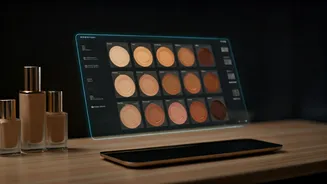
For decades, finding the right foundation shade has been a frustrating process. Consumers have had to rely on swatching products on their hands under harsh department store lighting, only to discover the colour oxidizes and changes minutes later. This
trial-and-error method is not just inconvenient; it's also costly. For brands, it leads to a high volume of product returns. For shoppers, especially those with skin tones that fall outside of historically narrow shade ranges, it can be a deeply alienating experience. This challenge is particularly pronounced for individuals with complex undertones—the subtle warm, cool, neutral, or olive hues beneath the skin's surface—which are often missed by traditional matching methods and limited product lines.
How AI Delivers a Perfect Match
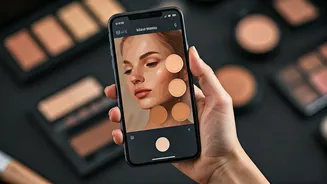
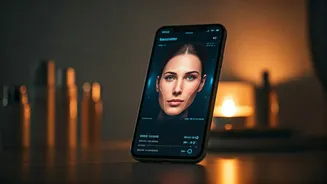
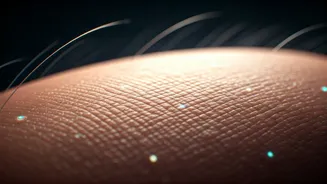
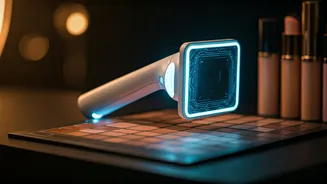
Artificial intelligence is revolutionizing shade matching by replacing subjective guesswork with data-driven precision. Using a smartphone's camera, AI-powered tools analyze a person's skin. These advanced computer vision algorithms, trained on massive datasets of diverse skin tones, assess not just the surface colour but also the subtle undertones. Some technologies even use a technique called spectroscopy, which involves capturing a sequence of images under different lighting conditions to get a hyper-accurate reading of the skin's unique color signature. The result is a scientifically precise recommendation from a brand's product line, often achieving accuracy rates of over 90 percent. This process happens in seconds, offering a level of personalization previously unimaginable.
The Brands Leading the Tech-Powered Change
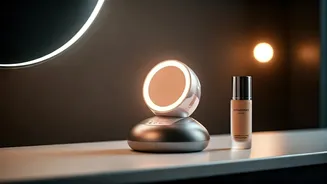
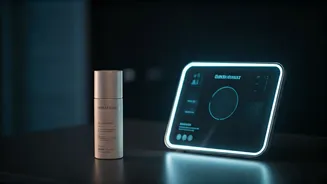
Several beauty companies are at the forefront of this technological shift. Online brand Il Makiage built its direct-to-consumer empire on its PowerMatch quiz, which uses machine learning to find a customer's shade without ever seeing their face. Retail giant Sephora has updated its long-standing Color iQ service with new AI technology that better accounts for saturation and undertone, making it more inclusive for BIPOC customers who have been underserved by past technologies. Other major players like L'Oréal, Clarins, and Mary Kay have also invested heavily, developing everything from in-store diagnostic tools to at-home smart devices like the 'Perso,' which can dispense a custom-blended formula daily based on skin analysis and even local environmental factors like humidity and UV index.
A More Inclusive and Personalized Future
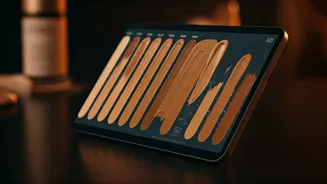
Beyond convenience, the biggest impact of AI in beauty is its potential to foster genuine inclusivity. For years, the industry has been criticized for its narrow definition of beauty, but technology is helping to dismantle those barriers. AI systems can analyze vast amounts of data to identify gaps in existing shade ranges, pushing brands to develop products for previously overlooked consumer groups. This is particularly significant for a diverse country like India, where a wide spectrum of complexions and undertones exists. By catering to the individual, AI helps ensure that everyone feels seen and valued, shifting the industry from mass production to mass personalization.
Is It Truly Foolproof?
While the technology is impressive, it's not without its limitations. The accuracy of a smartphone-based scan can be heavily influenced by ambient lighting. A recommendation taken in warm indoor light might differ from one taken in natural daylight. Furthermore, the effectiveness of any AI algorithm depends on the quality and diversity of the data it was trained on; a biased dataset can lead to biased results. For now, these tools are best seen as powerful assistants that significantly narrow down the options. They remove most of the frustrating guesswork, but the final choice may still benefit from a human touch and personal preference.