







The High Cost of Constant Connection
In today's fast-paced work culture, it's easy to believe that being productive means staying glued to your screen for hours on end. Lunch is often eaten at the desk, and the only time you get up is for another cup of coffee. This non-stop approach, however,
is counterproductive. Prolonged sitting and continuous mental exertion lead to a host of problems, including physical discomfort, mental fatigue, and a steady decline in focus. Research consistently shows that sedentary behaviour is linked to an increased risk of musculoskeletal issues, cardiovascular problems, and even mental health challenges like anxiety. Our brains are not designed for marathon focus sessions; they function in cycles of peak activity followed by necessary rest. Ignoring this natural rhythm doesn't make you a better worker—it just makes you a more exhausted one.
The Science of the Micro-Break
This is where the 'micro-break' comes in. A micro-break is a short, voluntary rest period, typically lasting anywhere from 30 seconds to five minutes. Unlike a full lunch break, these tiny pauses are taken frequently throughout the day to punctuate long periods of focused work. The goal isn't to disengage for a long time, but to give your mind and body a quick reset. Studies have shown that these brief interruptions can significantly boost energy levels, improve concentration, and reduce feelings of stress. One study found that regular micro-breaks could enhance focus by up to 40%. They work by preventing cognitive overload and breaking the monotony that causes your brain to become desensitised to a task, helping you return to your work with renewed attention.
It's Not Just Mental
The benefits of stepping away, even for a minute, extend far beyond your brain. A desk job often leads to physical strain—sore necks, stiff backs, and tired eyes are common complaints. Micro-breaks that involve movement help counteract the negative effects of a sedentary day. Simple activities like standing up, stretching, or taking a short walk can improve circulation, reactivate muscles, and reduce physical discomfort. This regular movement is crucial for long-term health, helping to mitigate some of the risks associated with a sedentary lifestyle. By integrating these small bursts of activity, you're not just clearing your head; you're also taking care of your body.
Five Easy Micro-Breaks to Try Today
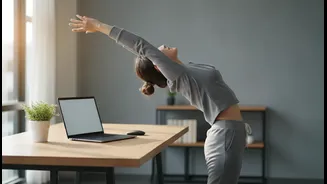
Adopting this habit doesn't require a major overhaul of your workday. It’s about finding small, repeatable actions. Here are five simple micro-breaks you can integrate immediately: 1. Practice the 20-20-20 Rule: To combat digital eye strain, every 20 minutes, look at something 20 feet away for 20 seconds. This simple exercise gives your eye muscles a much-needed rest. 2. Stand Up and Stretch: Set a timer to get up every hour. Roll your shoulders, stretch your neck, and reach for the sky. Even 60 seconds of movement can make a difference. 3. Take a Hydration Lap: Walk to the pantry or water cooler for a glass of water. It forces you to get up and move, and staying hydrated is essential for cognitive function. 4. Have a Mindful Moment: Close your eyes and take five deep breaths. Focus only on your breathing. This can help clear your mind, reduce stress, and bring you back to the present moment. 5. Use a Structured Method: Try the Pomodoro Technique. This involves working in focused 25-minute intervals separated by five-minute breaks. After four cycles, you take a longer break. It’s a proven method for maintaining high performance without burning out.