





The Soul of the Handmade
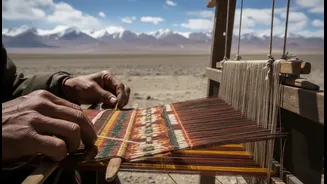
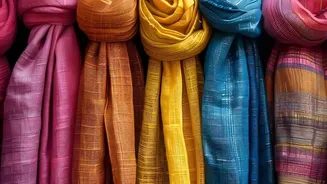
First, it’s essential to understand what handloom means. It is fabric woven on a loom operated manually, without electricity. A weaver, sometimes with their family, powers the entire process. This human involvement is precisely why no two handloom pieces
are ever perfectly identical. Unlike a power loom that produces flawless, uniform fabric at high speed, a handloom reflects the rhythm, tension, and subtle movements of the person who created it. Tiny, nearly imperceptible knots might show where a weaver paused or fixed a broken thread. These are not mistakes; they are the fingerprints of the craft, telling a story of skill, patience, and tradition. This inherent irregularity is the very soul of handloom, distinguishing it from mass-produced textiles.
Hallmarks of Authenticity (Not Flaws)
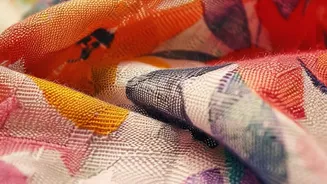
Many of the so-called 'imperfections' are actually desirable hallmarks of an authentic handwoven piece. When you run your hand across the fabric, you might feel small bumps or knots. These are often 'slubs'—thicker sections in the yarn that are a natural part of the spinning process, especially with fibres like cotton, linen, and some silks. They add a beautiful, organic texture to the fabric. Another sign is an uneven selvedge, which is the finished edge of the fabric. On a handloom, this edge is often slightly irregular because the weaver adjusts thread tension by hand. A machine-made selvedge, by contrast, is perfectly straight and uniform. You might also spot minor variations in motif sizes or symmetry; this is a natural outcome of a design being woven by hand rather than programmed into a machine.
How to Spot Poor Quality
While handloom celebrates minor variations, genuine defects compromise the fabric's integrity and beauty. These are different from the charming quirks of a handmade item. Watch out for significant shade variation, where patches or sections of the fabric are noticeably different in colour. This can point to improper dyeing. Another red flag is excessive or large snags and thread pulls that aren't just small knots but loops that can easily catch and unravel. While a handloom weave has a certain looseness that makes it breathable, large gaps or areas where the weave is noticeably thin and weak are signs of poor craftsmanship. Also, be wary of stains from dirt or machinery oil, which can sometimes occur during production but are a clear quality control failure.
Handloom vs. Power Loom: A Quick Guide
Telling a true handloom piece from a power loom imitation is a key skill for any buyer. The quickest test is to flip the fabric over. On a handloom piece, the back will often show the reverse of the woven pattern, with some loose threads or 'floats' between motifs. A power loom product often has a much tidier, flatter, or even blank reverse side. The texture is another giveaway. Handloom fabrics tend to feel softer, more breathable, and have a unique, slightly uneven hand-feel. Power loom fabrics often feel perfectly smooth, almost too uniform, and sometimes have a plastic-like consistency. Finally, if two pieces of the 'same' design are absolutely identical down to the last thread, they are almost certainly machine-made. True handloom always carries slight individual variations.
Your Pre-Purchase Checklist
When you're ready to buy, go in with a plan. First, feel the fabric—does it feel soft and breathable, with minor textural variations? Second, check the reverse side for signs of hand-weaving. Third, inspect the selvedges for slight irregularities. Fourth, look for the Handloom Mark, a Government of India certification that guarantees the product is genuinely handwoven. While not every authentic piece will have it, as the certification can be costly for small weavers, its presence is a strong sign of authenticity. Finally, consider the price. If a complex silk saree is priced at a 'too good to be true' level, it likely is. The cost of a handloom product reflects the immense time, skill, and effort invested by the artisan.