







From Dinner Table to Digital Report
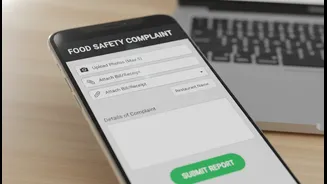
The Food Safety and Standards Authority of India (FSSAI) has launched the Food Safety Connect platform, a digital initiative encouraging consumers to report food safety violations. Available as a mobile app and web portal, it allows users to file complaints
about issues like unhygienic kitchens, adulterated products, expired goods, and misleading labels. Consumers can upload evidence such as photos and specify the location, turning their mobile phones into tools for public accountability. The goal, according to FSSAI, is to create a responsive ecosystem that leverages public participation to identify violations and enable timely regulatory action across restaurants, retailers, and online delivery platforms.
The Promise of Accountability
On the surface, the system is a significant step forward. It promises to build a comprehensive database of grievances, helping regulators spot trends and patterns that might indicate systemic problems. By asking consumers to be its "eyes on the ground," FSSAI aims to increase surveillance far beyond what its own inspectors can achieve. This digital-first approach aligns with a broader push to make regulation more transparent and efficient. In theory, a complaint lodged on the platform is forwarded to the relevant business operator or state food safety authority for resolution, creating a clear line of communication and a mechanism for tracking the complaint's status. This system has already been used to issue notices to major e-commerce and quick-commerce platforms based on consumer complaints.
The Verification Challenge
The first major question arises with evidence. While a photograph of a dirty kitchen or a visibly spoiled product is compelling, not all food safety issues are visible. Chemical contamination, microbial pathogens, or the presence of unlisted allergens cannot be captured in a photo. Furthermore, verifying the authenticity of a digital complaint is a hurdle. How can authorities confirm that a photo hasn't been manipulated or that the complaint isn't a malicious attempt to harm a competitor? The system relies heavily on the complaint being forwarded to the business operator first, but a simple refund often closes the loop without addressing the underlying safety concern, a loophole some consumers have pointed out.
From Complaint to Consequence
Lodging a complaint is one thing; ensuring it leads to effective enforcement is another. Critics of India's food safety framework point to systemic weaknesses in implementation, a lack of trained personnel, and under-resourced labs as major barriers. A former FSSAI CEO has noted that the focus must shift from simply measuring regulatory activity (like the number of inspections) to measuring outcomes, such as a reduction in violations and improved consumer confidence. FSSAI itself lacks the direct power to mandate recalls, often relying on voluntary action from manufacturers or inconsistent enforcement by state-level authorities. This raises a crucial question: even with a flood of digital complaints, does the system have the teeth to ensure violations are truly fixed?
An Uneven Playing Field?
The platform's accessibility also brings up concerns about equity. While it empowers urban, digitally literate consumers, it may inadvertently create challenges for small, unorganized food businesses, like street vendors, who may lack the resources or tech-savviness to navigate the system. FSSAI has made efforts to simplify registration for these vendors, but the threat of complaints remains. A barrage of negative reports, whether legitimate or not, could disproportionately harm a small vendor compared to a large corporation with a dedicated team for grievance redressal. Balancing consumer protection with the livelihoods of millions in the unorganized food sector is a delicate act.