



A Fortuitous First for Science
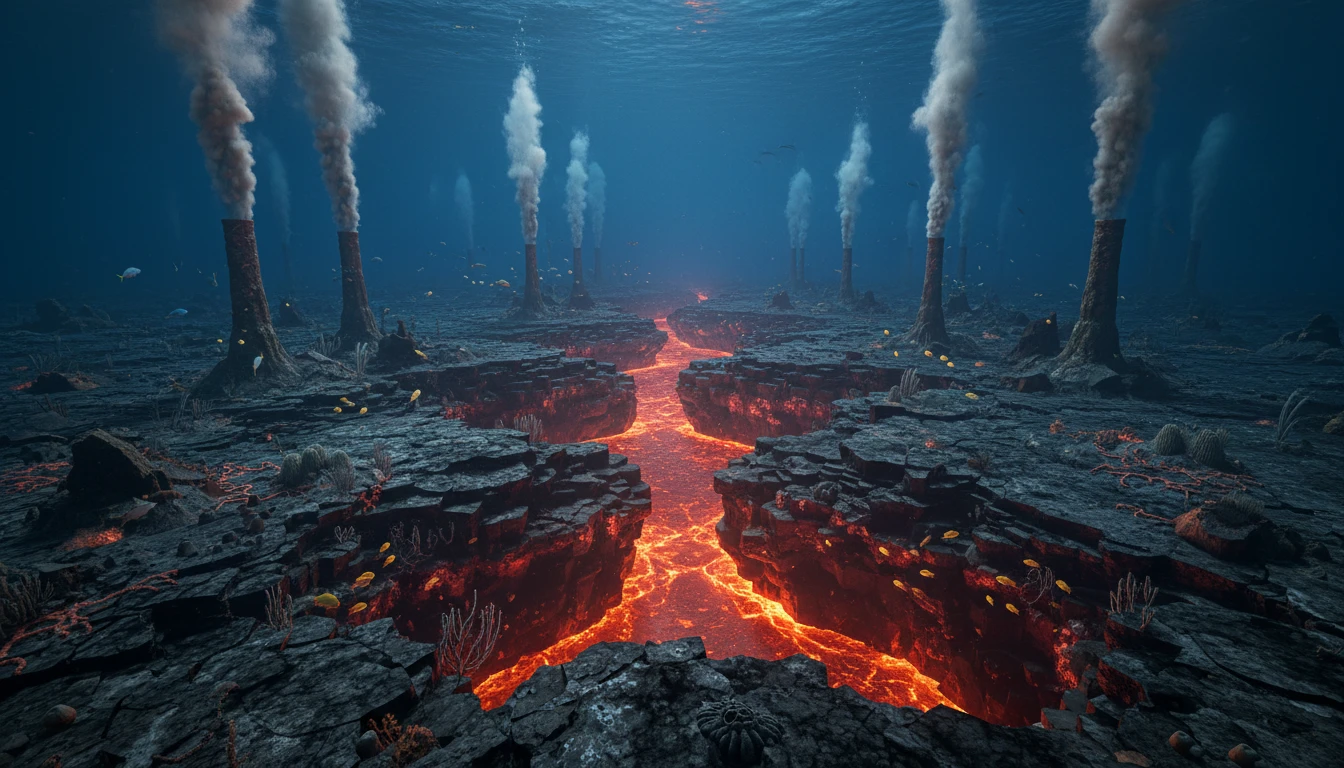
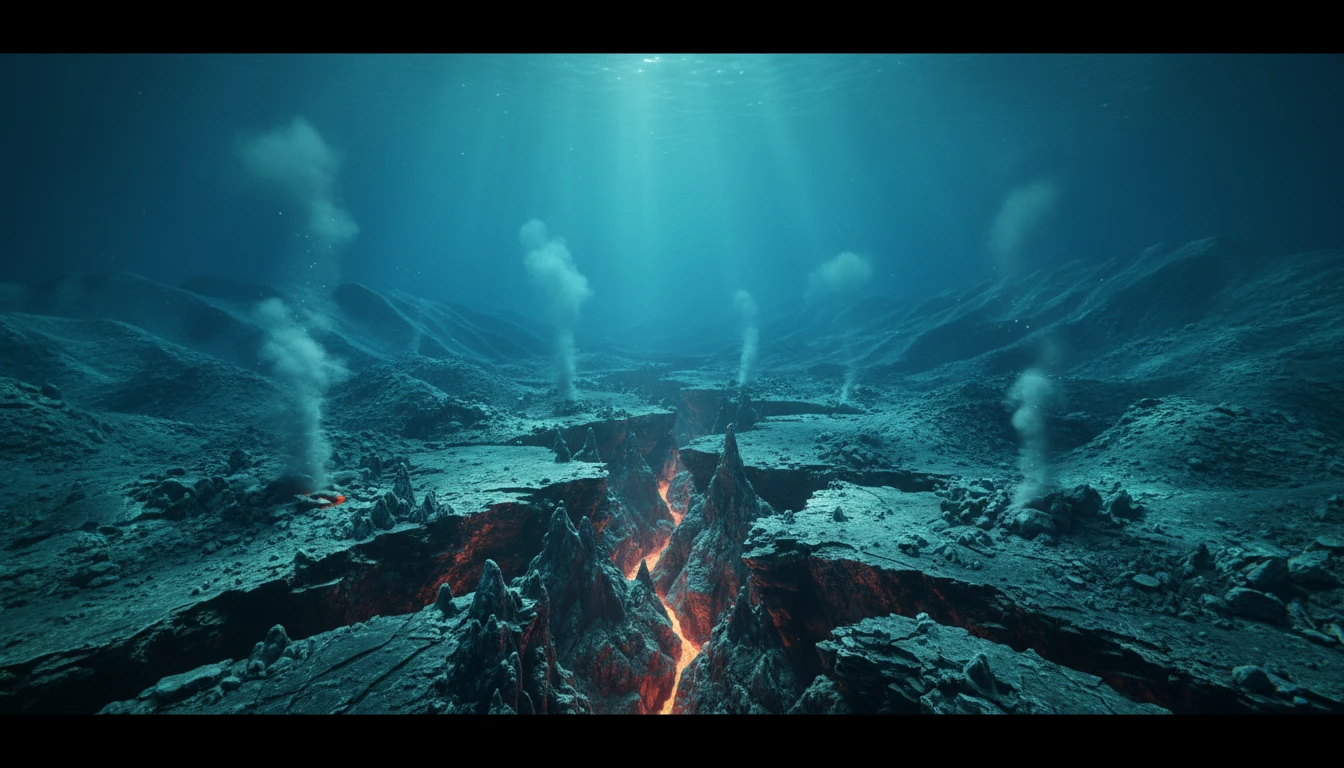
For the first time in history, scientists have captured a complete seafloor spreading event as it happened. In a remote part of the southern Indian Ocean, along a vast underwater mountain range known as the Southeast Indian Ridge, the ocean floor tore
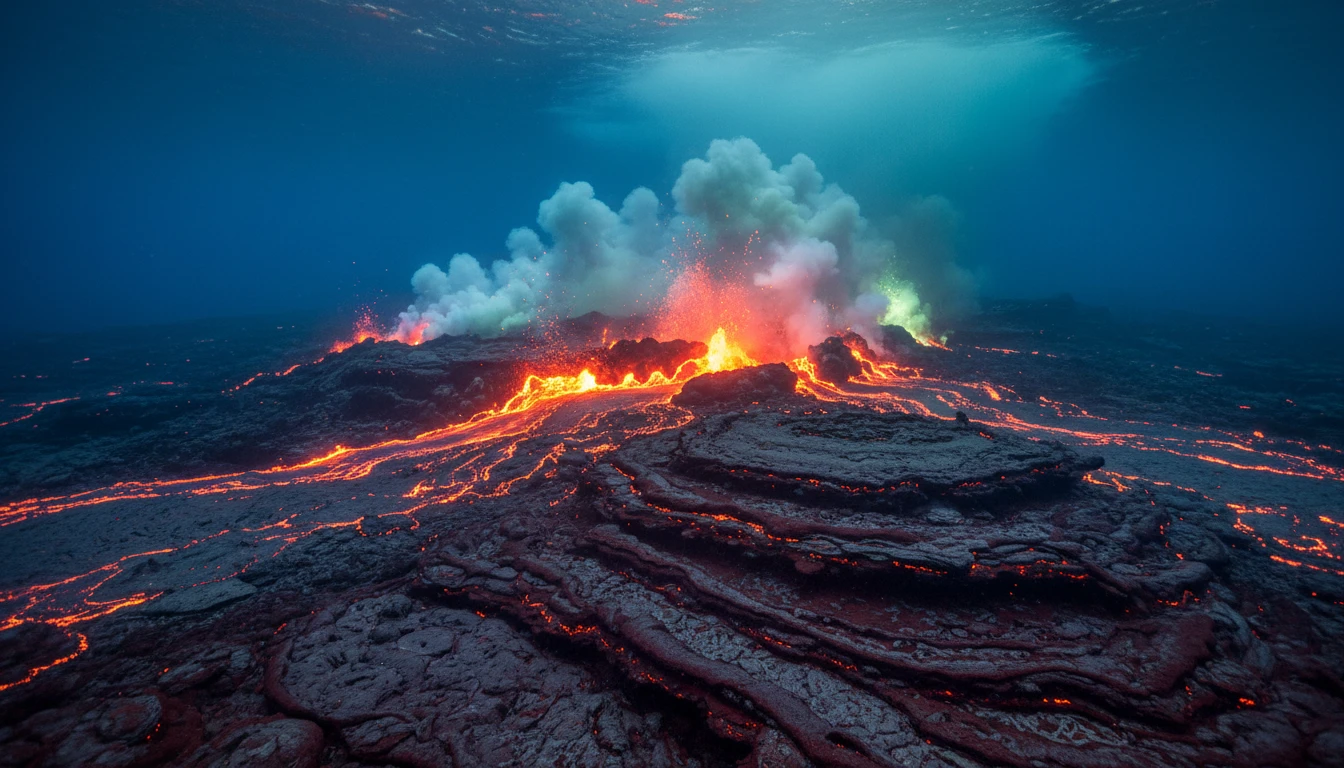
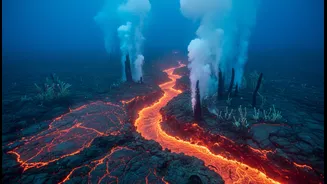
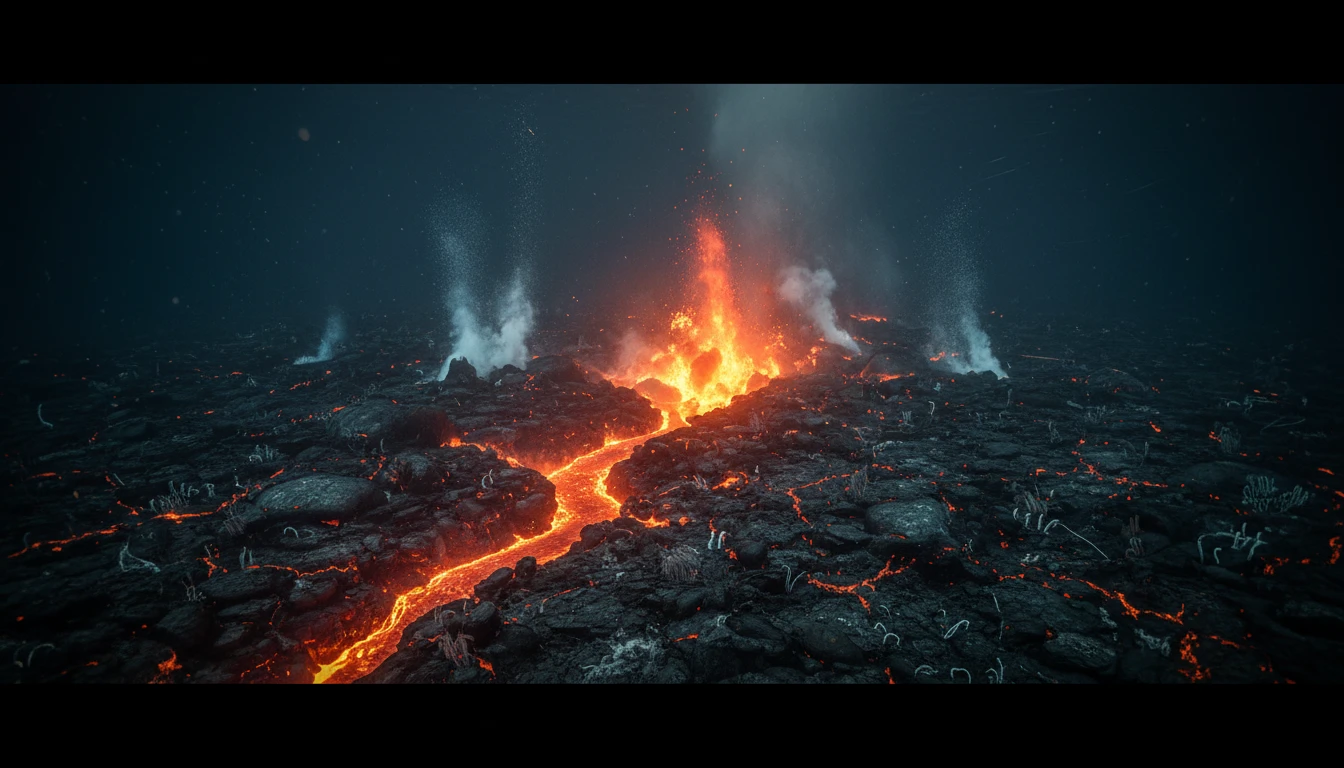
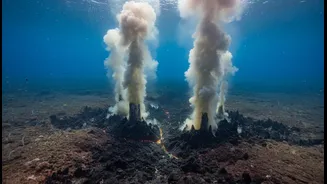
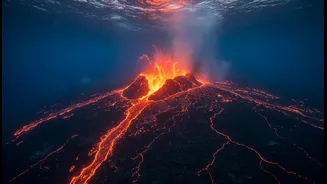
open. This remarkable occurrence began on April 26, 2024, when a network of sensitive instruments, deployed only two months prior by a French-led research team, detected a swarm of earthquakes. These tremors were the first sign that something dramatic was unfolding nearly four kilometres below the waves. Over the next 16 days, the Earth put on a spectacular, hidden show. Researchers watched, via their data feeds, as the ridge widened, the valley floor sank by up to four meters, and an immense volume of molten rock erupted to form new planetary crust.
Decoding Seafloor Spreading
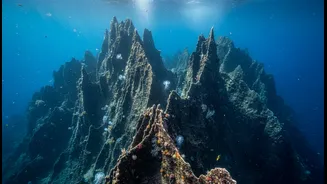
So, what exactly is seafloor spreading? Earth's outer shell isn't one solid piece; it's a puzzle of massive tectonic plates that are in constant, slow-motion transit. Mid-ocean ridges are the boundaries where these plates pull away from each other. As they separate, a gap is created, allowing hot, molten rock called magma from deep within the Earth's mantle to rise and fill the void. When this blistering magma meets the near-freezing seawater, it cools rapidly and solidifies, creating a brand-new section of ocean floor. This process, happening continuously for billions of years, is the engine that drives plate tectonics, shaping the continents and oceans as we know them. While the theory has been a cornerstone of geology for decades, this event marks the first time the entire sequence—from initial rift to final eruption—has been observed directly.
An Eruption of Epic Proportions
The scale of the event was immense. Scientists estimate that between 148 million and 160 million cubic metres of lava poured onto the ocean floor. This is enough material to fill approximately 64,000 Olympic-sized swimming pools. The eruption created extensive new lava flows, with some deposits measuring over 90 metres thick and stretching for kilometres. The team was able to track the eruption by listening for distinctive acoustic signals generated as the hot lava interacted with the cold seawater. The seabed itself widened by more than two metres in a matter of days—a geological shift that would normally take around 38 years to occur at the typical spreading rate for this ridge.
Rewriting the Rules of Ridge Geology
This observation is particularly significant because of where it happened. The Southeast Indian Ridge is considered a slow- to intermediate-spreading ridge. Previously, scientists believed that such dramatic, magmatically-driven events were more characteristic of faster-spreading ridges. The Indian Ocean ridges, especially the ultraslow-spreading Southwest Indian Ridge, were thought to be much less volcanically active. This event challenges that notion, showing that even slower-spreading centres can produce powerful and rapid geological changes. Furthermore, the data revealed that about 76% of the plate movement occurred without producing earthquakes—a phenomenon known as aseismic slip. This crucial finding may help solve the long-standing mystery of the "seismic deficit," where instruments have consistently measured more fault movement than can be accounted for by recorded earthquakes alone.
Why This Hidden Event Matters
While it happened far from human sight, this deep-sea eruption provides an unprecedented window into the fundamental mechanics of our planet. It confirms that the Earth's surface is not static but a dynamic and restless system, capable of sudden and transformative change. The detailed, real-time data allows scientists to refine their models of plate tectonics, magma behaviour, and how the majority of Earth's crust is actually formed. This knowledge is not just academic; it helps us better understand the forces that can trigger underwater landslides and even tsunamis. The discovery also underscores how much of our own planet remains unexplored, with advanced technology just beginning to pull back the curtain on the mysteries of the deep ocean.