






The Cocktail of Chemicals in Every Blast
To understand the environmental impact, we first have to know what fireworks are made of. Each firework is a carefully engineered package of chemicals. They contain propellants to launch them, but the key ingredients are metal salts and oxidizers. The brilliant
colours are produced by specific metals: strontium for reds, copper for blues, and barium for greens, for example. To help them burn, fireworks use oxidizers, which are oxygen-releasing compounds. One of the most common oxidizers is a chemical called perchlorate, which is also used in rocket fuel. When a firework explodes, it disperses a cloud of these metal particles and unburnt chemicals into the atmosphere.
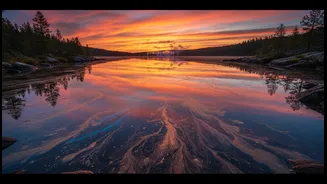
From the Sky into Our Waterways
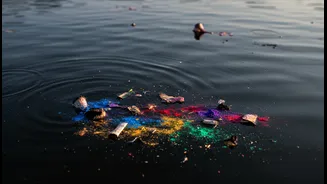
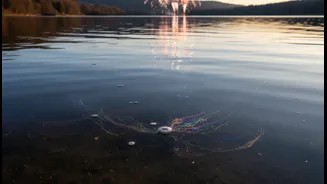
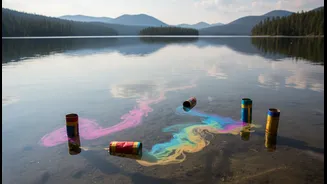
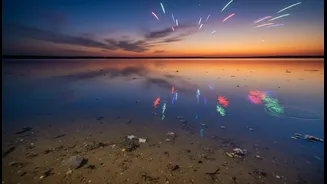
What goes up must come down. The chemical particles and leftover debris from fireworks don't just vanish. They fall back to the earth, settling on land and directly into water bodies like lakes and rivers, especially when displays happen over or near water. Rain can then wash the residue from streets and soil into storm drains, which often lead directly to local waterways. This process introduces a cocktail of contaminants into aquatic ecosystems. The physical debris, like plastic casings and charred paper, can also become a problem, posing risks to wildlife that might mistake it for food.
The Perchlorate Problem
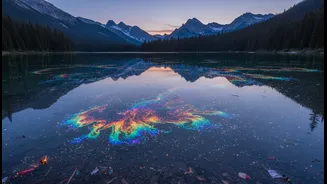
Scientists are particularly concerned about perchlorate contamination. Studies have repeatedly shown that perchlorate levels in lakes can spike dramatically after fireworks displays—in some cases, increasing by more than 1000 times the normal level within hours. The main concern is that perchlorate can interfere with the thyroid gland's ability to take up iodine. The thyroid gland needs iodine to produce hormones that are crucial for normal development and metabolism in both humans and animals. High levels of perchlorate in drinking water are therefore considered a potential health risk, and its presence can also affect the development of fish and amphibians in contaminated lakes.
Heavy Metals and Aquatic Life
The same metals that create beautiful colours can be toxic to the environment. Recent lab studies have shown that when firework residue enters water, it releases metal ions like potassium and manganese. These chemical changes can potentially disrupt the microbial communities that form the base of the aquatic food web. Heavy metals like copper and barium do not break down and can accumulate in the environment. This means they can be absorbed by small organisms and then move up the food chain, a process known as bioaccumulation, posing a long-term risk to the health of aquatic ecosystems.
What Do the Studies Show?
The connection between fireworks and water contamination is not just theoretical. Research projects have documented these effects in real-world settings. A multi-year study at Mount Rushmore in the United States found elevated perchlorate concentrations in soil and water samples near where fireworks had been launched. Another study on a municipal lake documented perchlorate levels spiking to over 1000 times the baseline concentration within 14 hours of a fireworks show. While concentrations often decrease over several weeks as the water mixes, the repeated, annual deposit of these chemicals is a growing concern for scientists monitoring water quality. This has prompted environmental agencies to fund further research to better understand the long-term risks.