




First, Sort Your Visas
Before you even look at itineraries, understand the visa situation for Indian passport holders. For Vietnam, a visa is mandatory; there is currently no visa-free access for Indian tourists. The most straightforward option is the e-visa, which you should
apply for online in advance. It allows entry for up to 90 days. For Cambodia, Indian citizens can obtain a visa on arrival at major international airports like Phnom Penh and Siem Reap for a stay of up to 30 days. However, if you plan to cross by land, it is crucial to verify if your specific border crossing supports this facility. An e-visa, secured beforehand, is often the safer bet to avoid any last-minute issues. Always ensure your passport is valid for at least six months from your date of entry into both countries.
Review the Itinerary and Pace
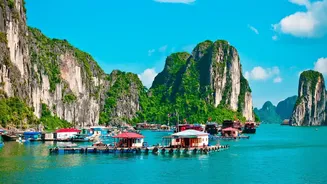
Multi-country packages can sometimes feel rushed as they try to cover too much ground in a short time. Look closely at the number of nights spent in each location, not just the number of days. A 'day' can sometimes just mean a few hours in a city before moving on. An ideal trip balances key sights like Ha Long Bay and Angkor Wat with enough downtime to explore local culture. Be realistic about travel time; a bus journey between Ho Chi Minh City and Phnom Penh, for instance, can take around six to seven hours including the border stop. Ensure the itinerary aligns with your interests, whether that's the historical depth of Hanoi or the stunning ruins of Siem Reap.
Understand the Border Crossing
Your package will dictate how you move between Vietnam and Cambodia. The two most common methods are by flight or by road. Flying is the fastest and most convenient option, with direct flights connecting major hubs like Ho Chi Minh City and Hanoi with Phnom Penh and Siem Reap. The overland route, typically by bus between Ho Chi Minh City and Phnom Penh, is more budget-friendly and offers a glimpse of the countryside. Some tour operators handle the border formalities, which can make the process smoother. Another scenic but slower option is a boat journey along the Mekong River, often from Chau Doc in Vietnam to Phnom Penh.
Clarify What 'All-Inclusive' Really Means
The price of a package can be misleading if you don't read the fine print. 'All-inclusive' rarely covers everything. Check specifically for what is excluded. Common additional costs can include entrance fees to temples and monuments, certain meals, tips for guides and drivers, and optional tours or activities. For example, a day trip to Ba Na Hills or a cruise on the Mekong Delta might be listed but marked as optional extras. A seemingly cheaper package can quickly become expensive once these costs add up. Ask your tour operator for a detailed list of inclusions and exclusions before you book.
Get Smart About Currency
The two countries have different approaches to currency. In Vietnam, the official currency is the Vietnamese Dong (VND), and it is used for nearly all transactions, from street food to shopping. While US dollars might be quoted for tours, payment is almost always made in Dong. ATMs are widely available. Cambodia operates a dual-currency system. The official currency is the Cambodian Riel (KHR), but the US dollar is widely accepted and used for most tourist transactions; you can even withdraw USD from ATMs. Riel is often given as change for amounts less than a dollar. Be sure to carry crisp, new US dollar bills, as torn or old notes are often rejected.