





The End of an Era, The Dawn of a New One
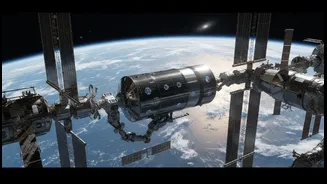
The International Space Station stands as one of humanity's greatest engineering feats, hosting thousands of experiments and astronauts from across the globe. But after three decades in orbit, the aging outpost is scheduled to be deorbited around 2030.
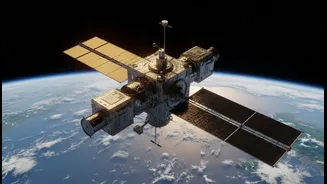
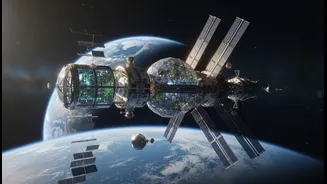
Recognizing the need to maintain a human presence in low-Earth orbit (LEO), NASA is not building a direct successor. Instead, through its Commercial LEO Destinations (CLD) program, it plans to become just one of many customers for a new generation of privately owned and operated space stations. This strategic shift is designed to foster a robust commercial economy in space, reduce costs for the agency, and prevent a gap in American orbital presence, especially as other nations expand their own space capabilities.
Meet the New Landlords of LEO
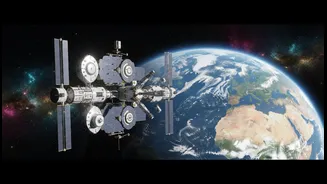
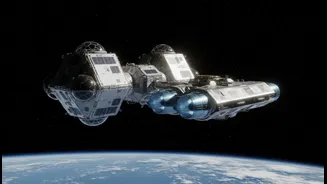
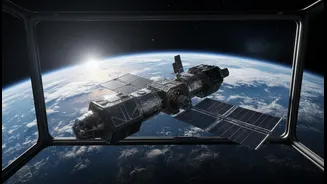
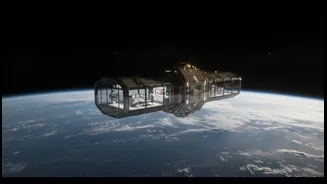
Several companies are racing to build the successors to the ISS. Axiom Space is a prominent player, with plans to first attach its commercial modules to the ISS starting as early as 2028 before detaching to become a free-flying station. Another key contender is Vast, which aims to launch its single-module station, Haven-1, as soon as the first quarter of 2027. A joint venture between Voyager Space and Airbus is developing Starlab, targeting a 2029 launch. Blue Origin, in partnership with Sierra Space, is also developing a concept called Orbital Reef, envisioned as a "mixed-use business park" in space for science, tourism, and manufacturing. These companies are backed by a mix of private investment and NASA funding through various agreements designed to spur development.
A Marketplace for Science?
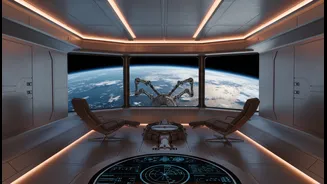
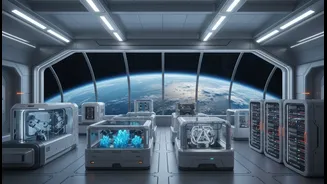
The primary promise of this new commercial era is democratized access to space. Proponents argue that a competitive market of multiple stations will drive down costs and increase opportunities for research. Instead of the long, complex process of getting an experiment aboard the ISS, universities, startups, and companies could potentially book lab space more quickly and flexibly. These new platforms are being designed from the ground up to support a wide range of activities, from pharmaceutical development and materials science to in-space manufacturing of everything from artificial retinas to high-purity optical fibers. For researchers, this could mean more frequent flights, more control over experiments, and a faster path from hypothesis to discovery. Vast's Haven-1, for instance, will feature a dedicated microgravity research lab with slots for various payloads.
The Price of Progress
Despite the optimism, significant challenges remain. The primary concern is whether a truly viable commercial market exists beyond NASA. Building and operating a space station is an immensely expensive undertaking, and the timelines are ambitious and prone to delays. There are also questions about how scientific priorities will be balanced against more lucrative ventures like space tourism or media projects. Will a company prioritize a long-term cancer study over a high-paying tourist? While NASA will be an anchor tenant, its budget alone may not be enough to sustain these stations. The success of this model hinges on attracting a diverse customer base from industries like biotech, manufacturing, and even education, creating a self-sustaining ecosystem where science is a key service, but not the only one.
More Than Just Labs in the Sky
The vision for these commercial stations extends far beyond simple research labs. They are seen as the foundational infrastructure for a true in-orbit economy. Orbital Reef, for example, is planned to support not only scientists but also commercial and private astronauts. Axiom Space has already conducted multiple private astronaut missions to the ISS, demonstrating a market for such flights. Activities could include everything from in-space manufacturing and advanced materials development to film production and sovereign astronaut training programs for nations without their own space programs. This transition represents a fundamental shift from viewing space as a place for government-led exploration to seeing it as a domain for economic development and human expansion.