
The Soul of Kutch on Your Wall
Lippan Kaam, also known as Chittar Kaam, is a traditional mural art form native to the Kutch region of Gujarat. The name itself tells its story: 'Lippan' is a local word meaning 'to apply' or 'plaster', and 'Kaam' means work. Historically, it was practiced
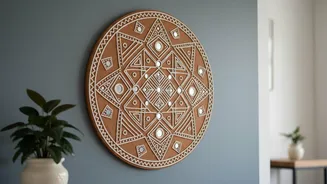
by various communities, including the Rabari, Mutwa, and Meghwal, primarily as a way to decorate their circular mud huts, or 'bhungas'. This was not just art for art's sake; the craft had a deeply functional purpose. The intricate clay relief work, traditionally made from a mixture of local clay and camel or donkey dung, helped insulate the homes against the harsh desert climate. The embedded mirrors, or 'aabhla', would catch and reflect the sparse light from a single lamp, illuminating the dark interiors and, as many believed, warding off the evil eye.
A Language of Mirrors and Mud
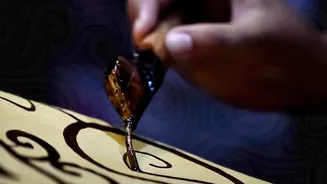
Traditionally, the art was the domain of women, who would pass down motifs and techniques through generations. The patterns are a visual language drawn from their daily lives and surroundings. You’ll find motifs of peacocks, camels, elephants, and flowers, alongside intricate geometric patterns inspired by the communities' rich embroidery traditions. Each community even developed its own distinct style. For instance, the Mutwa community, being Islamic, focused on geometric and floral patterns, avoiding the depiction of living forms. The beauty of traditional Lippan Kaam lies in its handcrafted, organic quality. Using only their fingers, artisans would sculpt the clay mixture, pressing in shards of mirror to create a surface that seems to shimmer and pulse with life.
From Village Huts to Urban Lofts
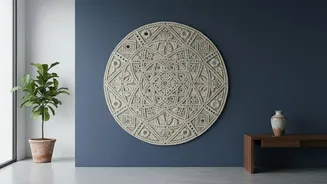
The very thing that made Lippan art so special—its connection to the mud walls of Kutch—also limited its reach. This is where the modern revival begins. Today's artists and design studios have ingeniously adapted the craft to make it portable and durable for contemporary homes. The fragile mud and dung mixture has largely been replaced with more resilient materials like air-dry clay, chalk powder, or plaster of Paris mixed with adhesives. The canvas is no longer a village wall but a sturdy MDF board or plywood panel. This crucial shift allows the art to travel from the Rann of Kutch to high-rise apartments in Mumbai and Delhi, transforming a structural mural into a collectible piece of decor.
The New Custodians of Craft
This modern renaissance is being driven by a new generation of artists and entrepreneurs who are passionate about preserving India's craft heritage. They are not just replicating old designs; they are experimenting and innovating. While traditional work was almost always white, contemporary pieces now explore a wide palette, from earthy terracotta and ochre to vibrant blues, greens, and even minimalist monochrome. The form is also evolving. Beyond wall panels, you can now find Lippan-inspired coasters, nameplates, jewelry boxes, and clock faces. Social media platforms and online workshops have played a huge role in this popularisation, allowing a wider audience to discover, learn, and purchase Lippan art, thereby providing a crucial source of livelihood for artisan communities.
Bringing Tradition Home
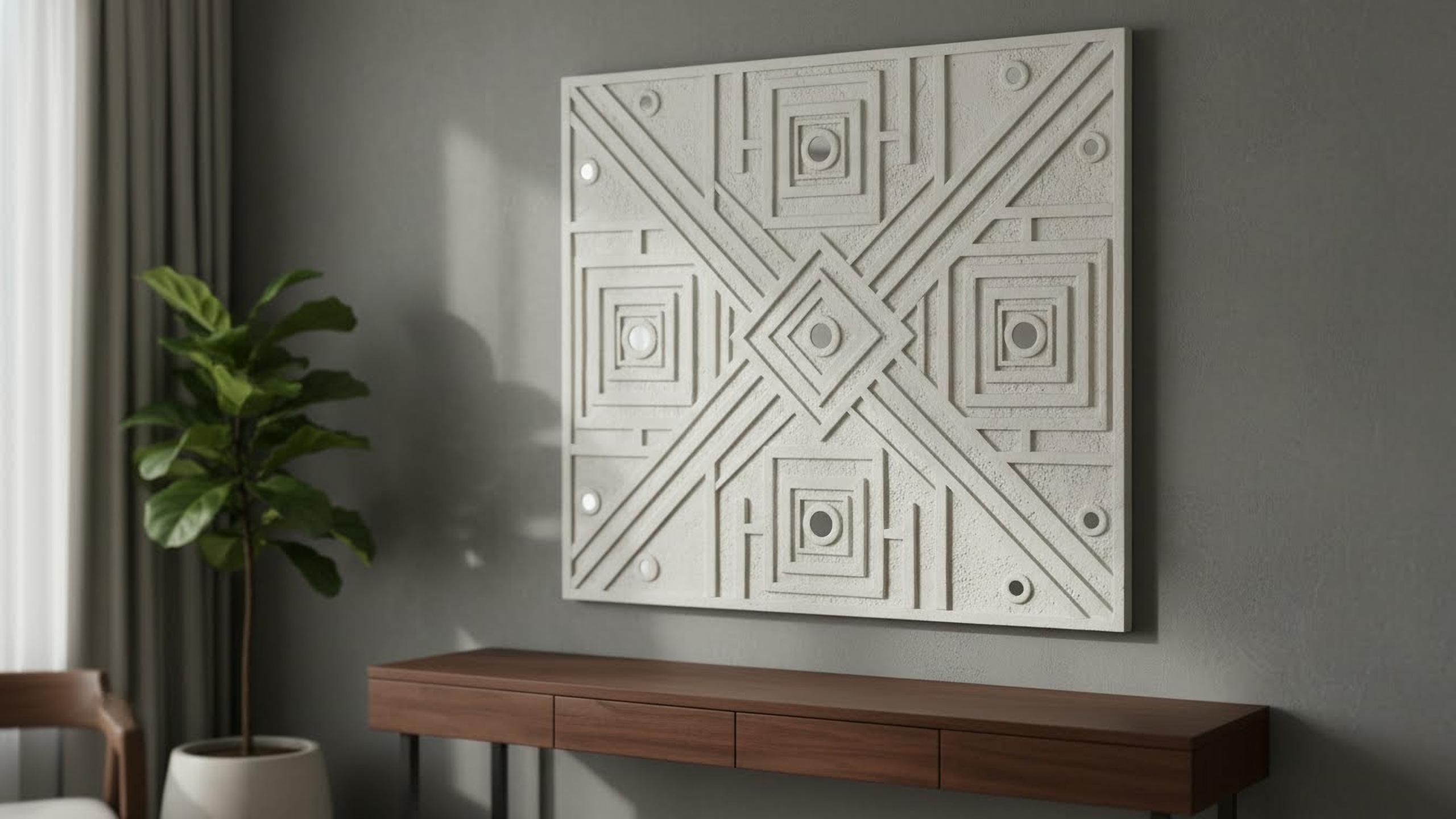
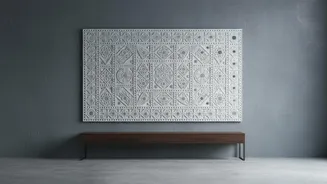
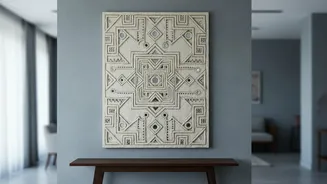
The versatility of modern Lippan art is one of its greatest strengths. A large, intricate panel can serve as a stunning statement piece above a sofa in a minimalist living room, its textured white surface and glittering mirrors adding depth and elegance. A collection of smaller, colourful pieces can be arranged into a gallery wall, bringing a bohemian or eclectic vibe to a hallway or bedroom. Its geometric patterns sit surprisingly well alongside contemporary furniture, while its naturalistic motifs can complement more traditional decor. By incorporating a piece of Lippan art into your home, you're not just buying a beautiful object; you're acquiring a piece of living history and supporting the evolution of a timeless craft.