




A Celestial Gift from Halley's Comet
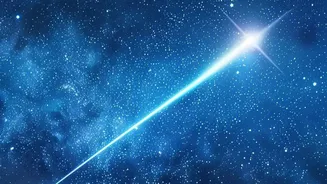
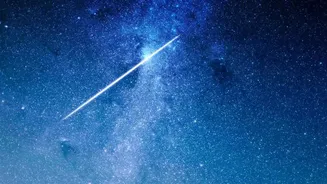
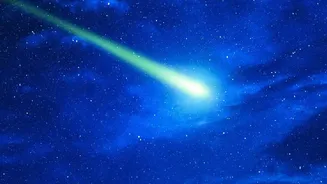
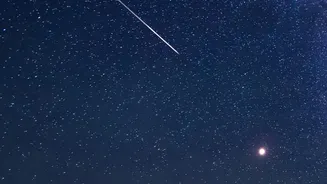
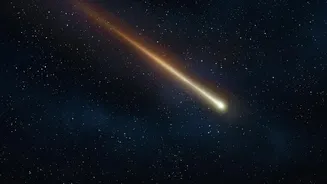
The Orionid meteor shower is one of the most anticipated skywatching events of the year, active from early October to early November. These shooting stars are not just random specks of light; they are tiny, fast-moving pieces of debris left behind by
the most famous comet of all: 1P/Halley. Each October, as Earth passes through this ancient trail of dust and ice, the particles burn up in our atmosphere, creating streaks of light. These meteors are known for their speed, entering the atmosphere at roughly 66 kilometres per second, and can often leave glowing trails that linger for a few moments after the initial flash. This connection to Halley's Comet, which won't be visible again until 2061, makes watching the Orionids a special way to connect with a larger cosmic history.
Best Dates and Times for Viewing in 2026
For 2026, the Orionid meteor shower is predicted to reach its peak in the pre-dawn hours of October 21st and 22nd. While you might see meteors on any night during its activity window, your chances are highest on these dates. The best viewing window is after midnight, continuing until dawn. This is when the shower's radiant—the point in the sky where the meteors appear to originate, near the constellation Orion—is highest in the sky. In 2026, a bright waxing gibbous moon will be present during the peak, which can make viewing more challenging. However, the moon is expected to set around 3 a.m. local time, opening up a window of darker skies between moonset and dawn, which will be the absolute prime time to watch.
Finding Your Urban Observatory
The biggest challenge for city dwellers is light pollution, which can wash out all but the brightest meteors. However, viewing is not impossible. The key is to find the darkest possible spot available to you. Think of large parks, open sports fields (after the lights are off), or even a high-rise rooftop with an unobstructed view of the sky. The goal is to put as much distance or as many buildings and trees between you and direct sources of light like streetlamps. Even moving to the outskirts of your city can make a significant difference. If you have a balcony or backyard, turn off all your own lights and, if possible, ask neighbours to do the same for an hour. Every bit of darkness helps.
Prepare for a Night Under the Stars
Once you have your spot, the next step is preparation. Your eyes need at least 20 to 30 minutes to fully adapt to the dark; this is crucial for spotting the fainter meteors. During this time, you must avoid looking at your phone, as the bright screen will instantly ruin your night vision. If you need to use your phone for a stargazing app, switch it to its red-light or night mode. Comfort is also essential. Meteor watching is a waiting game, so bring a blanket or a reclining chair to lie back on. Lying down allows you to take in as much of the sky as possible without straining your neck. Dress in warm layers, as even on clear nights, the temperature can drop significantly in the early morning hours.
Look Up and Be Patient
You don't need a telescope or binoculars; in fact, they are not recommended because they limit your field of view. The best tool is your own eyes. While the meteors appear to radiate from the constellation Orion, they can streak across any part of the sky. For the best view, don't stare directly at Orion. Instead, look about 45 degrees away from the radiant. This perspective allows you to see meteors with longer, more dramatic trails. Finally, be patient. In ideal dark-sky conditions, the Orionids can produce about 15 to 25 meteors per hour. In a city, that number will be lower. You might wait several minutes without seeing anything, and then see two or three in quick succession. Embrace the quiet moments as part of the experience of connecting with the night sky.