






The End of a Landmark Era
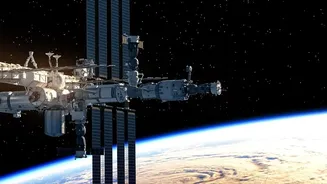
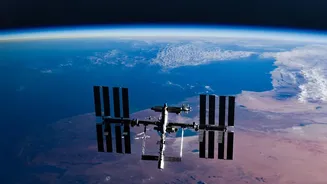
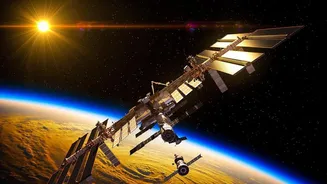
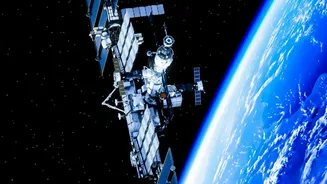
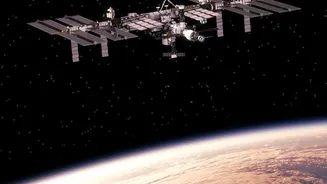
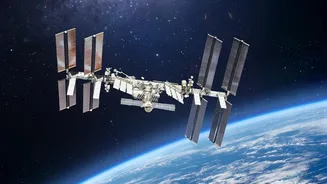
The ISS has been an unparalleled success, a symbol of international cooperation and a hub for scientific discovery since continuous occupation began in 2000. However, after three decades of service, the station is showing its age. Factors like structural
fatigue from thermal cycling and micrometeoroid impacts, coupled with rising maintenance costs, make its continued operation beyond 2030 unsustainable. NASA plans a controlled deorbit, guiding the 430-tonne structure into a remote area of the Pacific Ocean. This retirement isn't an end to human presence in low-Earth orbit (LEO), but rather the beginning of a strategic transition. NASA intends to become a customer, buying services from commercially owned and operated space stations rather than owning the hardware itself.
NASA's Commercialization Strategy
To ensure there is no gap in American orbital presence, NASA initiated the Commercial Low-Earth Orbit Destinations (CLD) program. This public-private partnership provides funding and technical support to several companies developing their own space stations. The goal is to foster a competitive marketplace in LEO, serving a mix of government astronauts, international space agencies, private researchers, and even tourists. While the strategy has seen some pivots and debates over its exact structure in 2026, the core objective remains: to have multiple commercial options ready to take over from the ISS by the end of the decade.
Axiom Space: The Incumbent's Bridge
Axiom Space is taking a unique approach by building a bridge from the old era to the new. As the only company already flying private astronaut missions to the ISS, it has significant operational experience. Its plan involves constructing modules that will first attach to the ISS. The first module is planned for launch around 2028. After adding a second module, Axiom Station can detach and become a free-flying, independent habitat before the ISS is deorbited. This strategy allows Axiom to test its systems in a live environment while generating revenue. Recent news from October 2026 confirmed that supplier Redwire would provide solar arrays for Axiom's second module, marking continued progress.
The Free-Flyers: Starlab and Orbital Reef
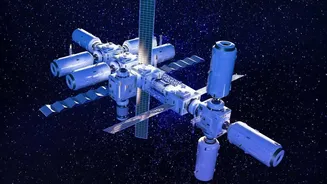
Other major contenders are building free-flying stations from the start. Starlab, a joint venture between Voyager Space and Airbus, is developing a station with a large inflatable habitat and a dedicated laboratory. It is designed to launch as a single unit aboard a SpaceX Starship, potentially in 2029, and will match the research capacity of the ISS from day one. Meanwhile, Blue Origin and Sierra Space are developing Orbital Reef, envisioned as a "mixed-use business park" in space for research, manufacturing, and tourism. Though its development pace has been uncertain, it represents a grand vision for a diverse orbital economy.
Vast: The Fast Mover
A key player aiming for an early start is Vast, a privately funded company. Its plan begins with Haven-1, a smaller, single-module station targeted for launch in early 2027. This station would be visited by crews of four on missions lasting up to 30 days. While Haven-1 is a deliberate first step, it's designed to prove the company's technology and business model quickly. Vast is also planning a larger, multi-module successor named Haven-2 to compete for long-term NASA contracts. By launching a complete, albeit small, station first, Vast hopes to become the first operational commercial habitat in orbit.
The Challenges Ahead
The transition to a commercial LEO ecosystem is not without significant hurdles. The primary challenge is financial; building a space station is immensely expensive, and the business case beyond NASA as an anchor tenant is still developing. There are also immense technical risks and the ever-present possibility of schedule slips, which are common in human spaceflight programs. The race is on not just to build these new habitats, but to do so before the ISS takes its final plunge, avoiding a costly and strategic gap in America's continuous presence in space. The success of these ventures will determine whether LEO becomes a bustling commercial hub or a quiet void once the lights go out on the ISS.