







The Forensic Autopsy of a Spaceship
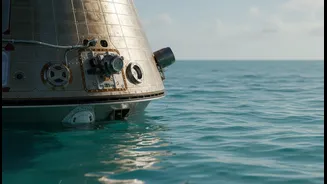
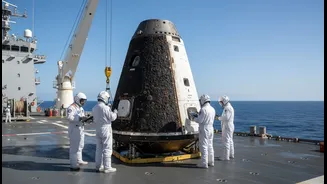
After the triumphant splashdown in the Pacific Ocean, the work of recovering and analyzing the Artemis II Orion capsule began almost immediately. The spacecraft, having endured a fiery reentry with temperatures reaching nearly 2,760°C, was carefully brought
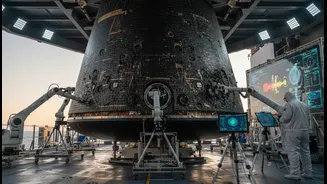
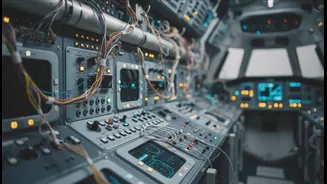
aboard a naval recovery ship. From there, it was transported to NASA's Kennedy Space Center in Florida for what can only be described as a high-tech forensic teardown. Engineers and technicians are methodically disassembling the capsule, a process that will take months. Every component, from the crew seats and avionics to the outer shell, is being removed and inspected. This painstaking process isn't just about checking for damage; it's a deep-dive analysis to understand exactly how the spacecraft performed under the extreme conditions of a lunar mission. This includes taking air samples from inside the sealed capsule and preparing to remove the heat shield for highly detailed analysis at a separate facility.
The Benefits: A Data Goldmine for the Moon Landing
The primary benefit of this exhaustive analysis is the wealth of data it provides for future missions, most importantly Artemis III, which is slated to test lunar landers in Earth orbit, and Artemis IV, the mission planned to land humans back on the Moon. Every sensor reading, every stress fracture, and every system anomaly is a lesson learned. A major focus is the heat shield. After the uncrewed Artemis I flight showed some unexpected erosion, engineers were keen to see how the shield on Artemis II performed with a crew aboard. Initial inspections showed that the char loss was significantly reduced compared to the first flight, performing as ground tests predicted. Beyond the shield, technicians are examining life support systems, navigation controls, and radiation detection equipment. The avionics boxes, once checked, will be refurbished and reused on the next mission, saving both time and resources. This complete systems check validates the design and safety of Orion for even longer and more complex journeys.
The Risks: What if the Data Shows a Problem?
While the Artemis II mission was a resounding success, the post-flight inspection carries its own set of risks—not of physical danger, but of programmatic delays and costly redesigns. The biggest risk is discovering that a critical component underperformed in a way that models didn't predict. For instance, if the heat shield had shown deeper-than-expected erosion, it could have triggered a major investigation and potential redesign, delaying the entire Artemis timeline. Similarly, any significant issues found with the life support, power, or navigation systems could force engineers back to the drawing board. Even smaller issues, like a noted problem with the urine vent line during the flight, require a root cause analysis and corrective action to ensure it doesn't pose a threat on a longer mission where repair options are limited. These checks are designed to find problems on the ground so they don’t become life-threatening emergencies in deep space, but any major discovery could have significant financial and scheduling consequences for NASA's lunar ambitions.
Practical Next Steps: The Road to Artemis III
The data from the Artemis II spacecraft directly informs the final preparations for Artemis III. Currently scheduled for 2027, Artemis III will be an Earth-orbit mission to test the docking procedures between the Orion capsule and the new lunar landers being developed by private companies like SpaceX and Blue Origin. The hardware and software of the Orion capsule for Artemis III are already being prepared, and modifications will be made based on the findings from the Artemis II analysis. The heat shield from Artemis II will be sent to NASA's Marshall Space Flight Center for more intensive testing, including X-ray scans, to fully understand its performance. The crew for Artemis III has already been named and has begun training. Their mission is a critical dress rehearsal in Earth's orbit, ensuring that all systems, especially the rendezvous and docking with a lander, work perfectly before NASA commits to the Artemis IV mission, which will finally return astronauts to the lunar surface in 2028.