


The Nutritional Showdown
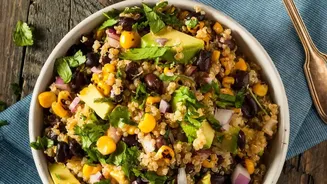
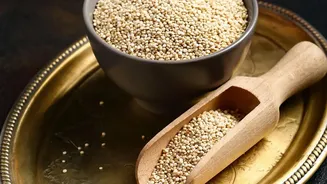
When it comes to nutrition, quinoa puffs take a clear lead. Quinoa is a 'complete protein', meaning it contains all nine essential amino acids, which is rare for a plant-based food. This makes it excellent for muscle repair and overall body function.
Puffed quinoa offers significantly more protein and fibre than puffed rice. For instance, a serving of quinoa puffs contains around 4 grams of protein, while the same amount of puffed rice has only about 1 gram. The fibre content in quinoa is also much higher, which aids digestion and helps you feel full longer. Furthermore, quinoa puffs are packed with more essential minerals like iron and magnesium, which are vital for energy and bone health. Puffed rice, while lower in calories, offers minimal nutritional value in comparison.
Glycemic Index and Energy Release
The glycemic index (GI) measures how quickly a food raises blood sugar levels. Quinoa has a moderate GI, typically around 53, whereas white rice can have a GI ranging from 64 to over 80. The combination of protein and fibre in quinoa slows down the conversion of carbohydrates into sugar, leading to a more gradual release of energy. This helps avoid the sharp blood sugar spikes and subsequent crashes often associated with refined carbohydrates like puffed white rice, making puffed quinoa a better choice for sustained energy and blood sugar management.
Taste, Texture, and How They Are Made
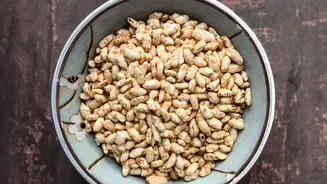
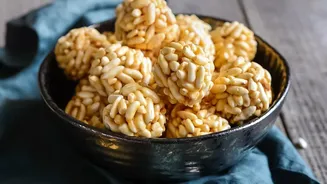
Puffed rice has a very neutral flavour, making it a versatile base that easily absorbs other tastes, whether sweet or savoury. Its texture is light and crisp but can sometimes become soggy quickly when mixed with liquids. Puffed quinoa, on the other hand, has a slightly nutty, earthy flavour and a denser, more resilient crunch that holds up better in yogurt or milk. The production process for both is similar, involving heat and pressure to expand the grain. However, the starting material is what makes the difference. Quinoa seeds must have their natural bitter coating, called saponin, removed before puffing, which adds a step to the process.
The Cost Question: Is Quinoa Worth It?
There's no denying the price difference: quinoa, and by extension puffed quinoa, is almost always more expensive than rice. This is due to several factors. Quinoa has specific growing conditions, primarily in the Andean regions of South America, and the global demand has often outstripped supply. The harvesting and processing, including the removal of saponin, are also more complex and labour-intensive. Rice is cultivated on a much larger global scale, making it more affordable. Whether the higher cost is justified depends on your priorities. If you are seeking maximum nutritional density, complete protein, and better blood sugar control, the extra expense for puffed quinoa may be a worthwhile investment in your health. For those on a tighter budget or who simply need a low-calorie, versatile crunch, puffed rice remains a sensible option.