




A Space Lab from Recycled Rocket Parts
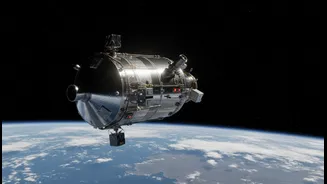
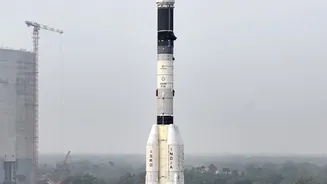
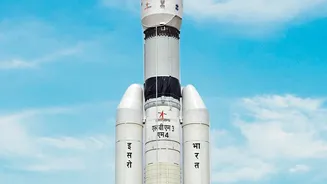
The Indian Space Research Organisation (ISRO) has pioneered a remarkably sustainable and cost-effective way to conduct experiments in space: the PSLV Orbital Experimental Module, or POEM. In simple terms, after a Polar Satellite Launch Vehicle (PSLV)
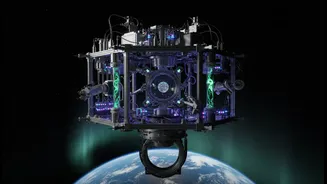
rocket deploys its main satellite, its final stage (known as PS4) doesn't just become space junk. Instead, ISRO engineers repurpose this spent stage, turning it into a fully functional orbital platform. This innovative 'upcycling' provides a stable, powered laboratory that orbits the Earth for weeks or even months, offering a free-of-cost ride to space for scientific payloads. The module is equipped with its own power generation through solar panels, along with navigation and control systems to keep it stable and oriented correctly for experiments.
How It Opens Doors for Researchers
Historically, sending an experiment to space was an incredibly complex and expensive affair, reserved for large government agencies or well-funded corporations. The POEM platform changes that entirely. The initiative, facilitated by the Indian National Space Promotion and Authorisation Centre (IN-SPACe), invites universities, research labs, and even private startups to design and build their own experimental payloads. These payloads, often compact and lightweight, are then integrated onto the POEM platform. ISRO handles the launch and provides the orbital infrastructure, effectively eliminating the biggest barriers to entry: cost and access. This democratisation of space allows a much wider pool of Indian talent to participate in cutting-edge research, moving from theoretical classroom learning to hands-on experience in the unique environment of microgravity.
From Student Projects to National Missions
The impact of this initiative is already visible. Recent POEM missions have carried a diverse array of payloads from Non-Governmental Entities (NGEs). For instance, Amity University in Mumbai sent an experiment to study the growth of plant callus in space, while startups like Bellatrix Aerospace and Manastu Space Technologies have tested advanced, eco-friendly green propulsion systems. Other experiments have included testing new sensors, robotics, and even AI models in orbit. On the POEM-4 mission alone, which launched in late 2024, 10 of the 24 payloads came from universities and startups. These projects provide invaluable data and 'space heritage'—proof that a technology can function in space—which is crucial for developing future missions and commercial products.
The Strategic Vision for India's Space Future
The POEM initiative is a key part of India's larger strategy to build a robust and self-reliant national space ecosystem. By lowering the entry barrier for orbital research, ISRO and IN-SPACe are cultivating a new generation of space scientists, engineers, and entrepreneurs. This hands-on experience is critical for building a skilled workforce ready to fuel the country's ambitions, from developing new satellite technologies to contributing to major projects like the Gaganyaan human spaceflight mission and a future Indian space station. Furthermore, by actively involving private players and academic institutions, India is accelerating the pace of innovation and expanding its share of the global space economy. This collaborative model moves beyond a government-led programme to an all-of-nation approach to space exploration and utilisation.