




Beyond The Silent Pictures
The breathtaking images of galaxies and nebulae that fill our screens are not photographs in the traditional sense. Telescopes like the Hubble, the James Webb Space Telescope (JWST), and the Chandra X-ray Observatory collect data in the form of ones and zeroes—light
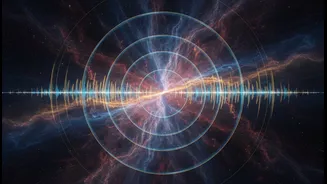
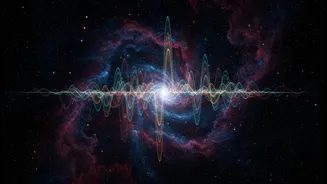
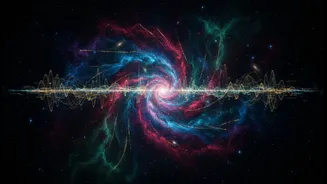
that is often invisible to the human eye. Scientists translate this digital information into the stunning false-colour images we know and love. But what if you could also listen to that data? That’s the question behind data sonification, a groundbreaking technique that is transforming our connection to the cosmos. Instead of just seeing the universe, we can now hear it.
What Does A Galaxy Sound Like?
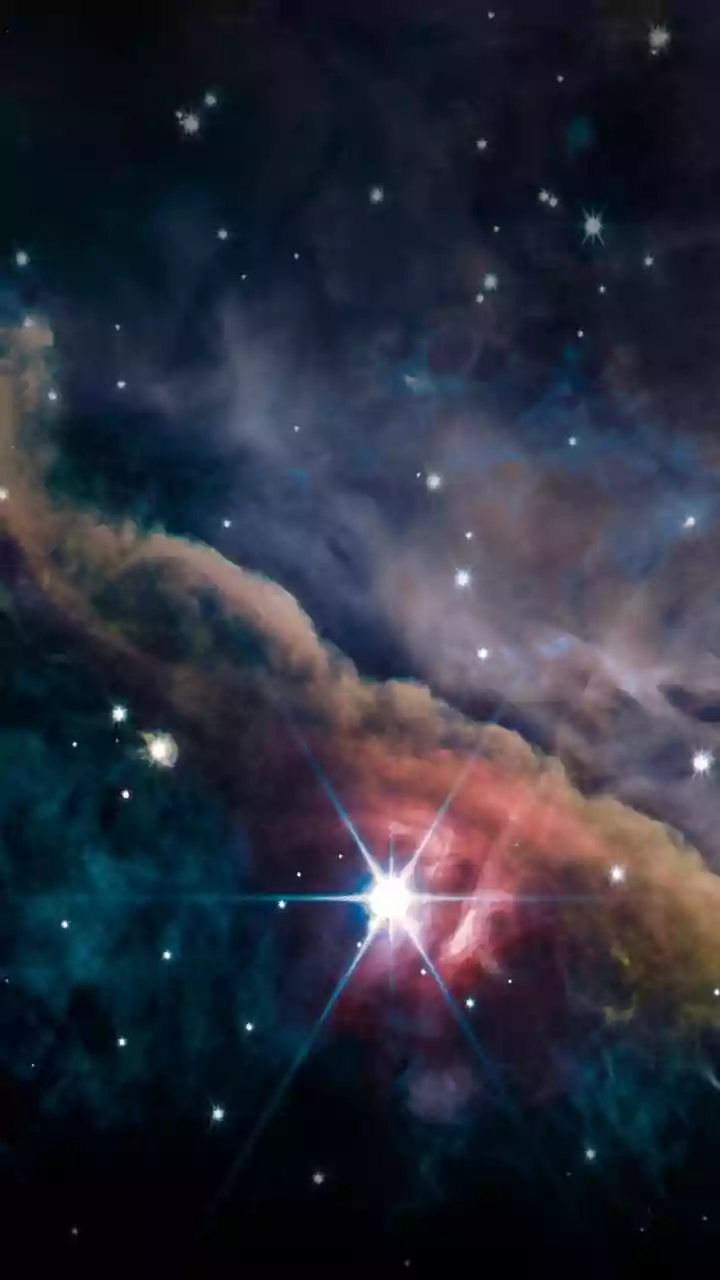
It’s important to clarify that these are not sounds recorded in the vacuum of space. Instead, sonification is the process of translating data into sound. In projects led by NASA's Chandra X-ray Center and other institutions, scientists and musicians collaborate to assign sonic qualities to astronomical data. For instance, in an image of the Galactic Centre, X-ray data from Chandra might be represented by the clear notes of a glockenspiel, while infrared data from the Spitzer telescope becomes the warm chords of a piano. The position of an object in the image determines its pitch, and its brightness dictates the volume. A scan from left to right across an image of the “Cosmic Cliffs” in the Carina Nebula becomes a symphony where bright stars are marked by percussive crashes and the jagged line of gas and dust becomes a meandering melody.
A Universe for New Discoveries
While sonification creates beautiful and often haunting soundscapes, its purpose is twofold and deeply scientific. First, it offers a powerful new tool for analysis. The human ear is exceptionally good at detecting subtle patterns, rhythms, and variations over time. By listening to data, astronomers can sometimes perceive nuances—like the flicker of a distant star or anomalies in a dense star field—that might be missed in a purely visual representation. It provides a complementary way to explore complex datasets, potentially leading to new discoveries that were hidden in plain sight. Wanda Díaz-Merced, a blind astronomer who pioneered the use of sonification in her own research, found it could improve the detection of signals related to black holes.
Making Space Accessible to All
Perhaps the most profound impact of sonification is its role in accessibility. For far too long, the visually-driven field of astronomy has presented significant barriers for people who are blind or have low vision. Sonification tears down those walls, transforming data into a medium that can be experienced and analyzed through hearing. This not only opens the wonders of the universe to a wider audience but also enables a new generation of scientists to participate in the field. Projects like NASA’s “Universe of Sound” are designed with blind and low-vision communities in mind first, creating an inclusive way for everyone to engage with scientific data. Combined with 3D-printed models of celestial objects, it creates a tactile and auditory experience, making the cosmos tangible in a way it has never been before.