

A Season of Bright Opportunity
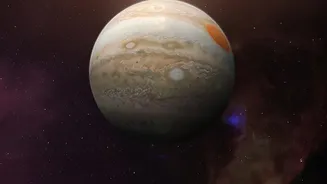
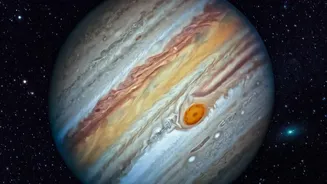
While Jupiter is almost always one of the brightest objects in our night sky, certain times are better for viewing than others. The period around a planet's "opposition" is one such prime time. Opposition occurs when Earth passes directly between the Sun
and an outer planet, like Jupiter. This alignment means a few things for observers: the planet is visible for most of the night, it is at its closest point to Earth for the year, and consequently, it appears at its largest and brightest. While Jupiter's 2026 opposition officially falls on January 10, 2026, the weeks leading up to and following it—including late autumn—provide excellent viewing opportunities. In India, the post-monsoon autumn months of October and November are considered a golden window for stargazing, as the rain washes dust from the atmosphere, leading to exceptionally clear skies.
Understanding 'Magnitude'
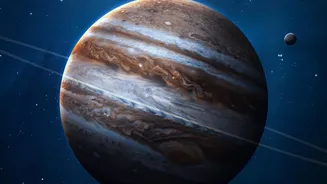
When astronomers talk about how bright a celestial object appears, they use a scale called 'apparent magnitude'. It might seem a bit backward at first: the lower the number, the brighter the object. For example, the Sun has a magnitude of -27, and a full Moon is about -13. Very bright stars are around magnitude 0 or 1. Jupiter will be shining brilliantly around this time. For context, its magnitude at opposition in January 2026 will be a dazzling -2.7, making it brighter than any star in the sky. You won’t need any special charts to find it; it will appear as a strikingly bright, non-twinkling, silvery-white point of light. Its steady glow is what distinguishes it from stars, which tend to twinkle due to atmospheric turbulence.
Your Simple Stargazing Toolkit
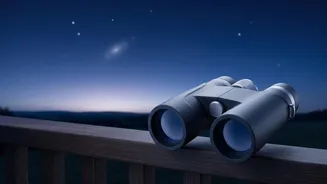
You don’t need an expensive telescope to get a meaningful view of Jupiter. In fact, a standard pair of binoculars is the perfect starting tool. Many astronomers suggest that a good pair of binoculars is a better first instrument than a telescope because they are portable, easy to use, and offer a wide field of view, making it easier to find objects. Look for binoculars with specifications like 7x50 or 10x50. The first number is the magnification (7x or 10x), and the second is the diameter of the front lenses in millimeters. A larger lens gathers more light, resulting in a brighter, clearer image, which is crucial for stargazing.
How to Spot Jupiter and Its Moons
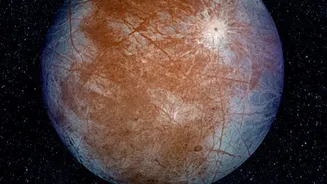
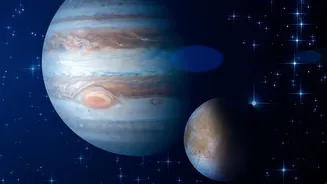
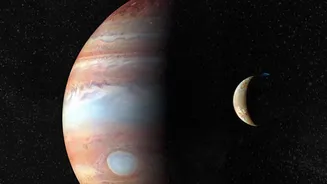
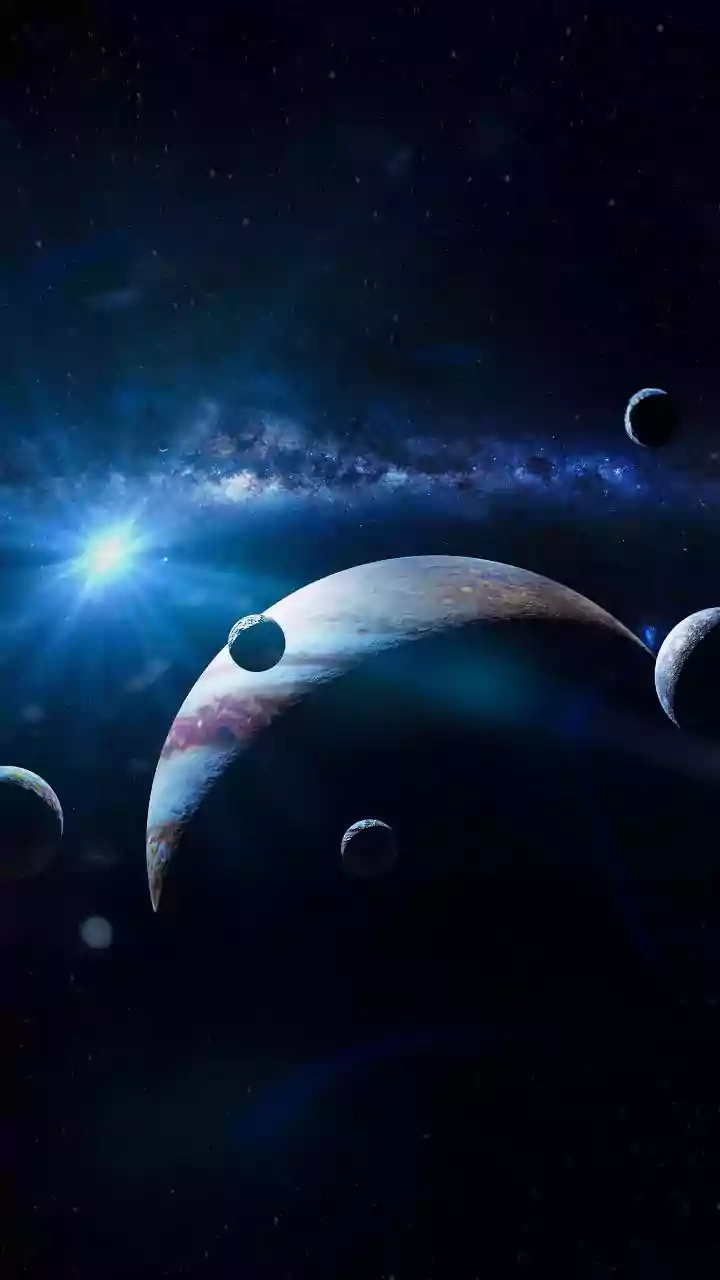
First, find a location away from bright city lights. Give your eyes at least 20 minutes to adjust to the darkness. During autumn 2026, Jupiter will be moving through the constellations of Cancer and into Leo. It will rise in the east and be visible for much of the night. Once you have your binoculars, the key to a good view is stability. Your hands will naturally shake, which can make the image blurry. Try bracing your elbows on a steady surface, like a wall or a car roof, or lean against a tree. The best solution is to use a tripod, and many larger binoculars have an adapter for this. When you look at Jupiter, you will see it as a small, distinct disk of light. But the real thrill comes when you look closely to either side of it. You should be able to spot up to four tiny pinpricks of light in a nearly straight line. These are not stars; they are the Galilean moons—Io, Europa, Ganymede, and Callisto—discovered by Galileo Galilei in 1610. Depending on their orbit, you might see all four, or some might be hidden in front of or behind the planet. Observing these moons change their position from night to night is a fascinating exercise that connects you directly to the clockwork of our solar system.