



Understanding Space Weather
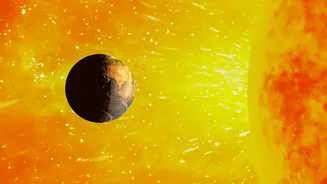
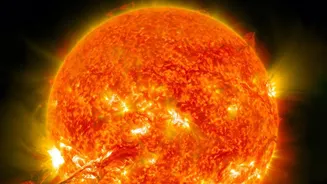
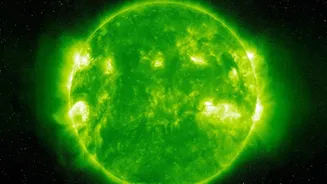
While we experience weather like rain and wind on Earth's surface, space has its own kind of weather. It begins at the Sun, which constantly sends out a stream of charged particles called the solar wind. This 'wind' flows across the solar system and interacts
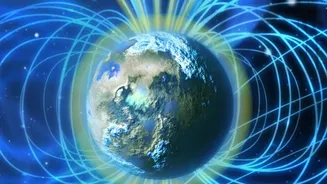
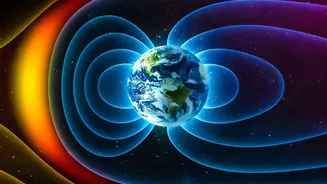
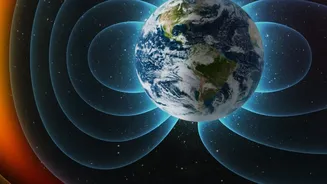
with Earth's magnetosphere, the protective magnetic bubble that surrounds our planet. Most of the time, the magnetosphere deflects the solar wind, but intense bursts of energy from the Sun, like coronal mass ejections, can disturb this shield, setting off a chain of processes that have effects reaching all the way to the ground.
The Violent Mystery of Substorms
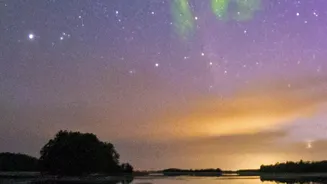
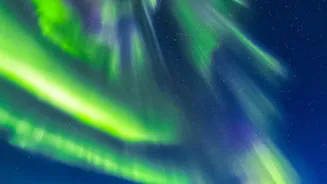
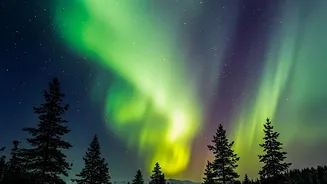
A magnetospheric substorm is a brief but violent disturbance that happens when energy from the solar wind, stored in the 'tail' of Earth's magnetosphere, is suddenly released. This injects a huge amount of energy into the upper atmosphere, creating the beautiful, dancing curtains of light we know as the aurora. But these events are more than just a light show. They are an explosive release of energy that has, until now, been difficult to track from start to finish. Scientists have long debated exactly where and how these substorms begin, making them a key puzzle in understanding space weather.
A New Multi-Point Perspective
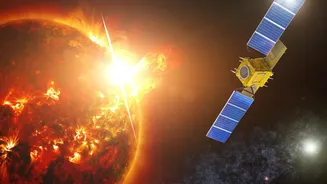
Recent research has provided a breakthrough by combining observations from multiple viewpoints at once. Scientists used data from NASA's THEMIS (Time History of Events and Macroscale Interactions during Substorms) mission, which involves five identical spacecraft, along with information from a wide network of ground-based observatories. These ground stations, equipped with magnetometers and all-sky imagers, measure changes in Earth's magnetic field and capture images of the aurora. By syncing the data from the satellites in space with the observations on the ground, researchers can follow the entire sequence of a substorm.
Connecting the Dots in Real-Time
This combined approach allowed scientists to watch as stretched magnetic field lines far from Earth suddenly reconnected, a key moment in the substorm. The THEMIS spacecraft recorded this as a burst of charged particles hurtling towards our planet. Just minutes later, the ground-based instruments detected rapid changes in the magnetic field on the surface. This proved that the effects of an energy release happening tens of thousands of miles away can reach the ground in minutes, a much faster timeline than previously understood for these specific impacts. The observations also showed the disturbance spreading across latitudes over the next 20 to 30 minutes.
Why This Matters for India
Understanding and predicting space weather is crucial for our modern, technology-dependent society. The intense electrical currents generated by substorms can flow through the ground and damage high_voltage transformers in power grids, potentially causing widespread blackouts. These storms also interfere with satellite operations, affecting GPS navigation, mobile communication, and weather forecasting. For a nation rapidly expanding its digital infrastructure and satellite networks, better space weather forecasts are essential for protecting these vital assets from disruption and damage. This new research provides a more complete picture of how these events unfold, paving the way for more accurate and timely warnings.