





Beyond the Answer Engine
For years, the promise of artificial intelligence in education was simple: instant access to information. Stuck on a problem? An AI could provide the solution. But educators and cognitive scientists quickly identified a flaw in this model. By simply providing
answers, these tools risked turning students into passive consumers of information rather than active learners. The real goal of education, after all, is not just to know facts, but to develop the ability to think critically and solve problems. This has led to a significant shift in educational AI design, moving from an 'answer engine' to an 'inquiry partner'. The most promising new AI study modes are built around a timeless pedagogical tool: the Socratic method.
The Ancient Power of a Good Question
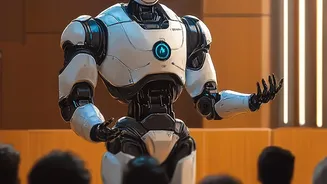
The Socratic method, named after the ancient Greek philosopher, is a form of dialogue based on asking and answering questions to stimulate critical thinking. Instead of lecturing, a teacher using this method guides a student toward their own discovery by posing a series of focused queries. This process encourages learners to examine their own assumptions, identify gaps in their reasoning, and build a more robust understanding from the ground up. It transforms learning from a passive act of memorisation into an active process of construction. Research has long shown that this kind of inquiry-based learning fosters deeper comprehension, improves retention, and builds essential problem-solving skills. The challenge has always been that this one-on-one method is incredibly difficult to scale in a classroom of 30, let alone for a professor with 600 students.
How an AI Becomes a Socratic Tutor
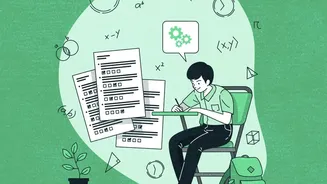
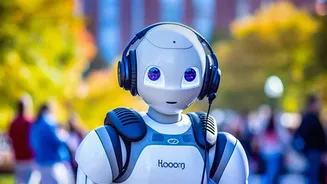
This is where modern AI comes in. An AI tutor using the Socratic method doesn't just ask random questions. It analyses a student's response to a problem, identifies the specific point of confusion, and formulates a tailored, follow-up question designed to nudge them forward. For example, if a student makes a mistake in a maths problem, instead of just correcting it, the AI might ask, “Why did you decide to subtract 3 in that step?” This prompts metacognition—the act of thinking about one's own thinking. The student is forced to re-evaluate their process, leading to a more profound and lasting insight. These AI systems can function as 'cognitive partners', providing just-in-time guidance that helps students navigate complex tasks without simply giving the game away.
The Promise and the Perils
The benefits of this approach are compelling. It offers a scalable way to provide personalised, one-on-one tutoring that adapts to each student's pace. It promotes intellectual independence and prepares students to engage with a world where asking the right question is often more valuable than knowing the answer. However, the technology is not without its risks. A significant concern is 'cognitive offloading'—the tendency to rely on external tools to the point that our own mental skills can weaken. Studies have shown a negative correlation between frequent AI tool usage and critical thinking abilities, particularly among younger users who may develop a dependency. There is a fine line between using AI as a supportive partner and using it as a crutch that hinders genuine intellectual growth. Therefore, teaching students how to use these tools responsibly is paramount.
The Future of Studying in India
For a country like India, with its vast and diverse student population, the potential of scalable, high-quality educational support is immense. AI-driven Socratic tutors could help bridge gaps in resource availability, offering personalised assistance to students in remote areas or in overcrowded classrooms. However, successful implementation requires more than just access to the technology. It demands a thoughtful integration into the curriculum, along with training for both teachers and students. The goal is to cultivate an 'inquiry mindset', where students learn to approach AI with both curiosity and healthy skepticism. The focus must remain on using these tools to enhance human intellect, not replace it. If implemented with care, these AI study modes could empower a generation of Indian students to become more analytical, creative, and resilient thinkers.