







The New Academic Workflow
A quiet revolution is happening on university campuses across India. Faced with demanding coursework and the pressure to excel, students are moving beyond the binary debate of whether to use Artificial Intelligence. Instead, they are developing a sophisticated
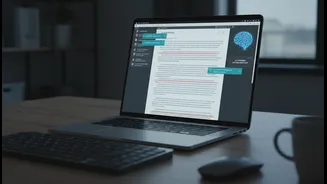
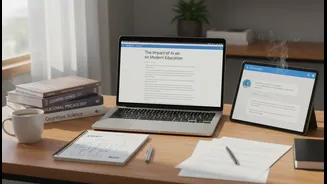
workflow that integrates AI assistants with the irreplaceable touch of human intellect. This hybrid model sees AI not as a replacement for human thought, but as a powerful collaborator. The modern research process, for many, is no longer a solitary effort but a dialogue between a student, their ideas, and an AI trained on vast datasets. This combination of AI and human editing is becoming a core academic practice, born out of a need for both efficiency and quality. Students use these tools to streamline time-consuming tasks, allowing them to focus more on the deeper aspects of research and analysis.
How the Hybrid Model Works in Practice
The process is more nuanced than simply asking an AI to write an essay. It begins with the student's own ideas and research. They might use AI to brainstorm topics, generate an initial outline, or summarize dense academic articles to identify key themes quickly. This allows them to get a lay of the land on a complex subject much faster than traditional methods. During the drafting phase, students write their core arguments themselves, preserving their intellectual ownership of the work. They then turn to AI for specific tasks. Tools can help refine grammar, improve sentence structure, and enhance clarity, which is especially beneficial for non-native English speakers. Some students use AI to create a 'reverse outline' of their draft, helping them check the logical flow of their arguments. The key is that the student remains the author and final decision-maker.
The Irreplaceable Human Element
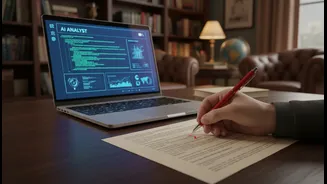
While AI is a powerful assistant, its limitations are where human oversight becomes crucial. The most significant role for the student in this hybrid model is that of the critical reviewer and ethical guide. AI tools are known to 'hallucinate'—inventing facts, misrepresenting sources, or creating plausible-sounding citations to papers that do not exist. It is the student's responsibility to verify every single piece of information and check every source provided by the AI. Furthermore, AI cannot replicate genuine critical thinking, interpret data with nuanced understanding, or ensure the final paper aligns with specific course instructions and ethical guidelines. The human author must weave the final narrative, ensure the arguments are sound, and take full responsibility for the intellectual integrity of the work.
Navigating University Rules and Risks
As this trend grows, universities are scrambling to adapt. Rather than outright bans, many institutions are establishing guidelines for responsible AI use. The common thread is transparency. Students are generally required to disclose their use of AI tools in their assignments. Using AI to generate entire papers that are passed off as original work is still considered academic dishonesty. Beyond plagiarism, over-reliance is another significant risk. Students who lean too heavily on AI may not develop the critical thinking, writing, and research skills that are the foundation of higher education. Another crucial consideration is data privacy; uploading sensitive or unpublished research to public AI platforms could compromise intellectual property.