


Football Was His First Love
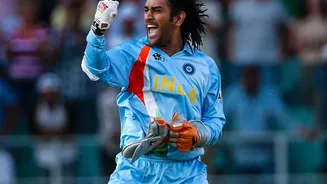
Long before he donned wicketkeeping gloves, MS Dhoni's primary passion was football. He was his school team's goalkeeper at DAV Jawahar Vidya Mandir in Ranchi. His agility, quick reflexes, and fearless diving skills between the goalposts caught the eye
of his school sports coach, Keshav Ranjan Banerjee. It was Banerjee who, needing a wicketkeeper for the local cricket club, convinced a reluctant Dhoni to try his hand behind the stumps. This accidental transition from football to cricket was a pivotal moment that ultimately reshaped the future of Indian cricket. His goalkeeping instincts, which involved attacking the ball rather than absorbing it, are often credited for his unique and lightning-fast stumping technique.
The Origin of the Helicopter Shot
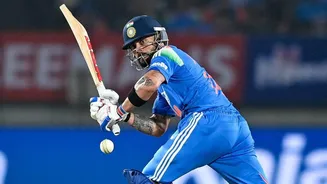
One of the most iconic shots in modern cricket, the 'Helicopter Shot', was not developed in the nets of a grand stadium. Dhoni learned this unorthodox stroke during his early days playing local tennis-ball cricket. The credit for teaching him the powerful wristy flick goes to his close friend, Santosh Lal. Lal, a talented local cricketer, originally called it the 'Thappad Shot' (slap shot). He taught Dhoni how to generate immense power with a strong bottom-hand grip to counter yorkers on rough local pitches. Tragically, Santosh Lal passed away at a young age, but his legacy lives on every time the helicopter shot is remembered, a poignant reminder of a friendship that shaped a signature move.
He Was a Multi-Sport Athlete
Dhoni's natural athletic abilities were not confined to just football and cricket. During his school days, he was also a skilled badminton player, competing at the district and club levels. This proficiency in racket sports likely contributed to his strong wrist work, hand-eye coordination, and powerful hitting, all hallmarks of his batting style. His all-around sporting background gave him a unique physical foundation, blending the agility of a goalkeeper, the wrist-snap of a badminton player, and the raw power honed in local cricket. This diverse skill set made him an unconventional but highly effective athlete long before he became a professional cricketer.
His First Stipend Was from a Coal Company
Before his job as a railway ticket examiner, a teenaged Dhoni got his first taste of professional support from the corporate world. In 1998, he was selected to play for the Central Coalfields Limited (CCL) team. Deval Sahay, a director at CCL, was impressed by Dhoni's hard-hitting abilities after he scored a double-century in an inter-school tournament. Sahay offered him a monthly stipend of Rs 2,000 under the company's sports quota. He even gave him an extra Rs 200, calling him a 'match-winning player'. At CCL, Dhoni was encouraged to bat higher up the order, which helped him develop his aggressive batting style and contributed to the team's promotion to a higher division.
A Misspelling Gave Him His Famous Name
The world knows him as Dhoni, but that was not his family's original spelling. His family, who hailed from the Almora district of present-day Uttarakhand, actually spells the surname as 'Dhauni'. The name 'Dhoni' reportedly emerged due to a spelling mistake on his school certificates. Despite repeated attempts by his family over the years to have it corrected, the change was never made. As a result, the name that would one day be chanted by millions in stadiums across the globe was born from a simple clerical error. This small, overlooked detail from his early life is a curious footnote in the story of one of cricket's most famous personalities.