






The AI Dream Meets Physical Reality
India's ambition in the artificial intelligence space is undeniable. With a burgeoning digital economy and a vast pool of tech talent, the government and private sector are pouring billions into AI infrastructure to power everything from public services
to the next generation of startups. The goal is to make India a global hub for AI development and deployment. However, this digital revolution is built on a physical foundation, and that foundation requires two critical resources in immense quantities: electricity and water. Every AI query and every model trained in a data center consumes significant power and generates enormous heat, which in turn requires vast amounts of water for cooling. This is where India's AI dream is running into a complex reality.
The Unprecedented Demand for Power
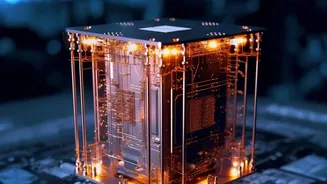
The energy appetite of AI is staggering. An AI-ready data center rack can consume anywhere from 30 to 100 kilowatts, far more than the 7-10 kW of a traditional server rack. As India scales up its AI capabilities, the collective demand on its power grid is set to explode. The Ministry of Power has projected that data centers will demand as much as 13.56 GW by 2031-32, a figure that has since been updated to an even higher 26.3 GW. This represents one of the largest single additions to electricity demand the country has ever planned for. While India has made huge strides in expanding its power generation, including from renewable sources, meeting this new, concentrated demand from AI infrastructure presents a monumental challenge for grid stability and transmission.
The Hidden Cost of Cooling
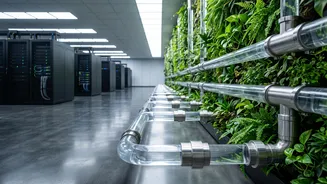
Beyond electricity, the AI industry has a massive water footprint. Data centers rely on water for cooling systems to prevent servers from overheating. A single large facility can consume millions of litres of water daily, often in urban areas where water resources are already under severe stress. In 2024 alone, India's data centers consumed an estimated 150 billion litres of water, a figure projected to more than double by 2030. This is a critical issue in a country that supports 18% of the world's population with only 4% of its freshwater resources. The competition for water between data centers, agriculture, industry, and households is becoming a major point of concern, especially in tech hubs like Bengaluru, Mumbai, and Chennai.
A Push for Sustainable Solutions
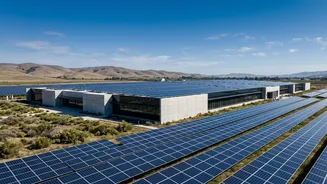
The good news is that these challenges are not going unnoticed. There is a growing consensus that India's AI growth must be sustainable. Policymakers and industry leaders are actively promoting 'green' data centers that are powered by renewable energy. States are beginning to offer incentives for facilities that meet energy efficiency benchmarks, measured by metrics like Power Usage Effectiveness (PUE). Technologically, the industry is pivoting towards advanced cooling solutions, such as closed-loop liquid cooling, which can dramatically reduce water consumption compared to traditional evaporative methods. The conversation is shifting from merely building capacity to building it efficiently and responsibly. The concept of 'frugal AI'—developing systems that are powerful yet less resource-intensive—is gaining traction as a pragmatic path for India.