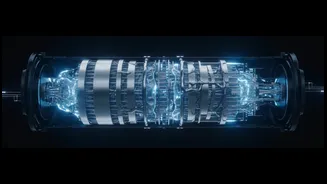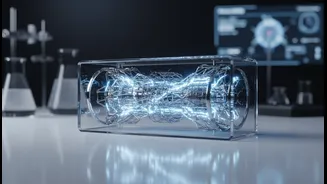








What is a Sodium-Metal Battery?
At its core, a sodium-metal battery (SMB) operates on a similar principle to the lithium-ion batteries in your phone and car: it moves ions between electrodes to store and release energy. The key difference is the star player. Instead of lithium, it uses
sodium—an element over 1,000 times more abundant and found globally in rock salt and seawater. This isn't just a simple swap; it has profound implications for cost and supply chains, avoiding materials like lithium and cobalt that are geographically concentrated. Unlike sodium-ion batteries that use carbon anodes, SMBs use a pure sodium metal anode. This design promises a much higher energy density, meaning more power in a lighter package, making them more comparable in size and weight to lithium-ion.
The Fast-Charging Breakthrough
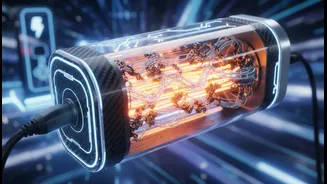
One of the most exciting recent developments is the dramatic improvement in charging speeds. Researchers in China recently announced a radical sodium-metal battery design that can be charged in just minutes. One laboratory test demonstrated the cell operating at a rate equivalent to a full charge in roughly four minutes. This leap forward was achieved by developing a new quasi-solid gel electrolyte. This gel helps sodium ions move more evenly during charging, preventing many of the issues that previously slowed the process down. While these results are from small, experimental cells and not yet ready for your EV, they represent a significant milestone. Even at a slightly slower, 20-minute charge rate, tests showed the battery retained 90% of its capacity after 2,000 cycles, matching the theoretical limits of some lithium-ion batteries.
Solving the Cycling and Longevity Puzzle
A battery's 'cycling' ability refers to how many times it can be charged and discharged before it starts to degrade. For a long time, sodium-metal batteries have been plagued by a major obstacle: dendrites. These are tiny, sharp, needle-like structures of sodium that can grow on the anode during charging. Over time, dendrites can pierce the battery's internal separator, causing short circuits, rapid capacity loss, and ultimately, battery failure. This is one of the main reasons SMBs have remained largely theoretical. However, recent innovations in electrolytes, like the quasi-solid gel, and the development of protective layers are proving effective at suppressing dendrite growth. These solutions create a more stable surface, allowing the sodium to deposit smoothly and uniformly, which dramatically enhances the battery's cycle life and long-term durability.
A Safer Alternative to Lithium
Safety is a major concern with high-energy batteries. Lithium-ion batteries can be prone to 'thermal runaway'—a chain reaction that causes them to overheat and potentially catch fire, especially when damaged. Sodium-metal batteries offer an inherent safety advantage. The sodium ions themselves are bulkier and move more slowly, making it harder for them to rush to a breach in the battery wall and start the kind of chain reaction that leads to fires. Furthermore, the move toward solid or quasi-solid electrolytes in new SMB designs eliminates the flammable liquid electrolytes found in many lithium-ion cells, further reducing fire risk. While all battery technologies require careful engineering for safety, the fundamental chemistry of sodium appears to offer a more stable and forgiving platform.
Impact on a Global and Local Scale
The potential impact of commercially viable sodium-metal batteries is enormous. For India, which is aggressively pursuing electric mobility and renewable energy goals, a domestic source of low-cost, high-performance batteries could be transformative. The technology's reliance on abundant sodium, rather than imported lithium, aligns perfectly with 'Make in India' initiatives and could bolster the nation's energy security. Globally, SMBs could first find a home in stationary grid storage, where their low cost and safety are paramount for balancing power from solar and wind farms. As the technology matures and energy density improves, applications in electric vehicles, particularly for public transport or budget-friendly commuter cars, become a strong possibility. This could help make EVs more affordable and accessible worldwide.