





Recognising the Danger Signs
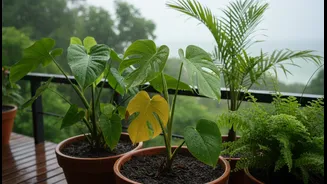
Before you can fix the problem, you need to know what to look for. A plant suffering from waterlogged soil isn't always obvious, especially to the untrained eye. The most misleading sign is wilting; your plant looks thirsty, but the soil is damp to the touch.
This happens because the roots are so saturated with water that they are deprived of oxygen and can no longer function to absorb moisture for the plant. Other key indicators include lower leaves turning yellow and dropping off, stunted or non-existent growth, and a sour or foul smell emanating from the soil. This smell is a clear sign that anaerobic bacteria have taken over, and the roots are beginning to decay. You might also notice green algae forming on the soil surface, a testament to persistently damp conditions.
Immediate First Aid Measures
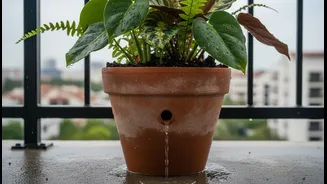
If you suspect waterlogging, you must act fast. First, stop watering immediately. If the pot is in the rain, move it to a sheltered spot under a roof or overhang to prevent it from getting any wetter. Next, improve drainage and airflow. A simple but effective trick is to gently tilt a heavy pot for a few hours to help excess water escape from the drainage holes. For smaller pots, elevate them on bricks or pot feet to ensure the drainage holes are not blocked and to allow air to circulate underneath. You can also gently poke several deep holes into the soil using a chopstick or skewer, avoiding the main stem. This creates channels for air to reach the suffocating roots and for trapped water to evaporate. Spreading a thin layer of dry material like coco coir on the soil surface can also help wick away some of the surface moisture.
The Emergency Repotting Procedure
If the soil is heavily saturated or you suspect significant root rot, repotting is the most effective solution. Carefully remove the plant from its pot and gently shake off the sodden soil to expose the root ball. Inspect the roots closely. Healthy roots are typically firm and white or light-coloured. Rotted roots will be dark brown or black, feel mushy and slimy to the touch, and may even fall apart easily. Using a pair of clean, sharp scissors or pruners, you must trim away all the affected roots. Be ruthless; leaving any decayed matter behind will allow the rot to spread. If a significant portion of the roots are removed, it's also wise to prune back about one-third of the plant's leaves. This reduces the stress on the remaining roots, which now have fewer leaves to support. Finally, repot the plant in a clean pot with completely fresh, well-draining potting mix.
Building a Better Potting Mix
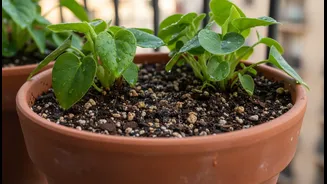
Prevention starts from the ground up, and that means using the right soil. Regular garden soil is too heavy for containers and compacts easily, leading to poor drainage. A good potting mix for balcony containers in India needs to balance moisture retention and drainage, especially to handle both intense summer heat and heavy monsoon rains. A reliable homemade recipe is a balanced blend of 40% garden soil, 30% compost (like vermicompost), and 30% materials for aeration and drainage, such as cocopeat and perlite or sand. Cocopeat helps the soil retain just enough moisture without becoming soggy, while coarse sand or perlite creates air pockets, allowing excess water to drain away freely and giving roots room to breathe. This kind of mix is light, airy, and resists compaction.
Long-Term Prevention is Key
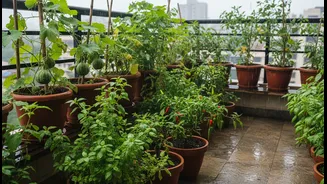
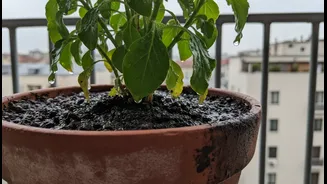
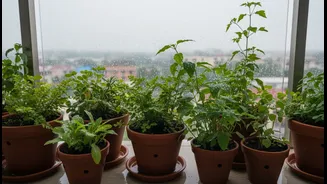
Once your plant is saved, you'll want to avoid a repeat disaster. The most critical factor is the pot itself. Ensure any container you use has adequate drainage holes at the bottom—this is non-negotiable. Terracotta pots are a good choice as the porous clay allows soil to breathe and dry out faster. Also, avoid the common myth of adding a layer of gravel or broken pot shards at the bottom; this actually hinders drainage by creating a perched water table that keeps the soil's lower level saturated. Instead, focus on a good quality potting mix throughout the pot. Finally, adjust your watering habits. Always check the soil before watering by inserting a finger a couple of inches deep. If it feels moist, wait another day or two. During the monsoon season, your plants may get all the water they need from rainfall alone.