





Decoding the New FDI Policy
The government has transformed the investment landscape for India's space sector, which was previously restrictive. The updated Foreign Direct Investment (FDI) policy now creates a tiered system to attract global capital. It allows up to 100% foreign
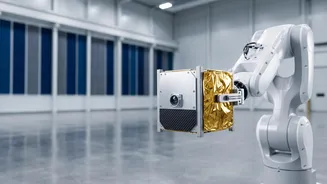
ownership via the automatic route for companies that manufacture components and sub-systems for satellites and their ground infrastructure. For more complex areas, like the manufacturing and operation of satellites, the automatic approval limit is set at 74%. For launch vehicles and the creation of spaceports, the cap for automatic approval is 49%. This liberalised approach is designed to accelerate investment, promote the transfer of advanced technology, and significantly improve the ease of doing business in a sector once dominated by the state.
The Dawn of a Job Creation Engine
This influx of capital is expected to turn the space sector into a major employment engine. The growth will create jobs far beyond the stereotypical role of a rocket scientist. The ecosystem will require a vast pool of skilled professionals, including software developers, data analysts, propulsion engineers, avionics experts, and specialists in satellite systems and advanced manufacturing. Projections indicate that India's space ecosystem could create over 200,000 new jobs by 2033 as it expands. However, this rapid growth also presents a challenge: ensuring a steady supply of talent with highly specialised, mission-critical skills to prevent a workforce gap. Private startups are already competing for experienced talent, sometimes leading to an exodus from government agencies to the commercial sector.
A Universe of New Business Ventures
The policy changes are fostering a vibrant startup culture, with the number of private space companies growing from just one in 2014 to over 400 in 2026. These new enterprises are not just supporting government missions; they are building independent businesses across the entire space value chain. Opportunities abound in satellite manufacturing, launch services, and ground station operations. An even larger market lies in downstream applications that use satellite data to power services in agriculture, logistics, telecommunications, and disaster management. Companies like Skyroot Aerospace, which developed India's first privately built orbital rocket, and Pixxel, which focuses on hyperspectral imaging satellites, are early examples of this new commercial frontier.
From Government-Led to a Commercial Ecosystem
For decades, the Indian Space Research Organisation (ISRO) was the primary driver of the nation's space activities. The new policies mark a fundamental shift towards a robust public-private partnership. The creation of the Indian National Space Promotion and Authorisation Centre (IN-SPACe) as a single-window agency is crucial to this transition. IN-SPACe is responsible for promoting, authorising, and supervising the activities of private companies, bridging the gap between startups and ISRO's extensive infrastructure and expertise. This framework allows ISRO to focus on strategic research and deep space exploration while the private sector drives commercialisation and builds a scalable industrial base.
Navigating the Path Ahead
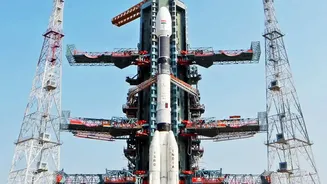
While the potential is immense, the path to becoming a global space hub has its challenges. India's space economy, valued at around USD 8.4 billion, aims to reach USD 100 billion by 2040, a goal requiring sustained growth and investment. The sector faces intense global competition from established players in the US and China. Key challenges include the need for more launch infrastructure beyond the single main complex at Sriharikota, developing a deeper domestic supply chain for critical components, and securing large-scale funding for capital-intensive projects. Aligning policy, capital, and talent development will be the critical test in transforming this growing potential into a sustainable and globally competitive industry.