






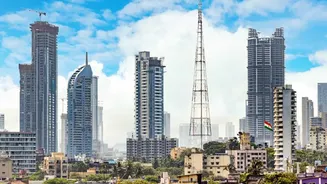

The Strain on Our Megacities
India's major metropolitan areas have long been magnets for talent, capital, and opportunity. However, this relentless concentration has come at a cost. Today, these cities are grappling with overburdened infrastructure, soaring real estate prices, and a diminishing
quality of life. The daily commute has become a multi-hour ordeal, air quality is a persistent health concern, and the cost of living makes it difficult for even well-paid professionals to build a secure future. This saturation is not just a social issue; it's a business problem. Companies face higher operational costs, intense competition for talent, and higher employee attrition as urban burnout becomes more common. The very engines of India's economy are overheating, and simply adding more fuel is no longer a sustainable option.
The Untapped Regional Potential
While megacities are crowded, a vast reservoir of talent lies waiting in India's smaller urban centers. These Tier-2 and Tier-3 cities—like Jaipur, Indore, Coimbatore, and Lucknow—are home to a growing population of educated, ambitious young people. Historically, they were forced to migrate for corporate jobs, contributing to a 'brain drain' from their hometowns. Now, the narrative is changing. These cities offer a compelling proposition: a large, motivated workforce combined with significantly lower operational costs for businesses. More than half of India's Micro, Small, and Medium Enterprises (MSMEs) are already based in these regions, providing employment to over 110 million people and signaling a robust, pre-existing economic foundation. Expanding corporate jobs here isn't about charity; it's about tapping into an underutilized economic force.
A Win-Win for Corporations and Communities
Decentralization is increasingly viewed as a strategic advantage. For companies, the benefits are clear: reduced expenses on real estate and salaries, access to a fresh talent pool, and potentially lower employee turnover as people enjoy a better work-life balance closer to home. Some Global Capability Centres (GCCs) report that costs in smaller cities can be 40-60% lower than in major hubs. For the towns themselves, the arrival of corporate jobs creates a virtuous cycle. It boosts the local economy, stimulates demand for housing and services, creates ancillary employment, and increases the local tax base, which can then be reinvested into better infrastructure. It provides young professionals with a viable path to a successful career without having to leave their communities behind.
The Digital and Physical Infrastructure Catalyst
This shift would not be possible without significant advancements in infrastructure. The government's focus on improving national highways, railways, and air connectivity has physically linked these smaller cities to the broader economy. Simultaneously, the digital revolution, powered by affordable data and widespread 5G rollout, has made remote and hybrid work not just feasible but efficient. Technology companies like TCS, Infosys, and Wipro have already begun establishing or expanding operations in cities such as Nagpur and Coimbatore. This digital framework allows companies to operate a 'hub-and-one' model, maintaining a strategic presence in a Tier-1 city while executing many functions from more cost-effective regional offices.
Challenges on the Path Forward
Despite the momentum, the path to balanced regional development is not without obstacles. The success of this transition depends on ensuring that smaller cities have reliable infrastructure, including consistent power, clean water, and quality local transportation. While government initiatives like the Urban Infrastructure Development Fund (UIDF) aim to address these gaps, proactive planning is crucial. Furthermore, a simple 'lift and shift' of jobs is not enough. Fostering local innovation ecosystems, strengthening educational institutions to match industry needs, and ensuring inclusive growth are essential for these new hubs to become truly self-sustaining. Without a coordinated effort between government and the private sector, the promise of regional growth could remain unfulfilled.