



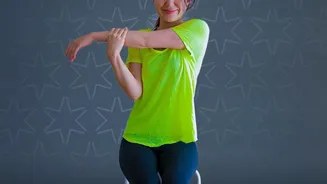


1. Effortless Shoulder Rolls
This is the classic move for a reason. Sitting hunched over a keyboard causes tension to build up in the trapezius muscles, which span your neck and shoulders. Shoulder rolls counteract this by improving mobility and boosting circulation. To do them,
sit tall and let your arms hang loosely. Inhale as you lift your shoulders up toward your ears. Exhale as you roll them back and down, squeezing your shoulder blades together. Repeat this 8-10 times, then reverse the direction, rolling your shoulders forward. It’s a simple, discreet movement you can do every hour to prevent stiffness.
2. Gentle Neck Tilts
Staring at a screen often causes us to crane our head forward, straining the neck muscles. Gentle neck tilts help release this tension. Sit up straight and slowly lower your chin to your chest, holding for 15 seconds. Return to the neutral position. Next, gently tilt your right ear toward your right shoulder, holding for 15 seconds without lifting your left shoulder. Return to the center and repeat on the left side. Avoid rolling your head in a full circle, as this can compress the vertebrae in your neck. These targeted tilts are safer and more effective.
3. Seated Spinal Twist
Your spine isn't designed to stay static for eight hours a day. A seated twist helps maintain mobility and can alleviate lower back discomfort. Sit upright with your feet flat on the floor. Gently twist your upper body to the right, placing your left hand on your right knee and your right hand on the back of your chair for a light leverage. Hold the stretch for 15-20 seconds, breathing deeply. You should feel a gentle stretch, not a strain. Return to the center and repeat on the left side. This is an excellent way to realign your posture during the day.
4. Wrist and Finger Savers
Hours of typing and clicking can lead to stiff wrists and forearms. To counteract this, extend your right arm forward with your palm facing up. With your left hand, gently pull your fingers down and back toward your body until you feel a stretch on the underside of your forearm. Hold for 20 seconds. Then, flip your hand so the palm faces down and gently pull the fingers toward you to stretch the top of your forearm. Hold again. Repeat on the left arm. Finish by making fists and then fanning your fingers out wide a few times to release tension.
5. Seated Cat-Cow
This adaptation of the popular yoga pose brings movement to the entire spine. Sit at the edge of your chair with your feet flat and hands on your knees. On an inhale, arch your back, push your chest forward, and look up toward the ceiling (the 'cow' pose). On an exhale, round your spine, tuck your chin to your chest, and let your shoulders curve forward (the 'cat' pose). Alternate between these two positions slowly for 8-10 repetitions. This movement helps increase spinal fluid circulation and relieves back stiffness.
6. Seated Figure-Four Stretch
Prolonged sitting can lead to tight hips and glutes, which can contribute to lower back pain. This stretch targets those areas effectively. While sitting, cross your right ankle over your left knee, creating a '4' shape with your legs. Keeping your back straight, gently lean forward until you feel a stretch in your right hip and glute. If you want a deeper stretch, you can apply gentle pressure on your right knee. Hold for 20-30 seconds, then switch sides. It’s a powerful way to open up hips that have been locked in a seated position.
7. Overhead Reach
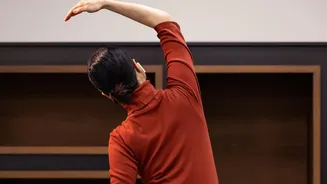
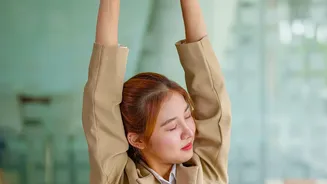
An overhead stretch helps to decompress the spine and stretch the muscles along the sides of your body. Sit tall in your chair and interlace your fingers. Push your palms up toward the ceiling, straightening your arms as much as comfortable. Breathe in and lengthen your spine. As you exhale, gently bend to the right, feeling a stretch along your left side. Hold for a few seconds, return to the center, and then repeat on the left side. This simple move fights the slump and elongates your entire upper body.