




A Celestial Event Explained
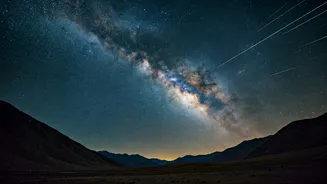
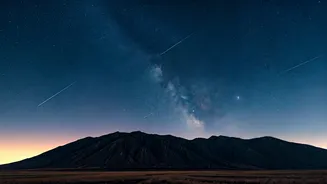
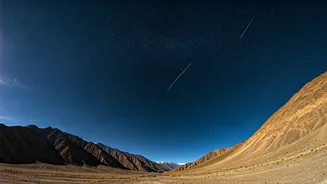
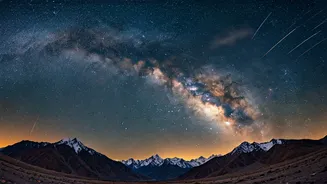
The Southern Delta Aquariids are an annual meteor shower that graces our skies from mid-July to late August. Peaking towards the end of July, this celestial event occurs when Earth passes through the trail of debris left by a comet, likely Comet 96P/Machholz.
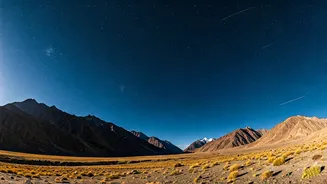
These tiny space rocks burn up as they enter our atmosphere, creating the fleeting streaks of light we call 'shooting stars'. While not as intense as the more famous Perseids, the Delta Aquariids offer a steady stream of meteors, with up to 20 per hour under perfect conditions. To see them, however, you need one crucial ingredient: a truly dark sky.
The Altitude Advantage
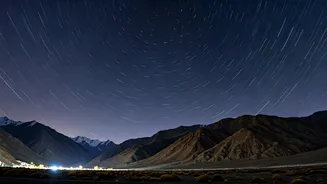
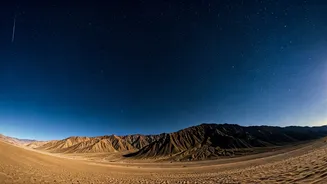
Ladakh's primary advantage for any celestial viewing is its elevation. With most of the region situated above 10,000 feet, observers are literally closer to the stars. More importantly, this high altitude means you are above a significant portion of the Earth's atmosphere. A thinner atmosphere leads to less turbulence and distortion, which is why stars appear to twinkle less and shine with a sharper, more brilliant clarity. The air is also incredibly dry, with low humidity and minimal water vapor to blur or absorb the faint light from distant meteors, ensuring a crystal-clear view.
A Sanctuary from Light Pollution
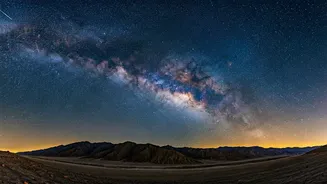
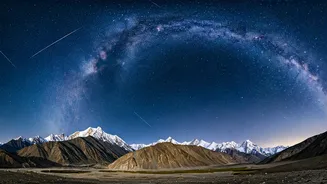
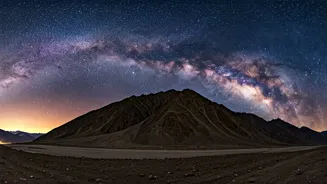
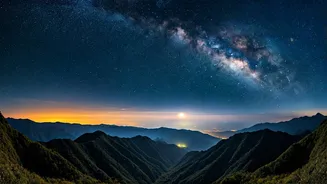
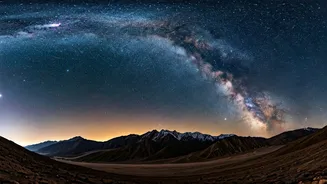
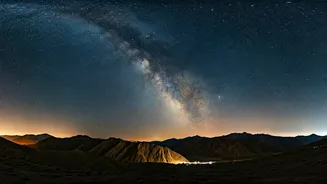
In an era where artificial light is rapidly erasing the night sky, Ladakh remains one of the darkest accessible places in India, and indeed the world. While the Milky Way is now invisible to a vast majority of the global population, in remote parts of Ladakh, it is so bright it can cast a shadow. This is due to the region's sparse population and vast, undeveloped landscapes that are free from the 'skyglow' that plagues urban and suburban areas. This near-total darkness is essential for spotting the often faint meteors of the Delta Aquariid shower, which would be completely washed out elsewhere.
India’s First Dark Sky Reserve
Recognizing its unique astronomical value, a part of Ladakh has been officially designated as India's first Dark Sky Reserve. Located in Hanle, within the Changthang Wildlife Sanctuary, this reserve is a testament to the region's pristine skies. The area, home to the Indian Astronomical Observatory, is one of the highest observatories in the world, chosen specifically for its superior viewing conditions. The reserve implements strict controls on artificial lighting to preserve the natural darkness, making it a sanctuary for both scientific research and astro-tourism. This official protection ensures that Hanle provides some of the best, most reliable stargazing opportunities in the country.
The Perfect Weather Window
The Delta Aquariids peak in late July and early August, which coincides with India's monsoon season. For most of the country, this means cloudy skies and obscured views. However, Ladakh is in a rain shadow area, meaning the towering Himalayas block most of the monsoon clouds. As a result, Ladakh enjoys clear, dry weather during this period, offering ideal conditions for watching the meteor shower when the rest of India is clouded over. This unique climatic advantage solidifies its status as the top spot for this specific celestial event.
Top Viewing Spots in Ladakh
While almost anywhere outside of Leh town will offer great views, some locations are particularly renowned. Hanle, as the Dark Sky Reserve, is the premier choice for serious stargazers. Nubra Valley, with its wide-open spaces and minimal infrastructure, is another excellent option. The high-altitude lakes of Pangong Tso and Tso Moriri also provide stunning backdrops, with the stars reflecting in the calm, high-altitude waters. These locations combine the essential ingredients of high altitude, clear skies, and profound darkness for an unforgettable celestial show.