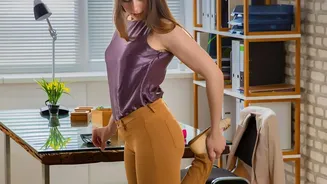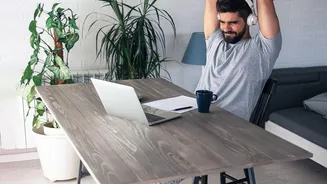





1. Neck Tilts and Rotations
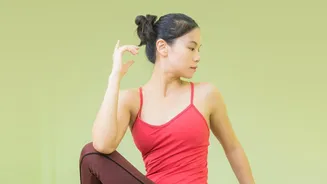
Your neck often bears the brunt of staring at a screen. To release this tension, sit up tall with your shoulders relaxed. Gently tilt your head toward your right shoulder, holding for 15-20 seconds to feel a stretch along the left side of your neck. Return
to the center and repeat on the left side. Next, slowly turn your head to look over your right shoulder as far as is comfortable, hold for 10-15 seconds, and then repeat on the left. These simple movements improve flexibility and reduce stiffness.
2. Shoulder Shrugs and Rolls
Stress and poor posture often cause us to hunch, creating tension in the shoulders. Combat this with simple shoulder shrugs and rolls. Sit or stand straight and lift your shoulders up toward your ears, hold for a few seconds, and then release them down. Follow this by rolling your shoulders backward in a circular motion five times, then forward five times. This helps release tension in the upper trapezius muscles and resets your shoulder position. It’s a quick and discreet way to feel more relaxed.
3. Seated Torso Twist
Sitting for long periods can make your spine feel compressed and stiff. A seated torso twist helps improve spinal mobility and can relieve lower back tension. Sit upright in your chair with your feet flat on the floor. Place your left hand on your right knee and your right hand on the back or arm of your chair. Gently twist your upper body to the right, keeping your hips facing forward. Hold for 15-30 seconds, breathing deeply, and then repeat on the other side.
4. Wrist and Finger Stretches
Constant typing and mouse use can lead to sore wrists and fingers. To stretch them, extend one arm in front of you with the palm facing up. Gently bend your wrist down, using your other hand to pull your fingers toward your body. Hold for 15-30 seconds. Then, flip your hand so the palm faces down and repeat the stretch. Follow up by making a tight fist and then spreading your fingers as wide as possible, repeating several times to improve circulation.
5. Upper Back and Chest Opener
Counteract the 'desk slump' by opening up your chest and stretching your upper back. You can do a version of the cat-cow stretch while seated. Place your hands on your knees and, on an inhale, arch your back and look up, opening your chest (Cow). On an exhale, round your spine and drop your chin to your chest (Cat). Another great option is to interlace your fingers behind your back, straighten your arms, and squeeze your shoulder blades together to stretch your chest.
6. Seated Leg Lifts
Your legs can also feel the effects of being sedentary. Seated leg lifts help to engage your quadriceps and improve circulation. While sitting in your chair, straighten one leg and hold it parallel to the floor for 10 seconds. For an added stretch, pull your toes toward you. Slowly lower the leg and repeat with the other side. You can do 10-15 repetitions on each leg to keep the blood flowing and prevent stiffness in your knees and hips.
7. Standing Hip Flexor Stretch
This is where your standing break comes in. Standing up every 30 minutes is crucial. Use one of these breaks for a hip flexor stretch, as these muscles get tight from prolonged sitting. Stand up and take a step forward with your right foot into a gentle lunge position. Keep your back straight and gently push your hips forward until you feel a stretch in the front of your left hip. Hold for 20-30 seconds without bouncing, then switch sides. This helps relieve lower back strain.