






Why is Kolkata often called the 'London of India'? This nickname is more than a casual comparison; it's a window into the city's soul, rooted in centuries of shared history, grand architecture, and a vibrant riverside culture.
The Empire's Second City
The story begins when Kolkata,
then Calcutta, was the epicenter of British India. From 1772 to 1911, it served as the capital of the British Raj, making it the most important city in the empire after London itself. This status meant that immense resources were poured into developing the city, not just as an administrative hub but as a showpiece of imperial power. The British East India Company had established it as a major trading post, and its political and economic significance grew exponentially. For over a century, Kolkata was the nucleus of governance, commerce, and education in British India, its infrastructure and public spaces designed to rival those of European capitals.
Architectural Echoes on the Hooghly
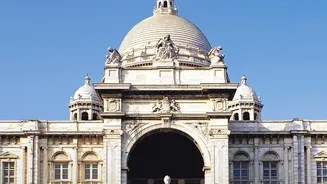
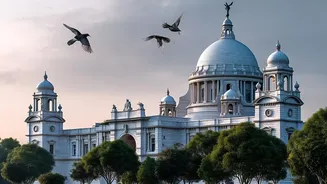
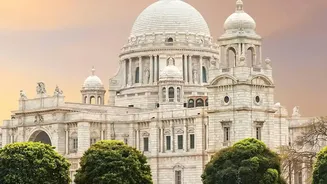
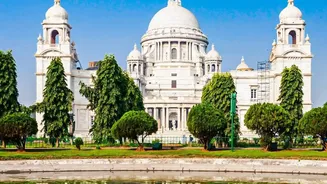
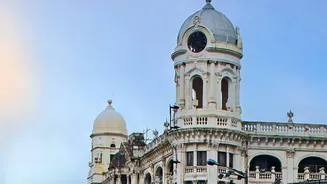
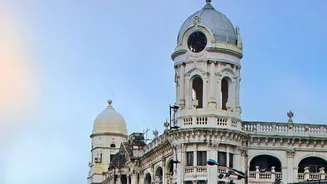
Perhaps the most visible link between the two cities is the architecture. The British built Kolkata to be a grand statement, using architectural styles popular back home. Strolling through its older districts reveals a stunning collection of buildings designed in Victorian, Neoclassical, and Gothic Revival styles. The magnificent Victoria Memorial, a grand white marble monument to Queen Victoria, stands as a prime example. Other landmarks like St. Paul's Cathedral, with its Indo-Gothic design, the Calcutta High Court, and the stately Writers' Building were all crafted to mirror the grandeur of London. This deliberate emulation created a cityscape that felt distinctly European, cementing its 'London of India' reputation.
A Tale of Two Rivers
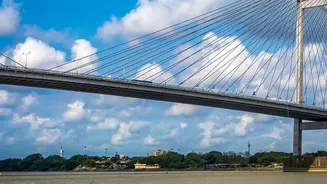
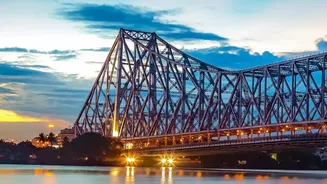
Just as London developed along the River Thames, Kolkata's identity is inextricably linked to the Hooghly River. A major distributary of the Ganges, the Hooghly was the city's lifeline, a critical artery for trade and transport that fueled its growth during the colonial era. This riverine connection is a key parallel. The bustling ghats, promenades, and old warehouses along the Hooghly's banks evoke a similar atmosphere to London's historic riverside. Massive cantilever bridges like the Howrah Bridge and the modern Vidyasagar Setu, spanning the water to connect the city, further strengthen the visual and functional comparison to the bridges over the Thames.
A Skyline of Past and Present
While the nickname is rooted in history, Kolkata's skyline today tells a story of evolution, much like London's. The historic colonial-era structures now share the horizon with modern highrises and contemporary architectural projects. This blend of old and new creates a unique and dynamic visual identity. The skyline is not just a static image but a narrative of a city that respects its past while embracing the future. From the iconic silhouette of the Victoria Memorial to the imposing structure of 'The 42', the city's tallest building, Kolkata’s skyline is a testament to its resilience and ability to adapt, a trait it shares with its British counterpart.
Cultural and Intellectual Capital
Beyond the physical resemblances, the comparison extends to culture and intellect. Kolkata has long been regarded as India's cultural capital, a hub for literature, arts, and revolutionary thought, much like London has been for the Western world. The Bengal Renaissance, a period of profound social and intellectual awakening, was centered in the city. This environment fostered a culture of intellectualism and debate. Even today, the city's famous coffee houses and freestyle conversations, known as 'adda', reflect a deepnded intellectual curiosity. The presence of numerous historic clubs, some of the oldest outside the British Isles, also points to a shared anglophile legacy.