

Understanding the Dhungar Method
The 'dhungar' method is a traditional North Indian technique for infusing a smoky aroma into a dish. It involves placing a piece of red-hot natural charcoal in a small heatproof bowl inside the cooked dish. Ghee or oil is then drizzled over the hot coal,
which immediately produces a fragrant, flavourful smoke. By quickly covering the pot with a tight lid, this smoke gets trapped and infuses into the food, lending it a unique, tandoor-like essence that is impossible to achieve otherwise. This final touch can elevate a simple homemade dal to a truly memorable meal.
Step 1: Preparing the Dal Base
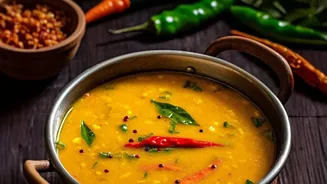
The foundation of a great dal tadka is, of course, the dal itself. Toor dal (arhar dal) is the classic choice for its creamy texture and nutty flavour. However, many restaurants use a blend to create more depth; a popular combination includes primarily toor dal with a smaller amount of chana dal for texture and masoor or moong dal for flavour. To begin, wash one cup of lentils thoroughly. In a pressure cooker, combine the rinsed lentils with three cups of water, a teaspoon of turmeric powder, and salt to taste. Cook for 3-4 whistles, or until the dal is completely soft and mushy. Once the pressure releases naturally, whisk the dal lightly to ensure a smooth, consistent texture. Set it aside while you prepare the tadka.
Step 2: Creating the Flavourful Tadka
The 'tadka', or tempering, is where the dal gets its primary layer of flavour. In a separate pan or kadhai, heat a tablespoon or two of ghee. Once hot, add a teaspoon of cumin seeds and let them splutter. Follow this with a pinch of asafoetida (hing), finely chopped ginger and garlic, and sauté until the raw aroma disappears. Next, add one finely chopped onion and cook until it turns soft and translucent. Add chopped tomatoes and cook them down until they soften and the ghee begins to separate from the masala. Finally, add your powdered spices like red chilli powder and coriander powder. Pour this flavourful tadka into your cooked dal, stir well, and let it simmer for a few minutes to allow the flavours to meld together.
Step 3: The Charcoal Infusion (Dhungar)
This is the final, transformative step. First, and most importantly, use only natural lump charcoal. Do not use chemical-laden briquettes or self-igniting charcoal, as these can release harmful fumes into your food. Using tongs, hold a small piece of charcoal directly over a gas flame until it is red-hot and glowing, which may take a few minutes. Carefully place a small, heat-safe steel bowl (a katori) or even a hollowed-out onion layer in the centre of your dal, ensuring it sits on top and doesn't sink. Place the glowing charcoal into the bowl. Immediately pour about a teaspoon of ghee over the hot coal. As it begins to billow smoke, cover the dal pot with a tight-fitting lid instantly. Let the dal infuse for about 2 to 5 minutes—any longer and the flavour might become too overpowering.
Tips for Perfect Smoky Dal
To ensure success, keep a few things in mind. Using ghee instead of oil for the dhungar process yields a richer, more aromatic smoke. You can also add a couple of cloves or some coarsely ground spices to the hot charcoal along with the ghee for an extra layer of flavour. Ensure your lid is very tight to trap as much smoke as possible. After the infusion time is up, carefully remove the lid away from your face to avoid a rush of smoke. Remove the bowl with the charcoal using tongs and give the dal a final gentle stir. Garnish with fresh coriander and serve immediately to enjoy the full effect of the smoky aroma.