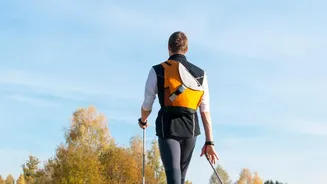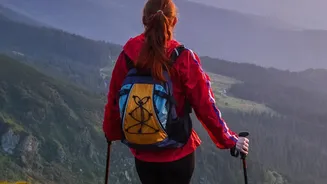



From Ski Slopes to Park Paths
Originating in Finland as a summer training method for cross-country skiers, Nordic walking has transformed into a popular global exercise. The concept is simple yet powerful: by using specially designed poles, you turn a regular walk into a comprehensive
workout. Unlike trekking poles used for stability, Nordic walking poles are actively used to propel you forward. This technique engages your upper body—including your arms, shoulders, back, and core—in a way that regular walking does not. While a standard stroll activates about 50% of your body's muscles, proper Nordic walking can engage up to 90%, significantly boosting the effectiveness of your workout.
The Full-Body Benefits of Proper Form
The difference between a casual walk with poles and true Nordic walking is the technique. When done correctly, the benefits are substantial. Studies have shown it can burn anywhere from 18% to 67% more calories than regular walking. This increase in intensity comes without a significantly higher sense of effort for many people. The use of poles also helps distribute your weight, reducing stress on your knees, hips, and feet, making it an excellent low-impact option. Furthermore, the rhythmic arm movement and pole planting can improve posture, balance, and upper body strength, making it a functional fitness activity that supports everyday movements.
Mastering the Core Technique
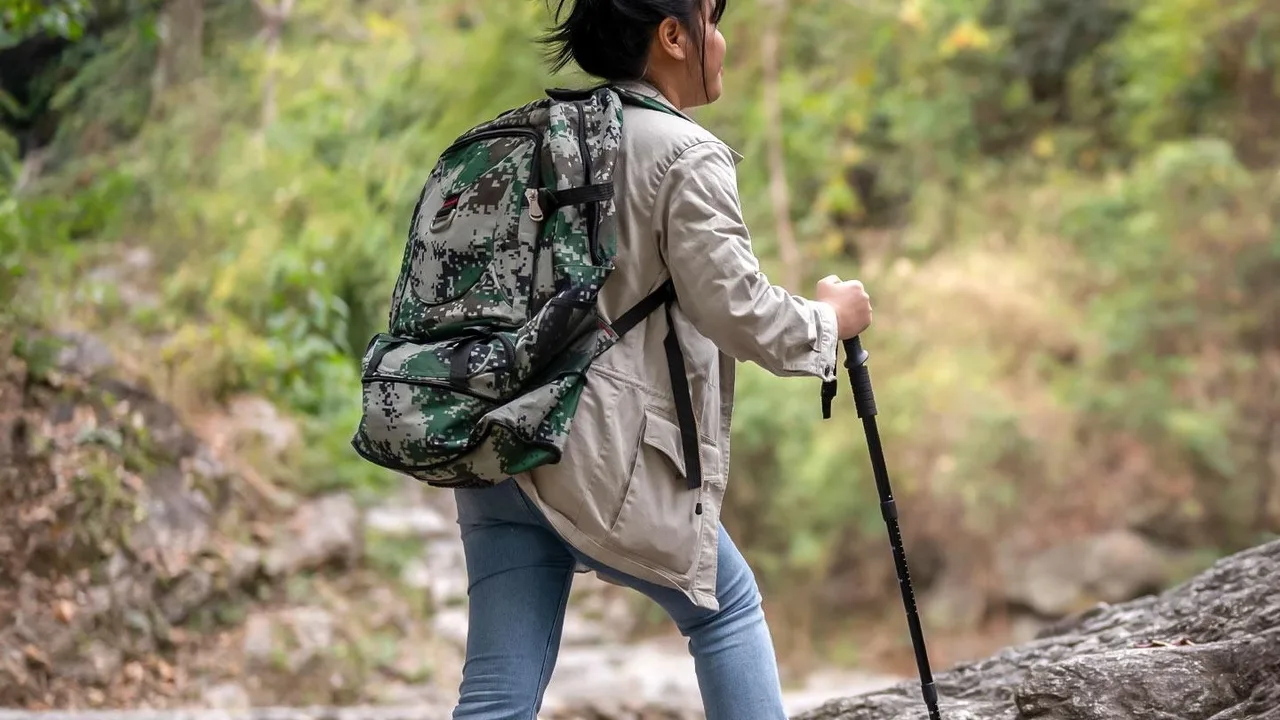
The fundamental movement of Nordic walking mimics the natural swing of your arms and legs. It is a cross-lateral motion: as your right leg steps forward, your left arm swings forward to plant its pole, and vice versa. A good way to think about the technique is a three-part motion: plant, push, and propel. You plant the pole tip on the ground roughly between your front and back foot. As your body moves past the pole, you push firmly through the strap, extending your arm behind you. This push propels you forward. A key detail is to open your hand at the end of the push, letting the pole swing forward via the strap, before gripping it again to plant for the next stride. Your posture should remain upright, with your gaze forward, not down at your feet.
Common Mistakes to Avoid
Many beginners make a few common errors that reduce the effectiveness of the workout and can cause strain. A primary mistake is planting the pole too far in front of the body, which acts as a brake rather than a propeller. Another is keeping the elbows bent and using only the forearms instead of engaging the larger muscles of the shoulders and back by extending the arm. Many also maintain a tight, clenched grip throughout the motion, which prevents the proper push-off and can tire the hands and wrists. Finally, walking with the arm and leg on the same side moving together (called pacing) is a common coordination hiccup. To fix this, try dragging the poles loosely from their straps while walking normally to reset your natural rhythm.
Choosing the Right Poles
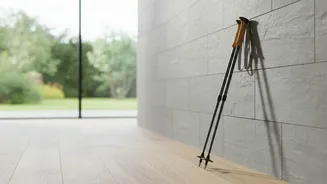
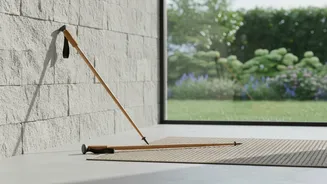
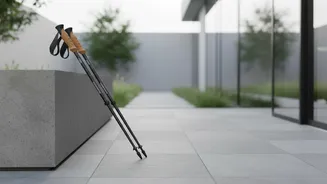
Your equipment is crucial, and the most common mistake starts with using the wrong poles. Trekking or ski poles are not suitable as they lack the specific strap system (often called a gauntlet) that allows for the 'push and release' technique. When it comes to length, a general rule is to multiply your height in centimetres by 0.68. Alternatively, when you stand with the pole tip on the ground, your elbow should be at roughly a 90-degree angle. If you're between sizes, beginners are often advised to choose the shorter option. Poles with some carbon content are preferable to pure aluminium as they absorb vibrations better, reducing strain on your arm joints.