




The United Nations Secretary-General is often called the world's top diplomat, but their 'election' is one of the planet's most exclusive and secretive processes. Here’s a look at how it actually works and why five powerful nations call the shots.
An Appointment, Not an Election
First
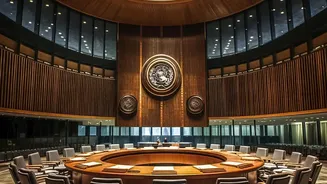
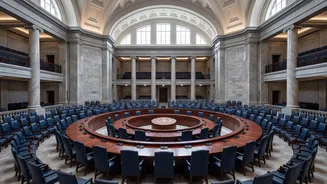
things first: the UN chief isn't elected by the public or even by all 193 member states in a straightforward vote. According to Article 97 of the UN Charter, the Secretary-General is 'appointed by the General Assembly upon the recommendation of the Security Council'. This single sentence sets up a two-stage process where the real power lies with the 15-member Security Council, which must first recommend a single candidate. The General Assembly has never rejected the Council's choice, making the 'appointment' more of a ratification.
The Security Council's Inner Sanctum
The selection process is dominated by the Security Council, and specifically its five permanent members (P5): China, France, Russia, the United Kingdom, and the United States. While all 15 members of the council vote, only the P5 hold the power of the veto. This means any one of them can block a candidate, effectively ending their bid. For a candidate to be recommended, they must secure at least nine 'yes' votes in the Council with no vetoes from a permanent member. An abstention from a P5 member, however, does not count as a veto.
The Secret Language of Straw Polls
To narrow the field, the Security Council holds a series of informal, secret ballots known as 'straw polls'. In these polls, members vote to 'encourage', 'discourage', or express 'no opinion' on each candidate. The real drama begins when the ballots become colour-coded. Votes from the ten elected members are on white paper, while those from the five permanent members are on red. This allows everyone to see if a leading candidate has a potential P5 veto hanging over their campaign, even without knowing which country cast the 'discourage' vote. A candidate who consistently receives a red-ballot 'discourage' vote is unlikely to succeed.
A Push for Transparency
For decades, the entire process was shrouded in secrecy. However, starting with the 2016 selection of António Guterres, there has been a significant push for more transparency. The process now officially begins with a joint letter from the presidents of the General Assembly and Security Council inviting nominations. Candidates submit vision statements and, for the first time in the current 2026 race, disclosures on campaign financing. They also participate in live-streamed 'interactive dialogues' with the General Assembly, essentially public job interviews where member states and civil society can ask questions.
Does Openness Change the Outcome?
While these reforms have made the process more open, critics argue they haven't fundamentally shifted the power dynamic. The public dialogues and vision statements create a more informed global audience, but the final decision is still brokered behind the closed doors of the Security Council. The P5's veto remains the most decisive factor. No candidate can win without at least the quiet consent of all five permanent members. As a result, aspiring Secretary-Generals often have to walk a fine line, avoiding strong stances on issues that might alienate one of their powerful gatekeepers.