




The Perseid Meteor Shower: A Monsoon Gamble
First up is the world-famous Perseid meteor shower, which peaks on the night of August 12-13. These fast, bright meteors are debris from Comet Swift-Tuttle. In 2026, viewing conditions are astronomically perfect because the peak coincides with a new moon,
meaning skies will be dark all night. This could allow observers to see up to 100 meteors per hour under ideal conditions. However, for most of India, there's a significant catch: the monsoon. Widespread cloud cover in August makes viewing a challenge. But for enthusiasts in drier regions like Ladakh, Spiti Valley, or parts of western Rajasthan and Kutch, the show promises to be spectacular. If you're in one of these areas, find a spot away from city lights, look towards the northeast after midnight, and prepare for a cosmic fireworks display.
Planetary Conjunctions: Jewels of the Evening Sky
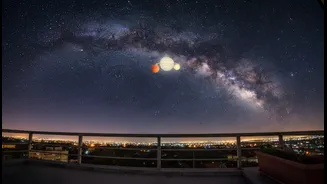
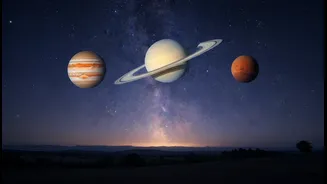
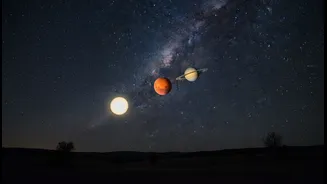
While meteor showers require patience, planetary conjunctions are easy, beautiful events. On the evenings of June 8 and 9, the two brightest planets, Venus and Jupiter, will appear incredibly close together in the western sky shortly after sunset. This stunning 'double star' will be visible to the naked eye across India, making for a fantastic photo opportunity. Later in the year, on November 15-16, Jupiter and Mars will have a close approach in the early morning sky. The brilliant Jupiter and reddish Mars will rise around midnight and be high in the southern sky by dawn, located in the constellation Leo. No special equipment is needed for these events, just a clear view of the horizon.
The Orionids: A Halloween Treat from Halley's Comet
In October, Earth passes through the dust trail of one of history's most famous comets: Halley's Comet. This creates the Orionid meteor shower, which will peak around October 21-22. The Orionids are known for fast meteors that can sometimes leave persistent, glowing trails. In a good year, you might see 15 to 20 meteors per hour. Unfortunately, 2026 presents a challenge for the Orionids. The peak night coincides with a bright waxing gibbous Moon, which will wash out all but the brightest meteors. While not the best shower of the year, dedicated observers who block the Moon from their line of sight might still catch a few bright streaks radiating from the constellation Orion.
The Leonids: A Shower with a Stormy History
The Leonid meteor shower, peaking on November 17-18, is famous for producing incredible meteor storms in the past, though it's much quieter in most years. For 2026, a modest rate of 10 to 15 meteors per hour is expected. The moon will be a waxing crescent, setting in the evening and leaving the prime viewing hours after midnight dark. While not as prolific as the Geminids or Perseids, the Leonids are known for being extremely fast — hitting the atmosphere at around 71 km/s — and can produce bright, colourful meteors. It's a great opportunity for post-monsoon stargazing in the clear November night sky.
The Geminids: India's Best Meteor Shower of the Year
Mark your calendars for December 13-14, because the Geminid meteor shower is the undisputed highlight of the year for Indian skywatchers. Often called the 'king of meteor showers', the Geminids can produce up to 120 bright, slow-moving, and often colourful meteors per hour. What makes the 2026 Geminids exceptional for India is the combination of factors: the peak occurs during the dry, clear skies of December; the Moon is a slim crescent and won't interfere; and the shower's radiant in the constellation Gemini rises in the evening, meaning you don't have to wait until the early morning hours to start watching. The parent body is the asteroid 3200 Phaethon, which results in denser, more vivid meteors. For the best experience, drive an hour or two away from city lights, lie back, and watch the year's grand celestial finale.