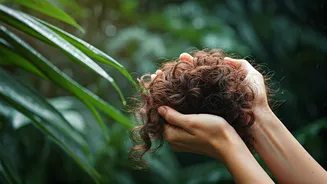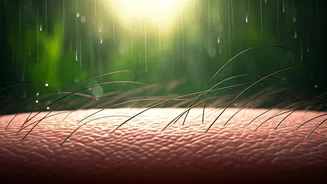






Why Monsoon Magnifies Hair Fall
It’s a simple case of science. The monsoon season brings a sharp spike in humidity. Your hair, which is porous, absorbs this excess moisture from the air. This causes the hair shaft to swell, making it weaker, more brittle, and prone to breakage. Furthermore,
this constant dampness creates the perfect environment for problems to brew right at the root. The hydrogen bonds in your hair's keratin are disrupted, leaving your locks frizzy, unmanageable, and fragile. So, when you see more hair in your brush, it’s often a direct result of your hair struggling to cope with the atmospheric moisture overload.
Your Scalp Is the Foundation
Healthy hair begins with a healthy scalp, and the monsoon is particularly unkind to it. The combination of sweat, rainwater, and high humidity makes your scalp a breeding ground for fungal and bacterial infections. This can lead to issues like dandruff, itchiness, and inflammation of the hair follicles (folliculitis), all of which can accelerate hair shedding. Keeping your scalp clean and dry becomes non-negotiable. Don't let rainwater sit in your hair; if you get caught in a downpour, try to wash your hair with a gentle shampoo as soon as you get home. A clean, balanced scalp is your best defence against seasonal hair fall.
Rethink Your Hair Wash Routine
While it's tempting to wash your hair daily to combat the greasy feeling, overwashing can strip your scalp of its natural oils, leading to more problems. Instead, aim for a balanced routine of washing your hair 2-3 times a week with a mild, sulphate-free shampoo. If you’re prone to dandruff, consider incorporating an anti-fungal shampoo containing ketoconazole or zinc pyrithione once a week. Always use lukewarm water, as hot water can further weaken hair roots and dehydrate the scalp. And never, ever skip the conditioner. Apply it only from the mid-lengths to the ends to seal the cuticle, reduce frizz, and protect the weakened shaft without weighing down your roots.
The Golden Rules of Drying
How you dry your hair is just as important as how you wash it. Vigorously rubbing your hair with a coarse towel is a recipe for disaster, as it creates friction and causes breakage in already vulnerable, swollen hair strands. Instead, gently squeeze out excess water with your hands and then pat it dry with a soft microfibre towel or an old cotton t-shirt. It's best to let your hair air-dry, but in a highly humid environment, this can take a long time, leaving your scalp damp. If you must use a blow-dryer, use it on the cool setting and keep it moving, holding it at least six inches away from your hair. The goal is to get your scalp dry first to prevent fungal growth.
Nourish From the Inside Out
Topical care can only do so much. Your hair is built from the nutrients you consume, so strengthening your diet is crucial. Ensure you’re getting enough protein (from sources like eggs, lentils, and paneer) and iron (from spinach, beetroot, and dates), as deficiencies in these are major causes of hair loss. Biotin, found in nuts and seeds, is another hair hero. Also, increase your intake of Vitamin C-rich foods like amla, lemons, and guavas. Vitamin C helps in the absorption of iron and plays a key role in producing collagen, a protein that strengthens hair. Staying hydrated by drinking plenty of water is also essential for overall health, including that of your hair and scalp.
Smart Styling and Simple Swaps
During the monsoon, it’s wise to give your hair a break. Avoid complex chemical treatments like straightening or colouring, as these processes can further weaken the hair shaft. Opt for simple, loose hairstyles like a braid or a loose ponytail instead of tight buns or high ponytails that pull on the roots and can cause traction alopecia. A weekly deep-conditioning mask or a traditional oil massage with coconut or almond oil (warmed slightly) can do wonders. Apply it an hour before washing to nourish the scalp and form a protective barrier on the hair shaft, reducing how much water it absorbs. These small adjustments can significantly reduce stress on your hair.