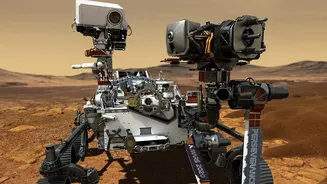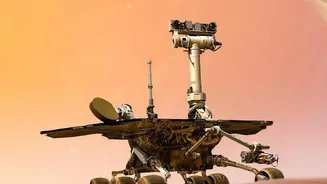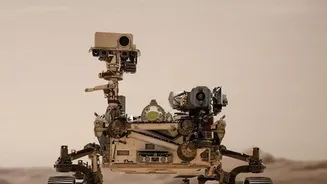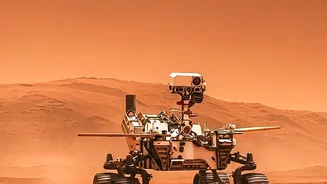


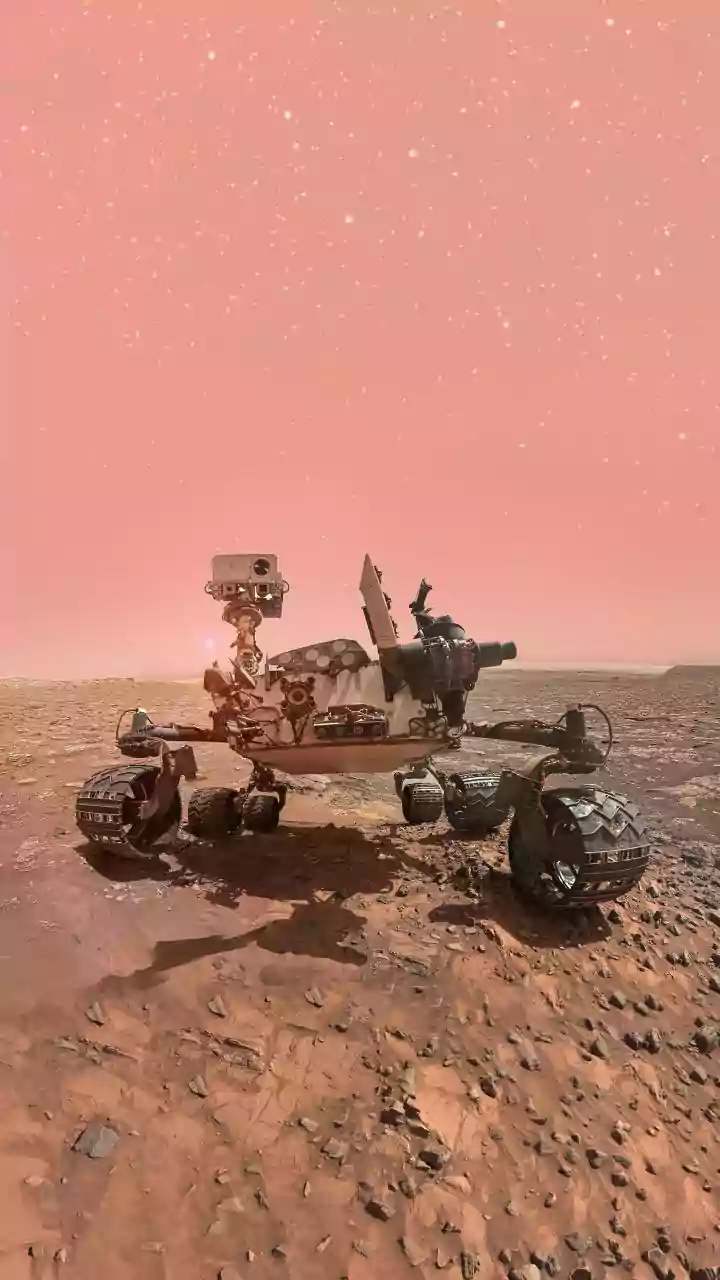



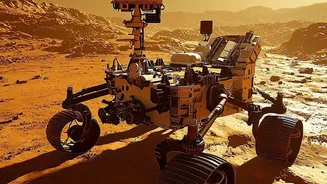
For years, NASA's Perseverance rover has been drilling and storing precious samples of Martian rock, soil, and air. Now, the agency has unveiled its new plan, a reset of the ambitious mission to bring those carefully collected samples back to Earth.
A Fresh Start for a Historic Mission
NASA
has kick-started a new initiative for its Mars Sample Return (MSR) program, dubbed the Perseverance Sample Retrieval Architecture, or PSRA. This move comes after previous plans faced significant hurdles, including independent reviews that projected costs as high as $11 billion with a return date stretching to 2040. NASA leadership deemed that timeline and price tag unacceptable, prompting a return to the drawing board. Announced in early November 2026, the PSRA is not a detailed mission plan just yet, but rather a strategic effort to develop 'impartial recommendations' for a more feasible and affordable way to retrieve the Martian treasures. A dedicated team will officially kick off its work in January 2027, tasked with reviewing past lessons, assessing current technology, and delivering a final report in the winter of 2027-2028.
Why the Samples Are So Important
The samples collected by Perseverance in Jezero Crater are a scientific holy grail. Since its landing in February 2021, the rover has been exploring an ancient river delta, a prime location for finding signs of past microbial life. It has been gathering a diverse set of rock cores and regolith (broken rock and dust), sealing them in ultra-clean tubes. Some of these tubes are stored inside the rover itself, while a backup depot of ten tubes has been carefully placed on the Martian surface at a location called 'Three Forks'. Bringing these samples back would allow scientists on Earth to analyze them with state-of-the-art equipment far too large and complex to send to Mars. This would enable unprecedented investigations into the planet's history, geology, and, most importantly, whether life ever existed on the Red Planet.
The Interplanetary Delivery Challenge
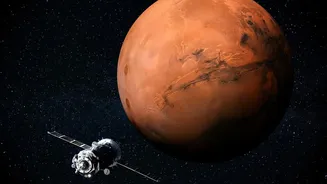
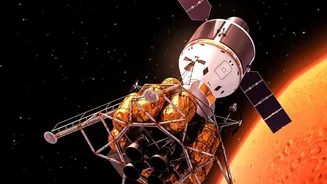
While the PSRA will define the final architecture, the fundamental challenge remains one of the most complex robotic endeavors ever attempted. The core concept involves multiple stages and spacecraft. A future mission will need to send a lander to Mars, likely called the Sample Retrieval Lander. This lander would carry a Mars Ascent Vehicle (MAV)—a small rocket. The samples, either delivered by Perseverance or collected by a smaller fetch rover, would be loaded into the MAV by a robotic arm. The MAV would then make history by launching from the surface of another planet, carrying the sample container into Mars orbit. From there, a separate orbiter, likely provided by the European Space Agency (ESA), would rendezvous with the container, capture it, and begin the long journey back to Earth for a landing sometime in the next decade.
A New Space Race?
A significant factor motivating NASA's renewed push is the progress of other nations. China is moving forward with its own ambitious Mars sample-return mission, Tianwen-3. Chinese space officials are planning to launch their mission around 2028 with the goal of returning samples to Earth as early as 2031. This has been described by some as a potential 'Sputnik moment' and adds a sense of urgency to NASA's efforts. While NASA officials focus on the scientific and engineering goals, the competitive timeline set by China is undoubtedly a 'forcing factor' in the agency's efforts to develop a faster, more efficient plan. The PSRA's success will be measured not just by its scientific return, but also by its ability to keep the United States at the forefront of planetary exploration.