



A New GPS for Deep Space
For decades, navigating in space has meant a constant conversation with Earth. Missions rely on the Deep Space Network (DSN), a global array of massive radio antennas, to pinpoint their location and trajectory. This method is reliable but has limitations.
It's time-consuming, expensive, and as more missions head to the Moon and Mars, the DSN is becoming a bottleneck. This is the problem CAPSTONE was sent to solve. It is pioneering a system that acts like a GPS for the Moon, allowing spacecraft to navigate without constantly phoning home. This technology, called the Cislunar Autonomous Positioning System (CAPS), enables spacecraft to determine their position by communicating directly with each other.
The Testbed Mission
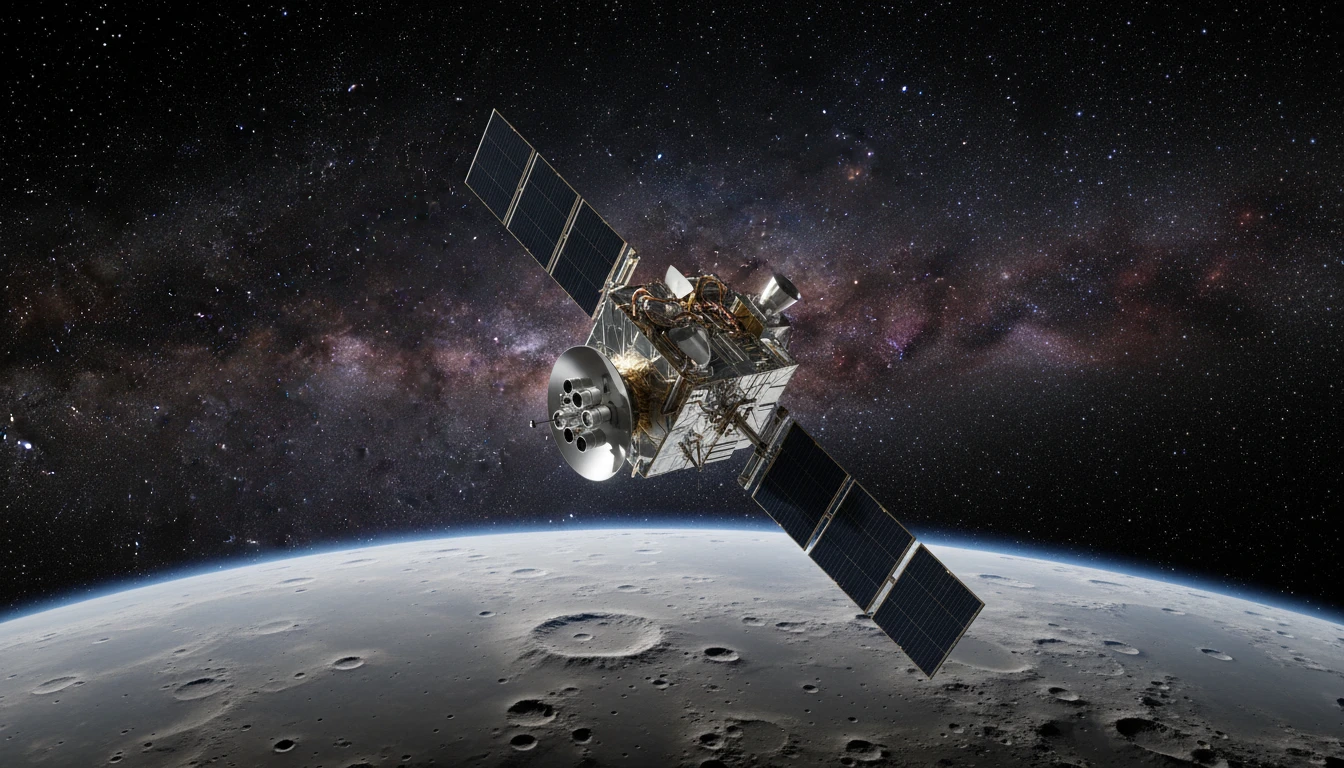
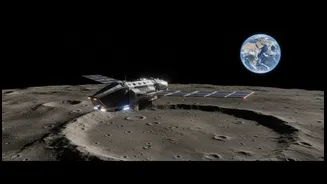
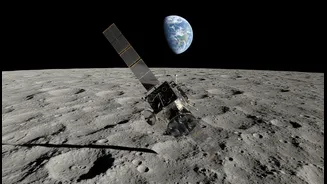
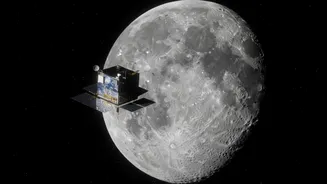
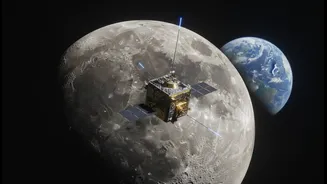
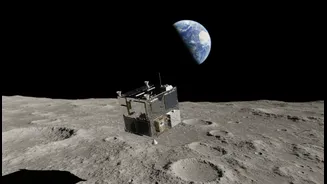
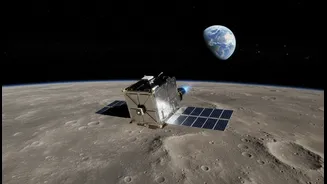
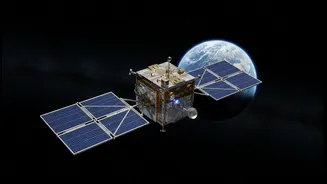
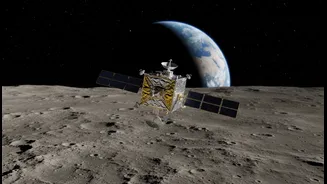
Launched in June 2022, the Cislunar Autonomous Positioning System Technology Operations and Navigation Experiment (CAPSTONE) is a 12-unit CubeSat with a crucial job. Its primary goal was to test the unique and highly efficient Near-Rectilinear Halo Orbit (NRHO) around the Moon. This is the same orbit planned for the Artemis program's Lunar Gateway, a future outpost for astronauts. By flying this path first, the 25-kg spacecraft has provided invaluable data, verifying the stability of an orbit balanced delicately between the gravity of the Earth and the Moon. Having successfully completed its primary and extended missions by mid-2026, NASA has concluded its formal involvement, but the spacecraft continues to be operated by its owner, Advanced Space, as a technology testbed.
A Spacecraft-to-Spacecraft Handshake
The core of CAPSTONE's navigation experiment involves a carefully choreographed dance with another NASA spacecraft, the Lunar Reconnaissance Orbiter (LRO), which has been circling the Moon since 2009. CAPSTONE sends a ranging signal to LRO, which then returns it. By measuring the time this round trip takes, the CAPS software onboard CAPSTONE can calculate its distance from LRO and, from there, determine its own position in space with remarkable accuracy. This peer-to-peer system is the key to autonomy. It proves that spacecraft in the lunar environment can build a navigation network without relying on ground-based tracking, a foundational capability for the future of deep space operations.
Paving the Way for Artemis
The success of CAPSTONE's autonomous navigation demonstration is more than just a technical achievement; it is a critical step for NASA's Artemis program, which aims to establish a sustainable human presence on the Moon. The Lunar Gateway will require spacecraft to dock, depart, and operate in close proximity, all of which demands precise, real-time navigation that cannot wait for instructions from Earth. CAPSTONE has shown that this is possible. It has successfully tested software that allows a spacecraft to determine its own position and plan maneuvers autonomously. This reduces the risk for multi-billion-dollar missions and frees up human operators and the Deep Space Network to focus on more critical tasks, making the entire architecture of lunar exploration more resilient and efficient.
The Future of Space Exploration
The technologies validated by CAPSTONE have implications far beyond the Moon. The ability to create local, self-sustaining navigation networks is a game-changer for missions to Mars and the outer planets. As fleets of smaller, more specialized spacecraft and constellations are deployed, they will need to operate autonomously, coordinating their actions without human intervention. The lessons learned from CAPSTONE's performance in its halo orbit and its successful software demonstrations are building the framework for this future. It represents a fundamental shift from centrally controlled missions to a distributed, more adaptable model of space exploration, where spacecraft are smarter and more independent.